
From Memes to Miku: The Cultural Evolution of AnimeNYC
In Richard Dawkins’ book, The Selfish Gene, there is a chapter in which he discusses the term, meme. To possibly most of the world, including myself, we look at memes as a humorous take or response to a societal issue taking place in the digital ecosystem and often times apply a gif, snapshot, or verbally voiced video excerpt describing the situation. The meme has become so popular as a form of expression, that it now appears as a comment choice on many popular social media apps.


The essence of the meme however, as described by Dawkins and emphasized by Metal Gear Solid’s and Death Stranding’s Hideo Kojima in his book, The Creative Gene, is considered “a unit of cultural transmission,” a form of replication; paralleling the way a gene transmits biological information from one generation to the next. This cultural transmission, this form of cultural evolution, is seen in many historic cultural movements in many parts of the world. An example, that many would possibly know would be the cultural evolution of Hip-Hop.
Considered an art form explicitly expressed by members of the African American and some Puerto Rican communities; within the Bronx in the 1970s, Hip Hop has now transcended globally, with many different people of different cultures and nationalities expressing themselves through rhyme, DJ-ing, dance, and visual expressions to express their thoughts.
And while this article isn’t an analysis on Hip Hop, I only use this example to discuss how LeftField Media’s AnimeNYC has become an environment in which cultural memes replicate and evolve, paying homage to the original cultural source in which those ideas originated. While Dawkins states that the meme is a unit of cultural transmission; a cultural replicator that can spread from person to person, generation to generation, AnimeNYC, in my opinion, would be considered its [memes] waystation in which generations of people touch down to discuss their favorite manga/anime characters, story arcs, and discuss future conversations on characters, all while paying homage to the original source in some way.
One example would be Akira Toriyama. When he died in March of 2024, the world shut down. When this passing (possibly bigger than that of Michael Jackson) happened, the world paid tribute to his artistry and his life and created millions of artwork and animation videos highlighting their love for him and his characters. Backtracking my thoughts, even when he was alive, many of his fans created their own versions of his characters while still staying true to the original source material.
SideNote: Even as I write this part, I tear up on account as to how Toriyama’s Vegeta helped me through a very troubling time in my life and assisted in battling my depression in college.
In its humble beginnings, AnimeNYC started in one corner of the Jacob Javitz Center where it encompassed various anime and manga companies such as Tokyopop, Funimation, Viz, Yen Press and others. There were also some newcomers that arrived on the scene to showcase their companies such as Saturday AM and Noir Caesar Entertainment. As fans gathered that first time, many shared their thoughts, perspectives, and experiences on the characters they fell in love with and showed love to the original authors and creators through their art, cosplay, and panel discussions.
It’s been 9 years since that eventful beginning and with it, the convention has expanded to 2/3rds of the Javits space. It’s safe to say that AnimeNYC has now become a necessary nexus of anime and manga culture where pop culture insight is actively exchanging hands, being remixed and reimagined by fans.
Additionally, during those 9 years of growth (reaching 150K guests for 2026), as the convention evolved, so too has the anime and manga market, which has grown into a global, billion dollar franchise in which artists and writers have shared various stories that specialize in Shonen, Shojo, Seinen, Josei, Kodomomuke and everything in between.
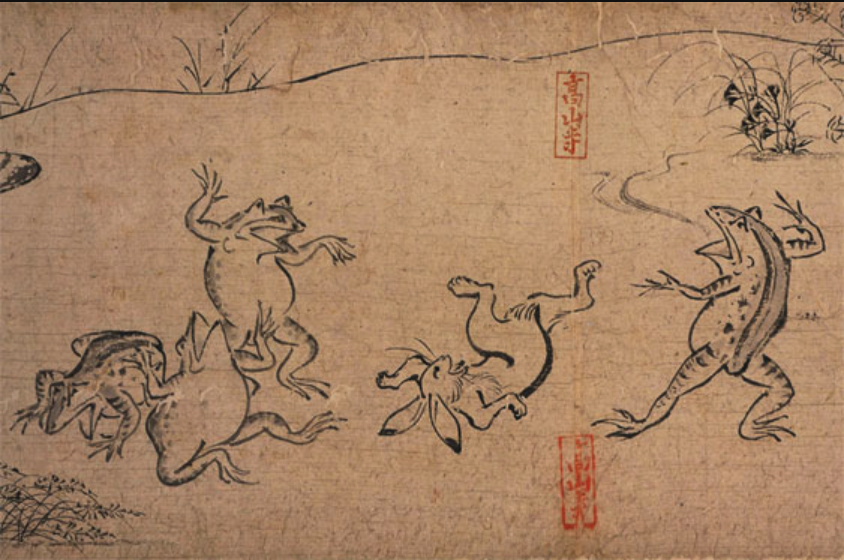
Chōjū-jinbutsu-giga handscrolls of the 12th and 13th century
As manga traditions originate as far back as 1053 -1140, with the Chōjū-jinbutsu-giga handscrolls of the 12th and 13th century, what makes reading manga fascinating is that its readership is not confined to one nationality; in other words, any person of any group can read manga; it’s all according to taste. And with that taste, comes differing opinions, viewpoints, and discussions. Unless of course we’re referring to “h” in which you should probably be 18 years or older to read or even look at.
AnimeNYC has not only evolved by the handling of its convention, its also evolved through its fanbase as well. While genes transfer heritable traits that allow the next generation to survive and adapt to their environment; from a cultural evolution perspective, AnimeNYC is a cultural transmission nexus in which the memes of culture have replicated, mutated, and passed on from one generation of fans to the next.
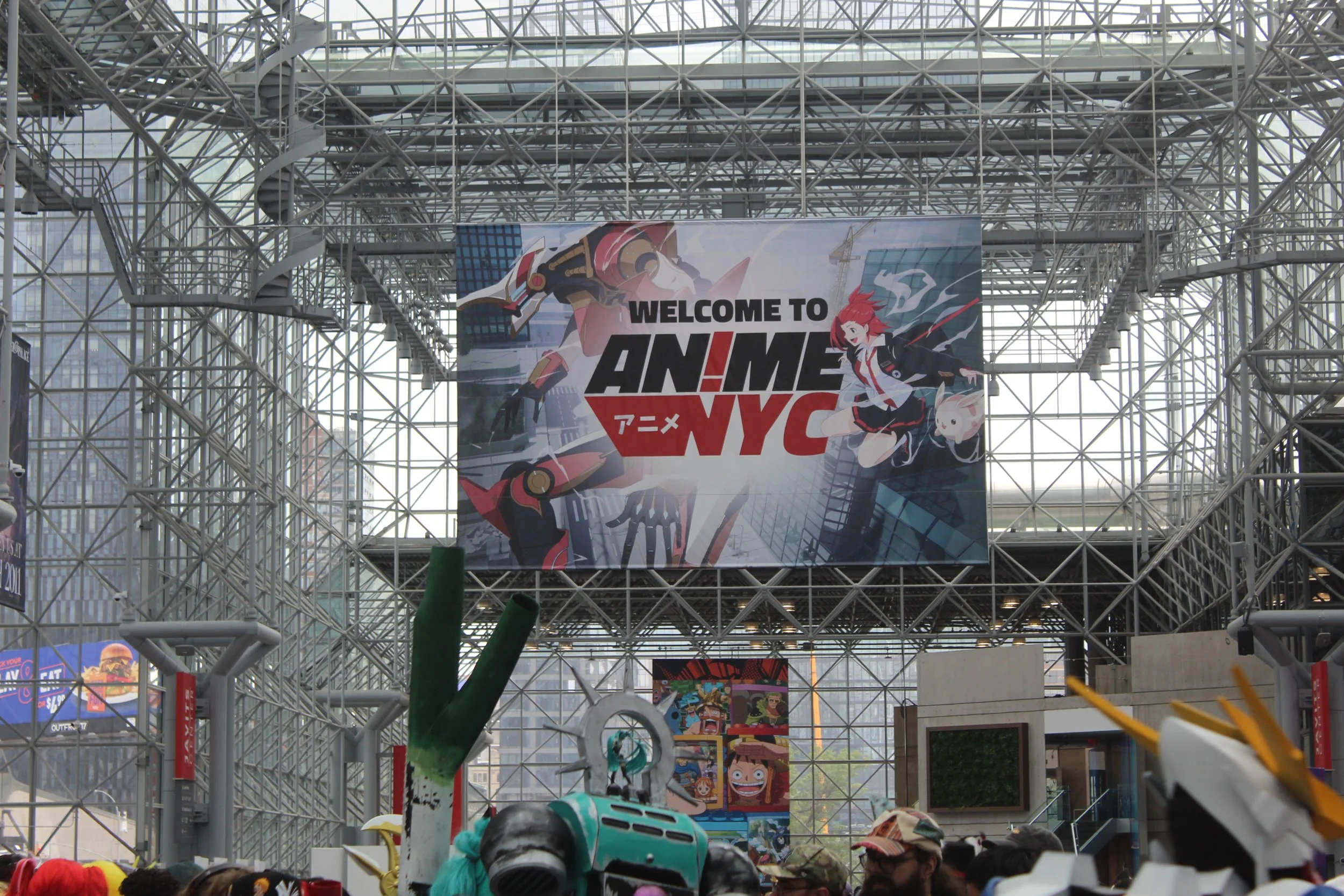
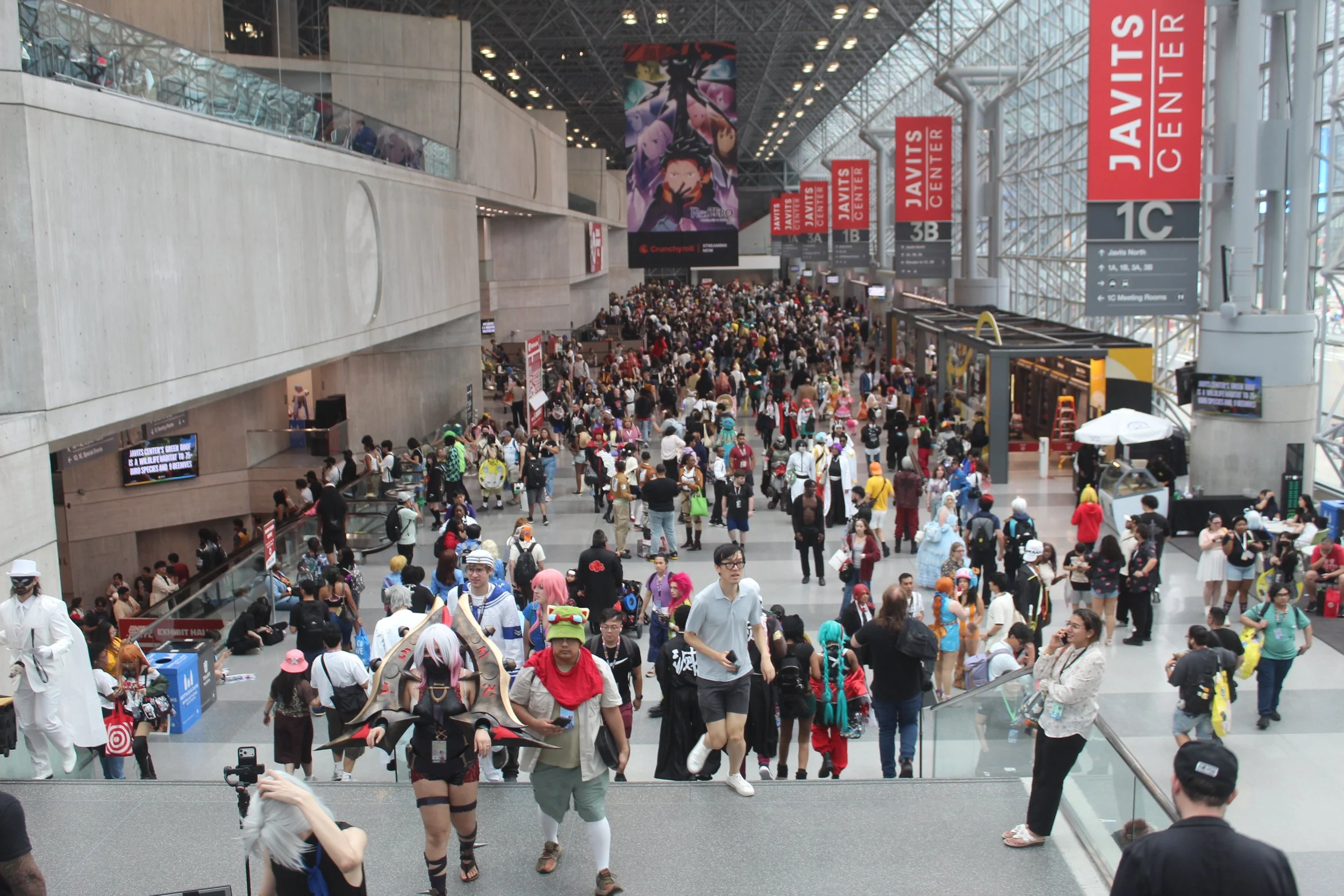
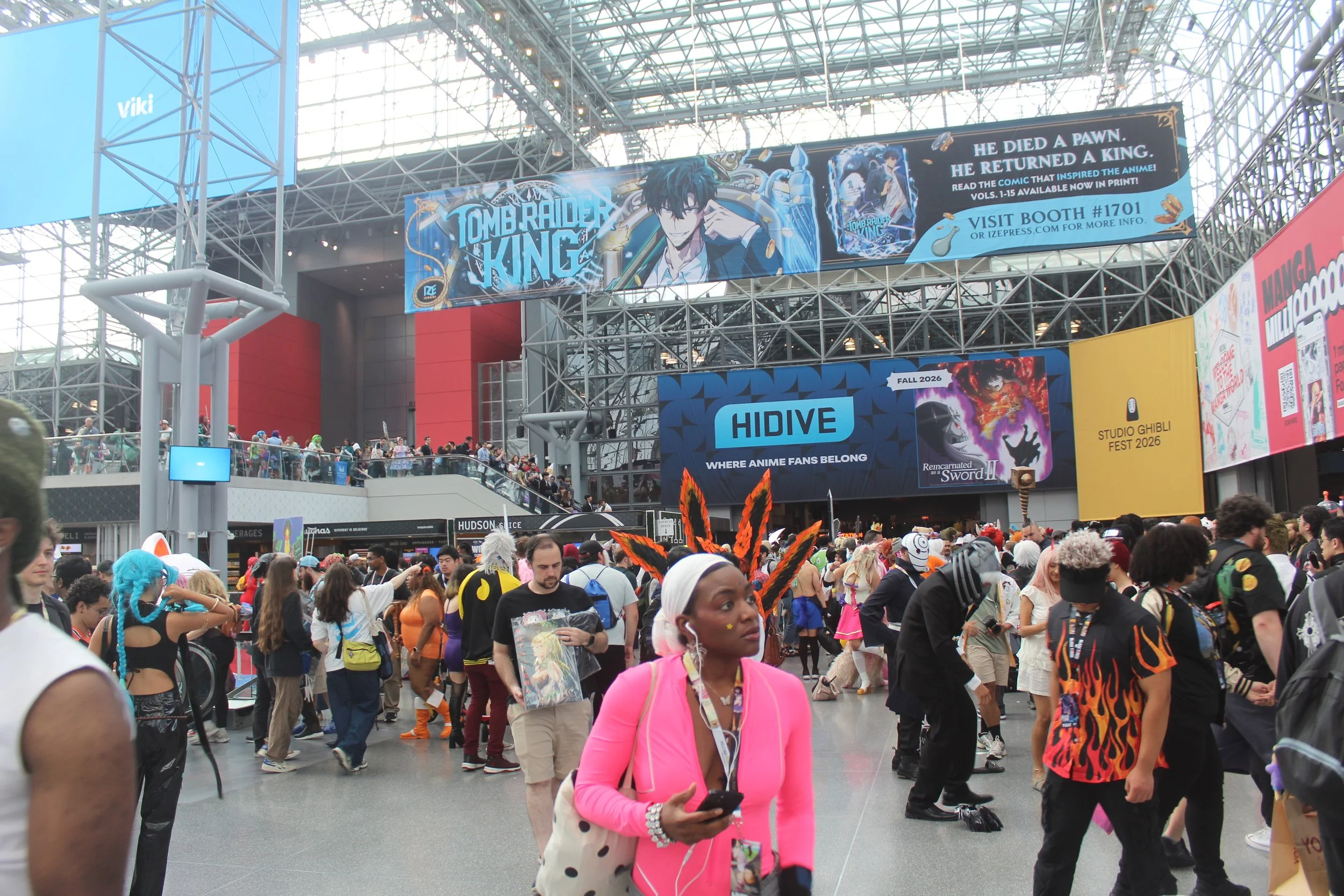
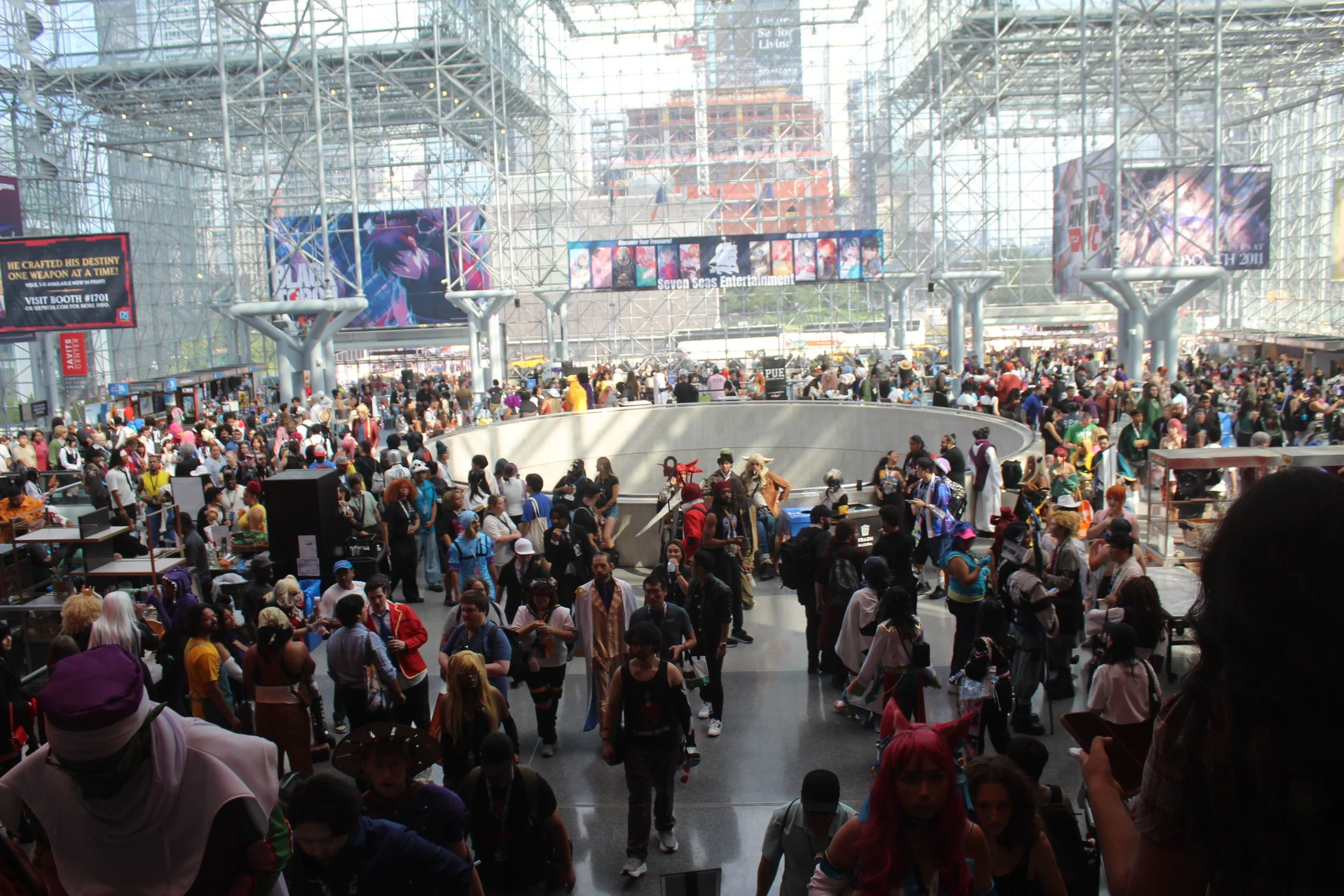
In other words, AnimeNYC has become a special con in which the next generation of fans are more engaged with the original characters, appreciative of the characters they cosplay, and build upon the respect of its fanbase and the community.
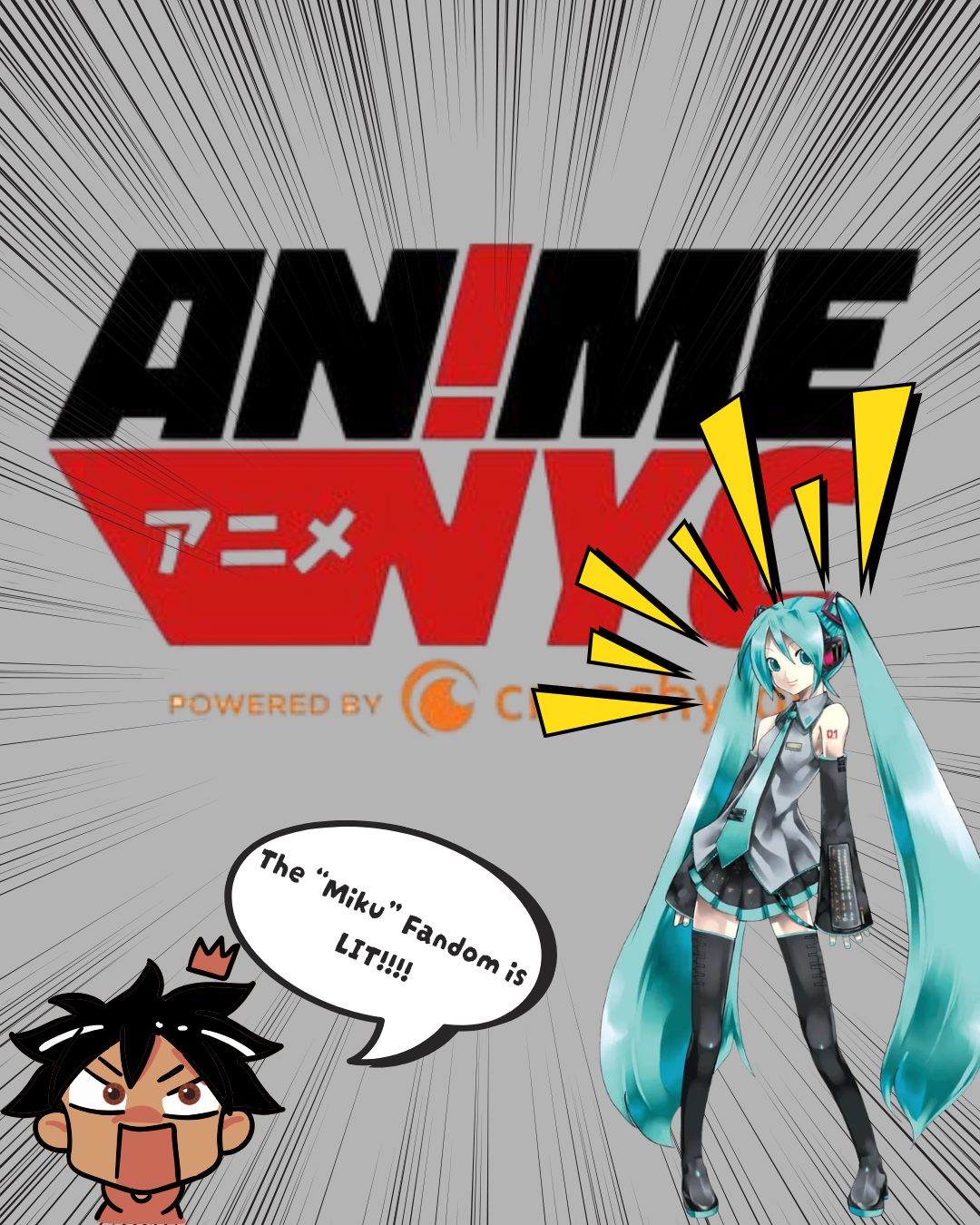
An example that helps support my argument is through the cosplay and fandom of Crypton Future Media’s first Vocaloid character, Hatsune Miku.
Hatsune Miku.
Crypton Future Media is a Japanese music tech company based in Sapporo, Japan, that specializes in music, sound generation software, and other forms of media. One of its most innovative products was Vocaloid, a singing voice synthesizer in which users can type in lyrics, input speech and melodies and use the recorded vocals of actors and singers to output the commands through a piano-roll interface. Additionally, users can also modify how the voice is outputted by adjusting the vocals and tone.
What’s innovative here is that the software uses voice banks which are collections of samples from singers and voice actors, and markets them as a “singers in a box.” This allows the users to create songs without an actual singer performing them. Furthermore, many Vocaloid voice banks are represented by anime style characters called avatars, transforming this innovation into a form of virtual idol culture, with some of these characters appearing as projected digital performers in real life concerts.
One of the famous Vocaloid characters was the Character Vocal Series 1 aka Hatsune Miku (Miku). Developed by Crypton in 2007, Miku was created by Yamaha’s Vocaloid 2 technology with the singing voice coming from Japanese voice actress, Saki Fujita. The first of Crypton’s character vocal series, her name comes from merging the Japanese words for first (hatsu), sound (ne), and future (miku), which translates into "the first sound of the future."
SideNote: She was released first on the 2nd gen of the Yamaha Singing-synthesis software.
Miku became so popular, fans were able to use her voice and likeness to create their own songs, art, videos, and characters. This has been taking place for the last 19 years, with her 19th anniversary taking place on August 31st 2026. To date, she has released over 100K songs, uploaded 170k YouTube videos and has amassed over 1 million artworks.
Not bad for an eternal blue-green haired, double pigtailed, 16-year-old vocalist.
CV01’s (Miku) character has been translated through art and by cosplay in so many forms over the years, that I felt it was important to highlight her contributions within the anime/manga culture. Miku has been presented in multiple forms, and gender expressions, becoming an international cultural icon in the process.
As AnimeNYC is a cultural nexus allowing many different forms and expressions of Miku, I would further add that Miku too is her own cultural nexus whose character, voice, identity, and likeness continuously gets reproduced, modified, and transmitted by a global community of fans and creators.
Cosplay of CV01
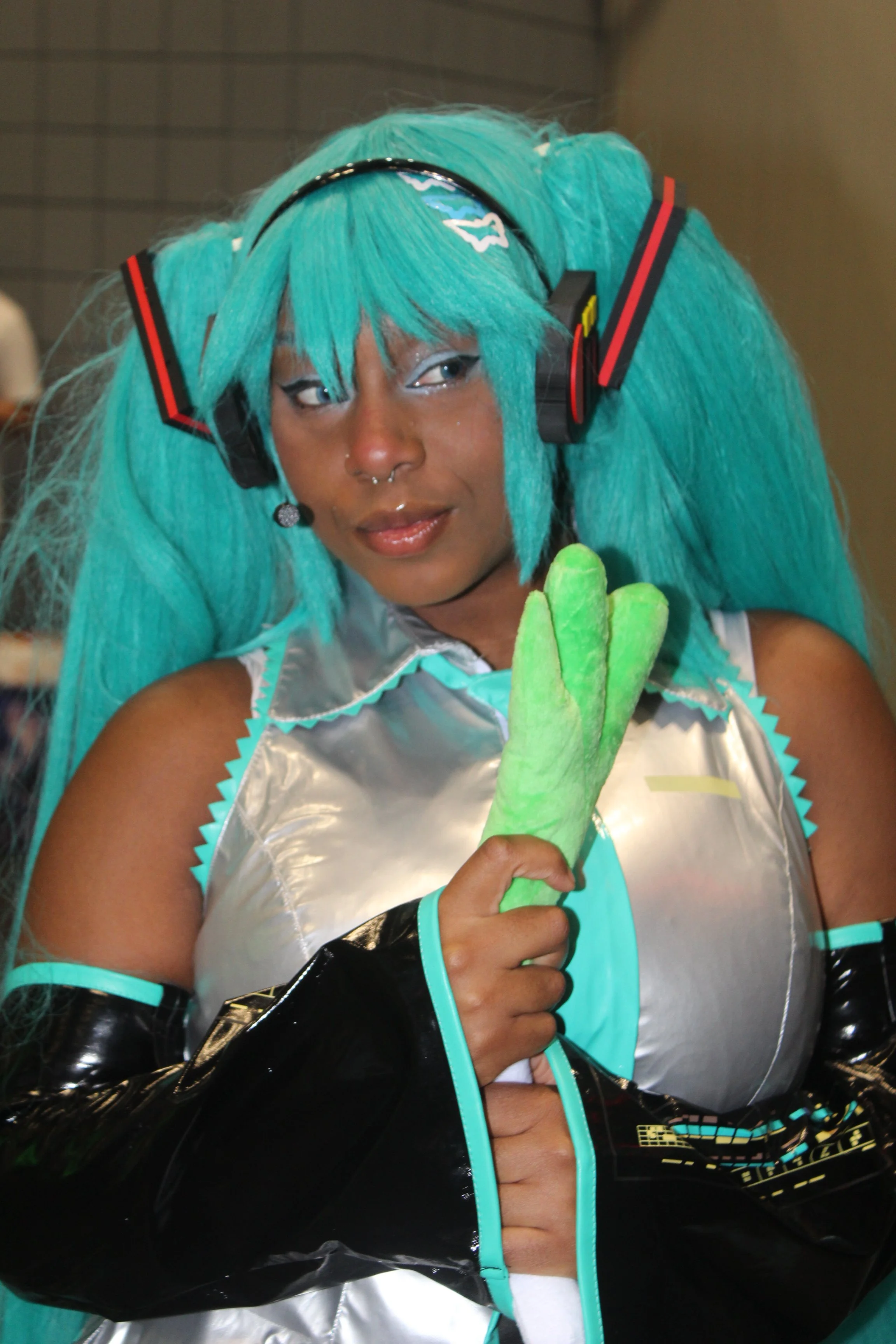
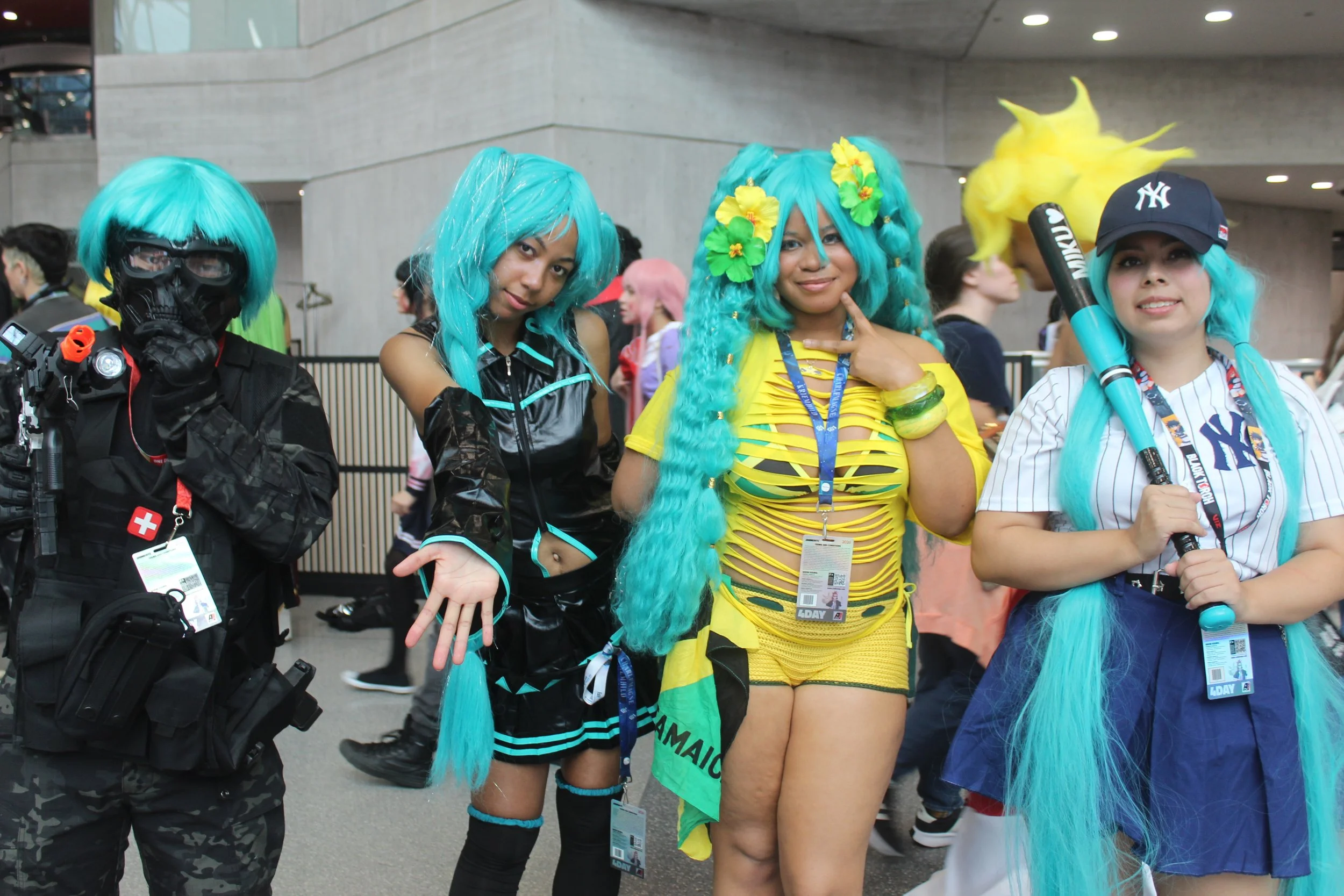
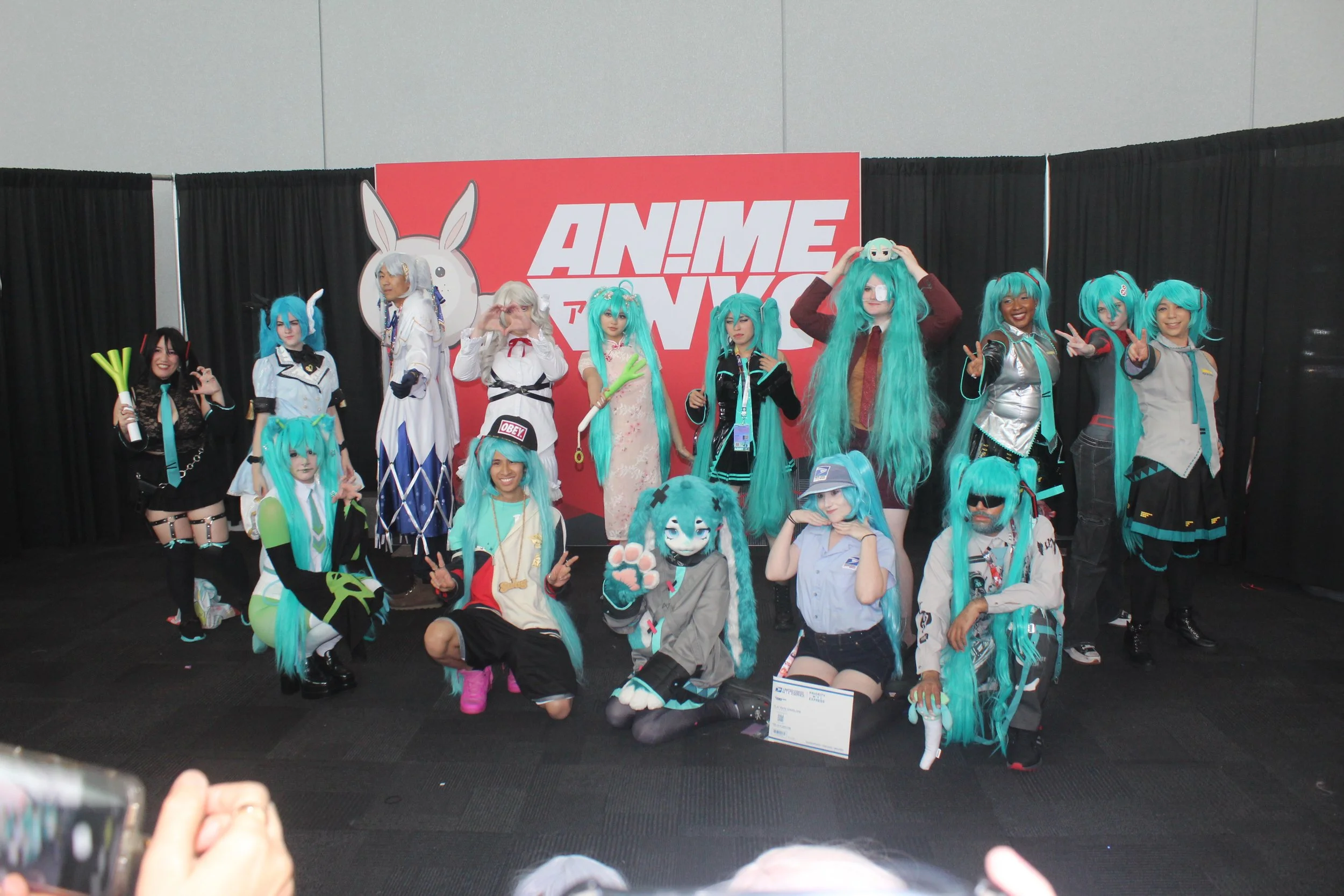
AnimeNYC also allowed me to see that cultural transmission in action through the various cosplays of Hatsune Miku. With over 100+ variations of Miku, or tallied by an AnimeNYC observant, I witnessed firsthand the influence that Miku has had with fans over the years. One Miku in particular that combined the essence of the character followed by a sci-fi twist was in the guise of Stormhammer Hatsune Miku. Exquisite, Dangerous and blue-green, this character was a sought after cosplay in need of capturing on camera.
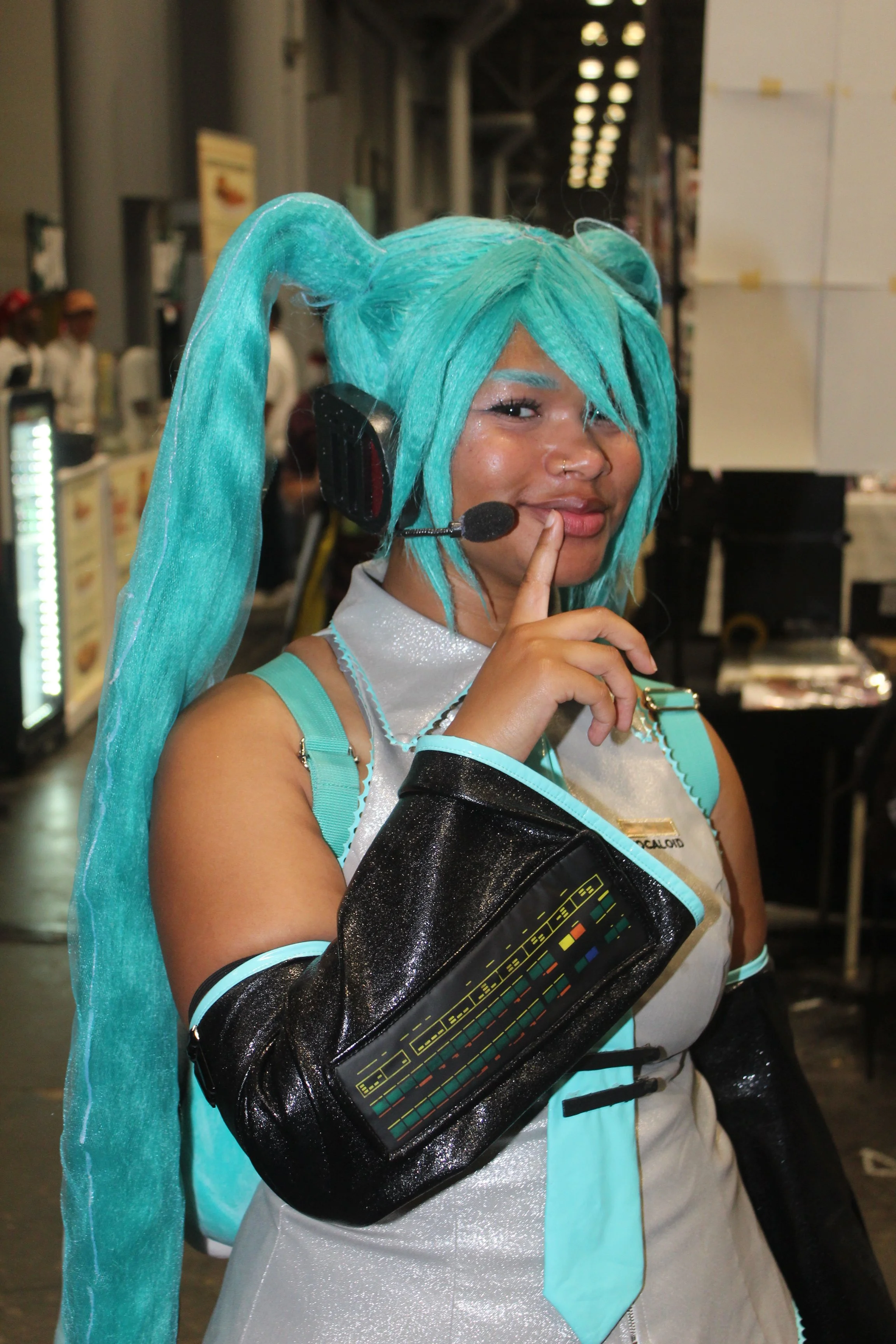


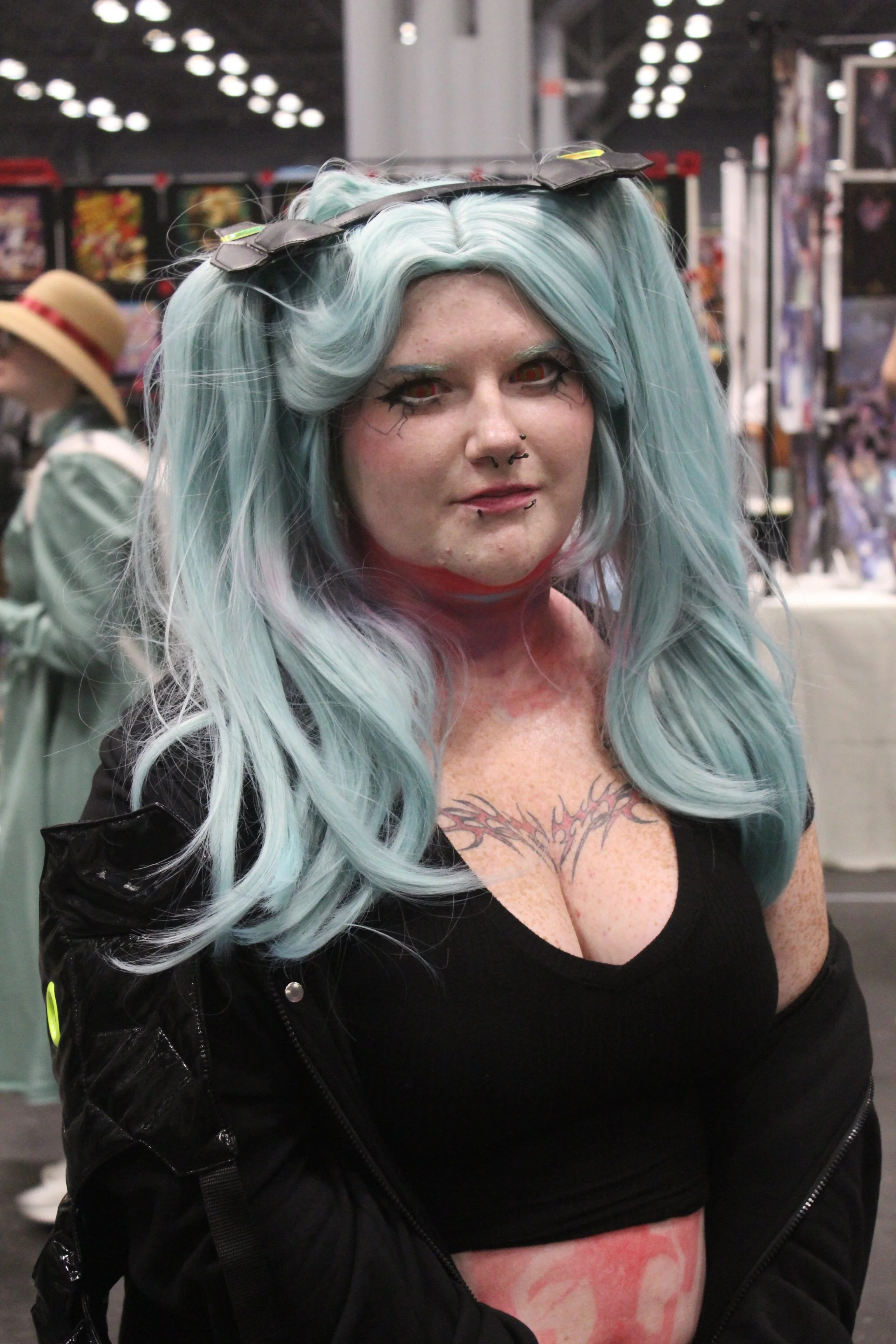
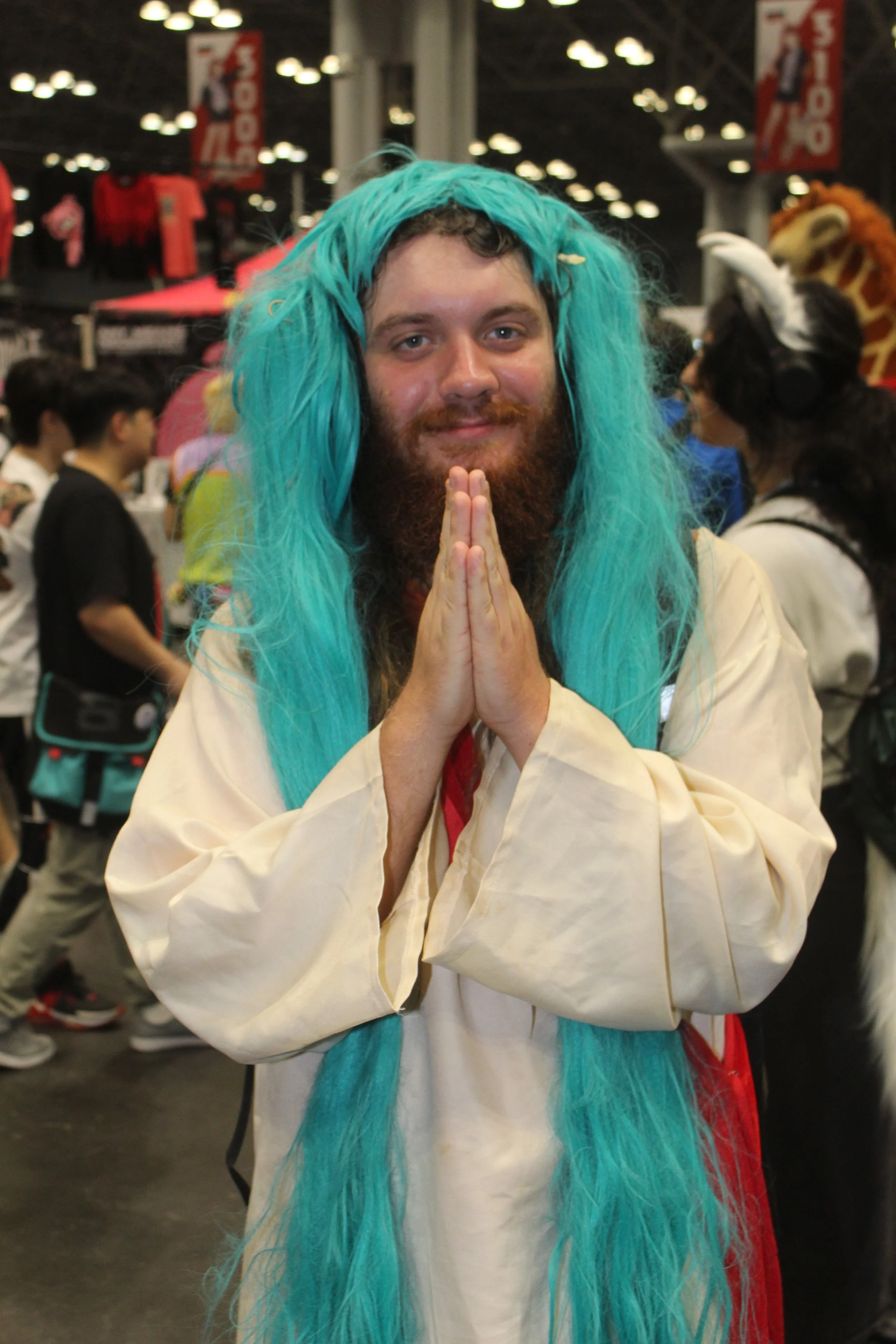
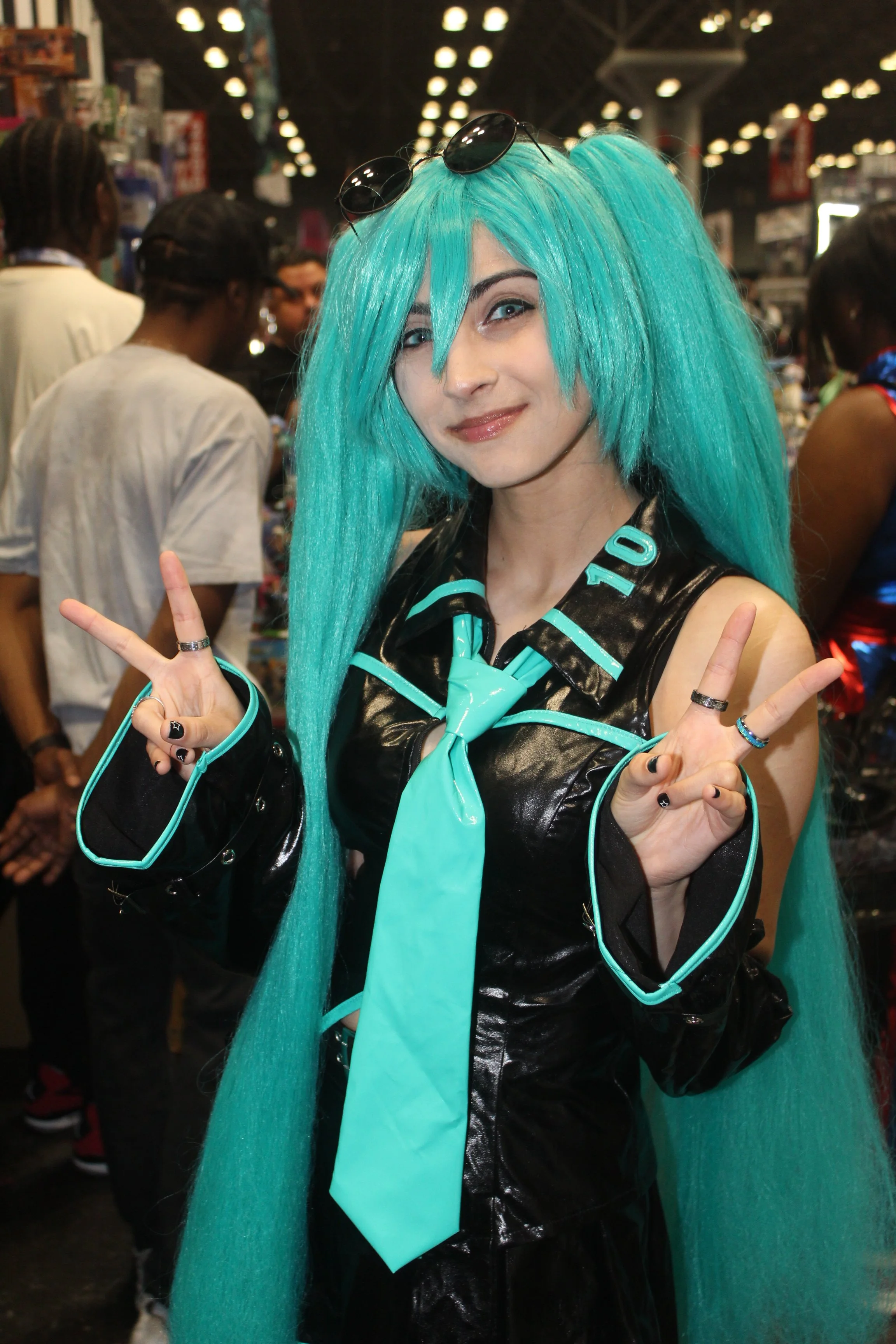
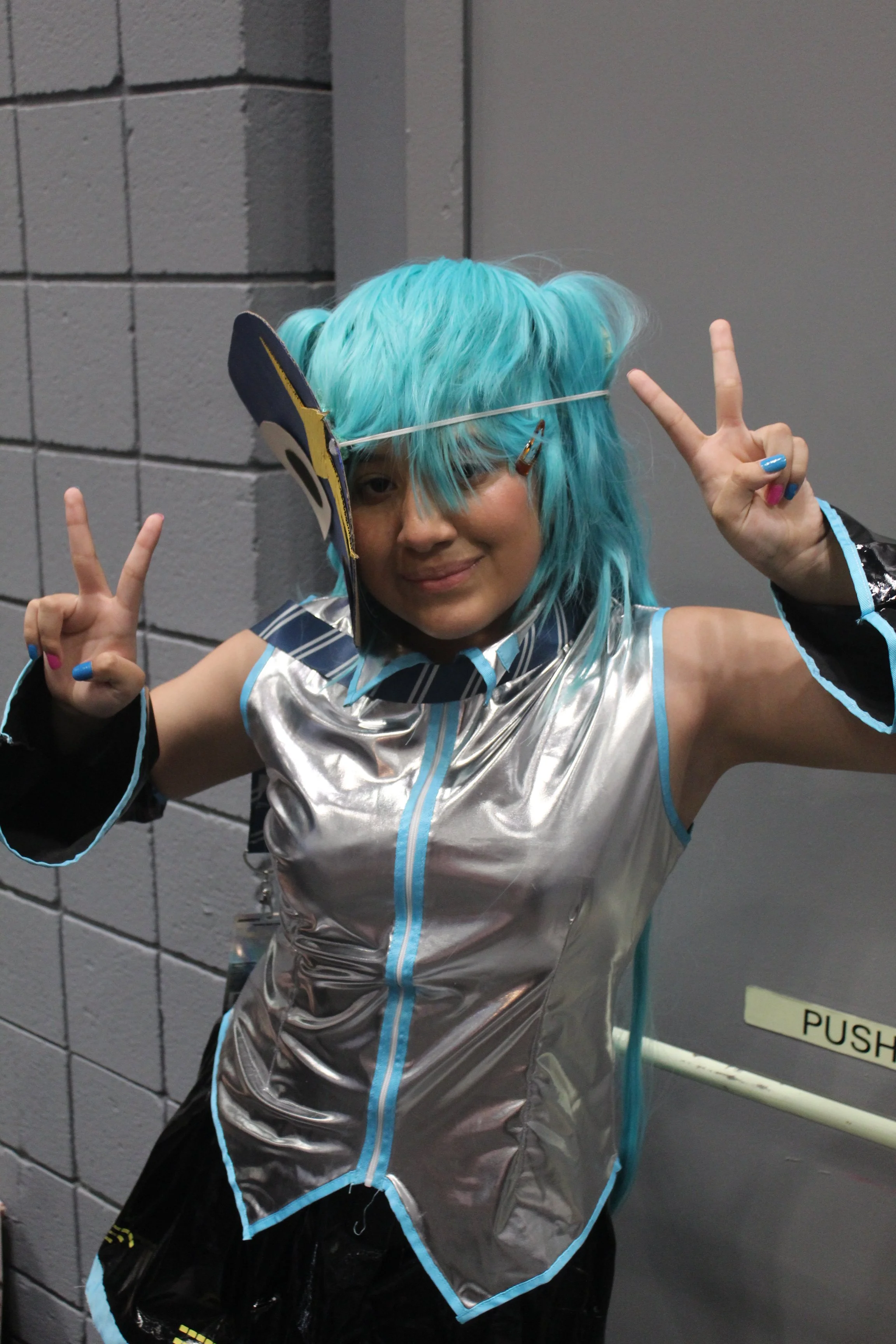
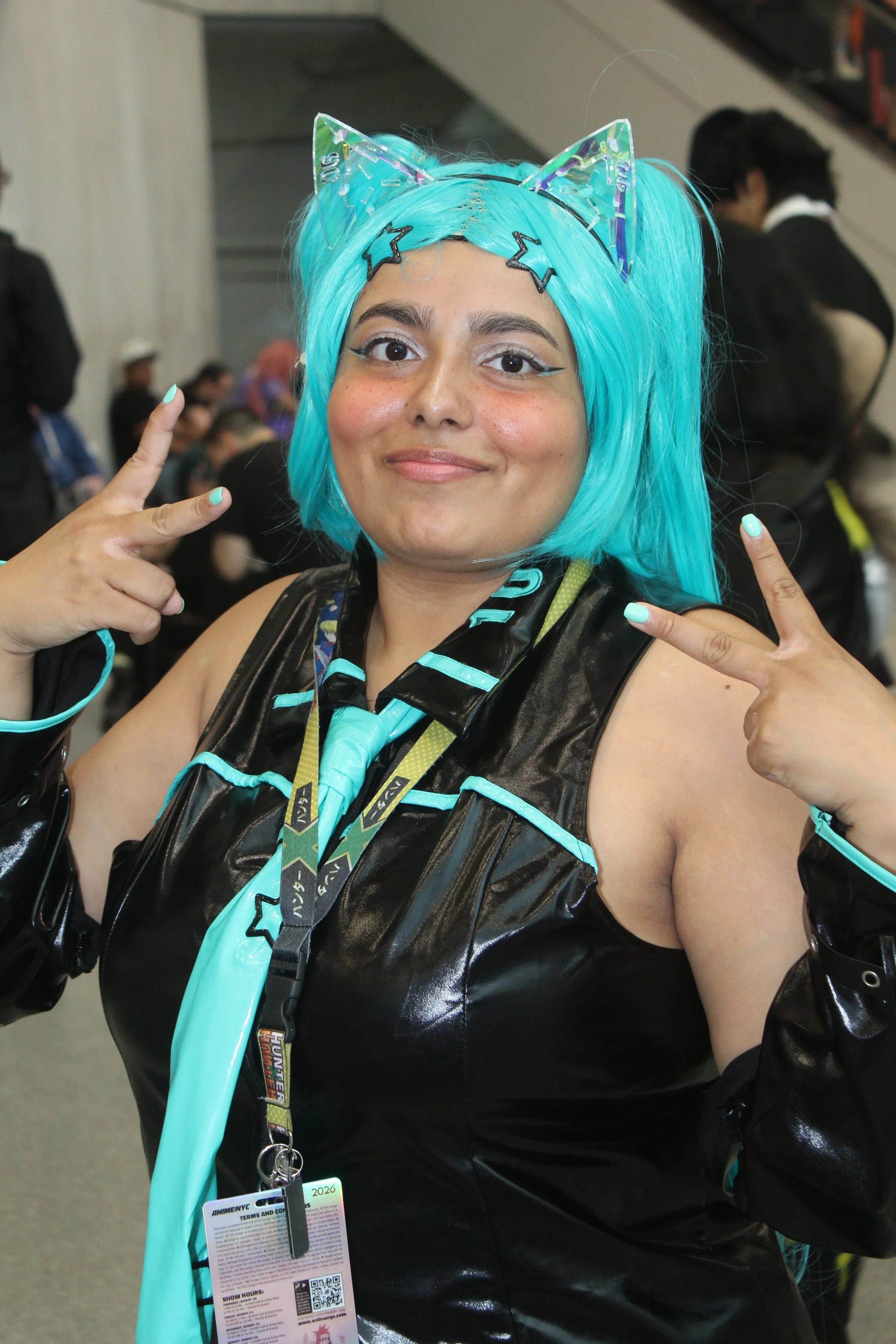

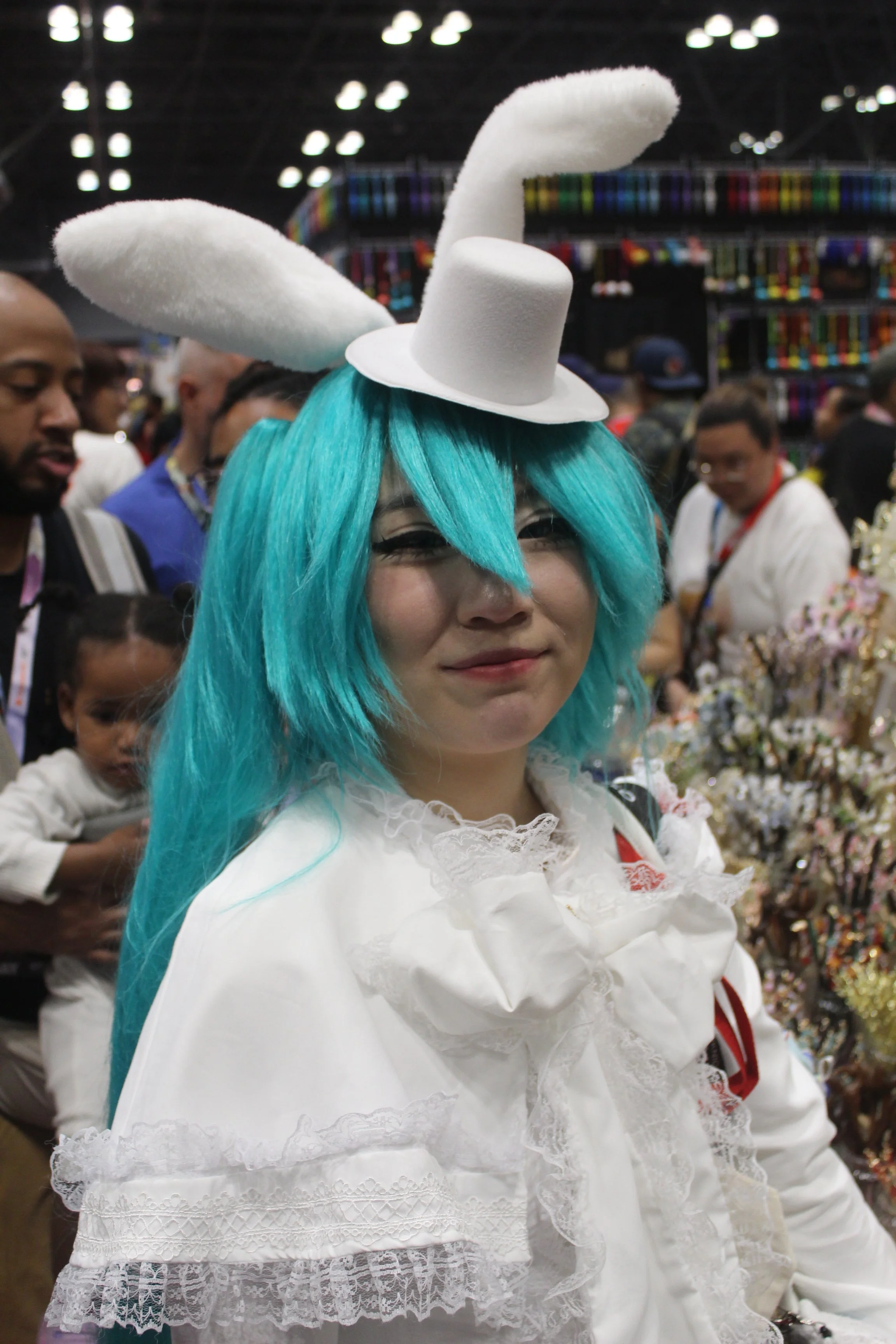
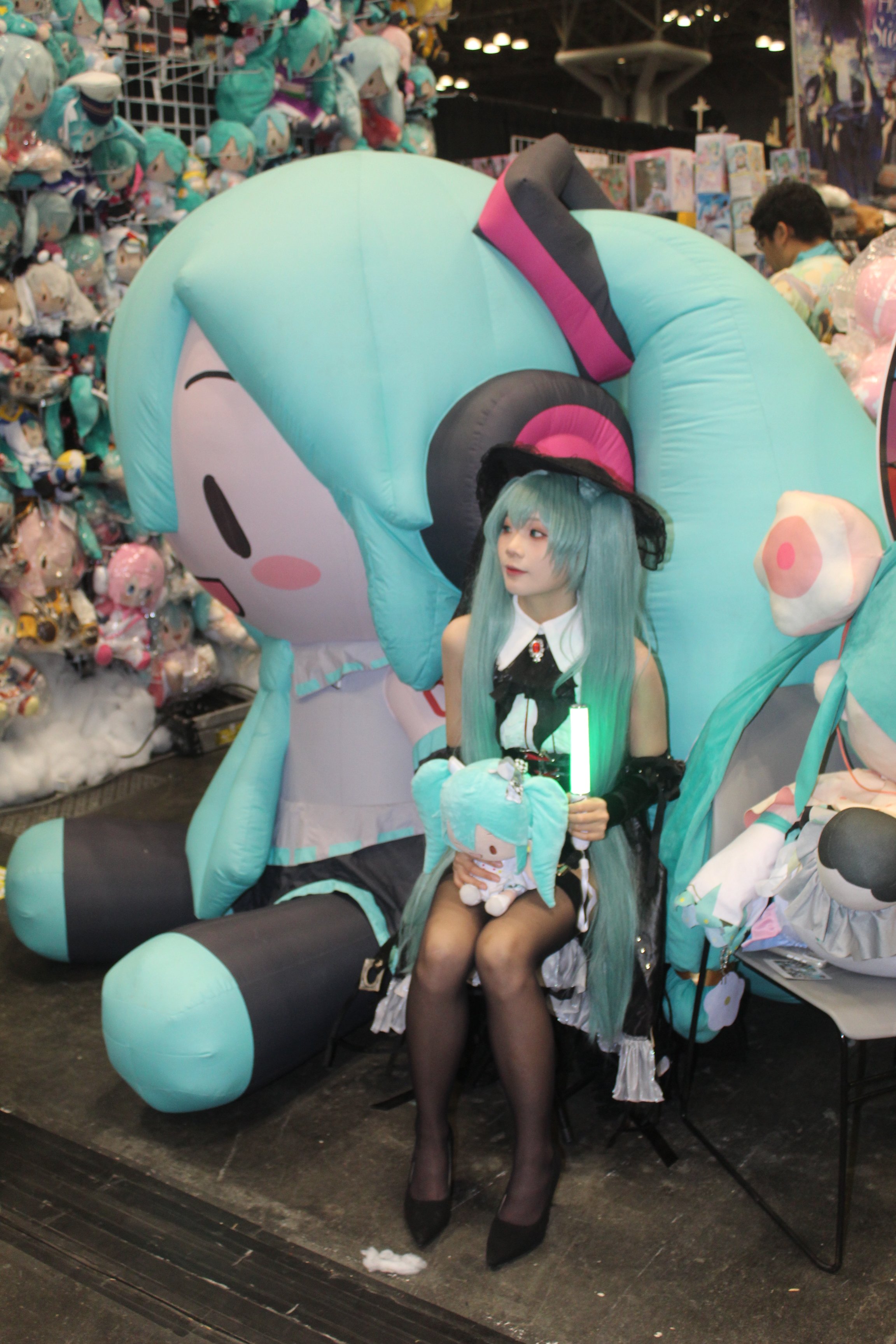


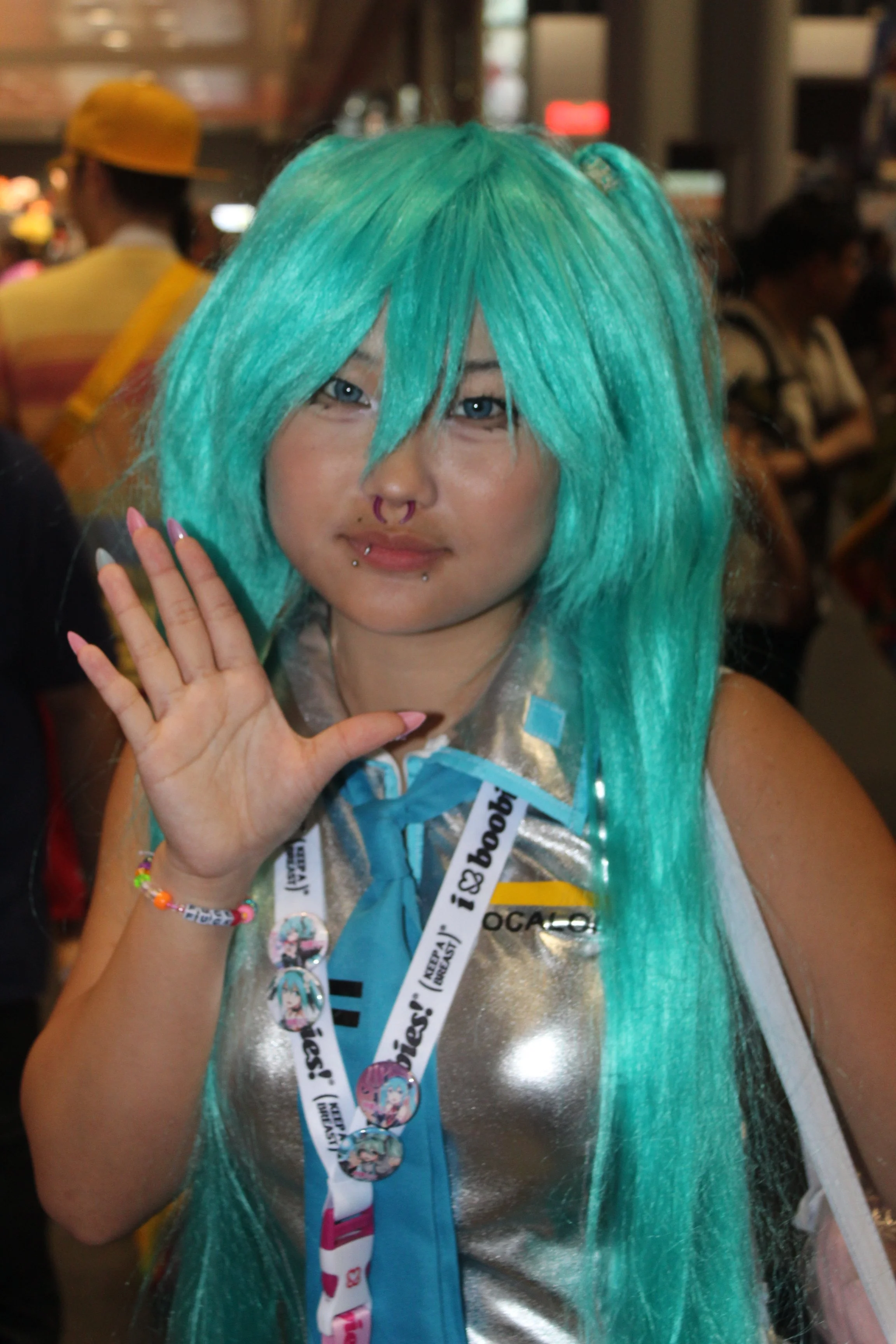

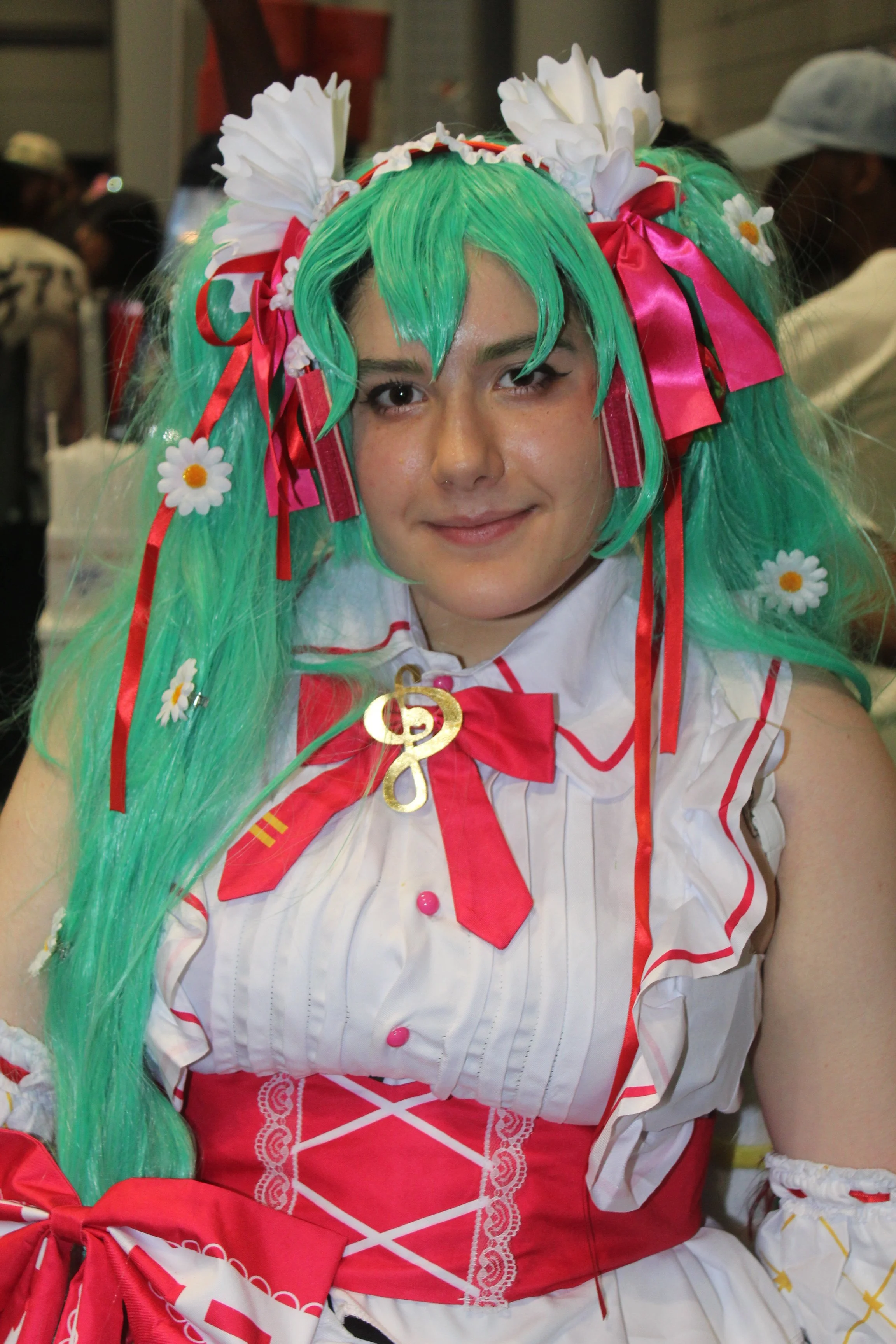
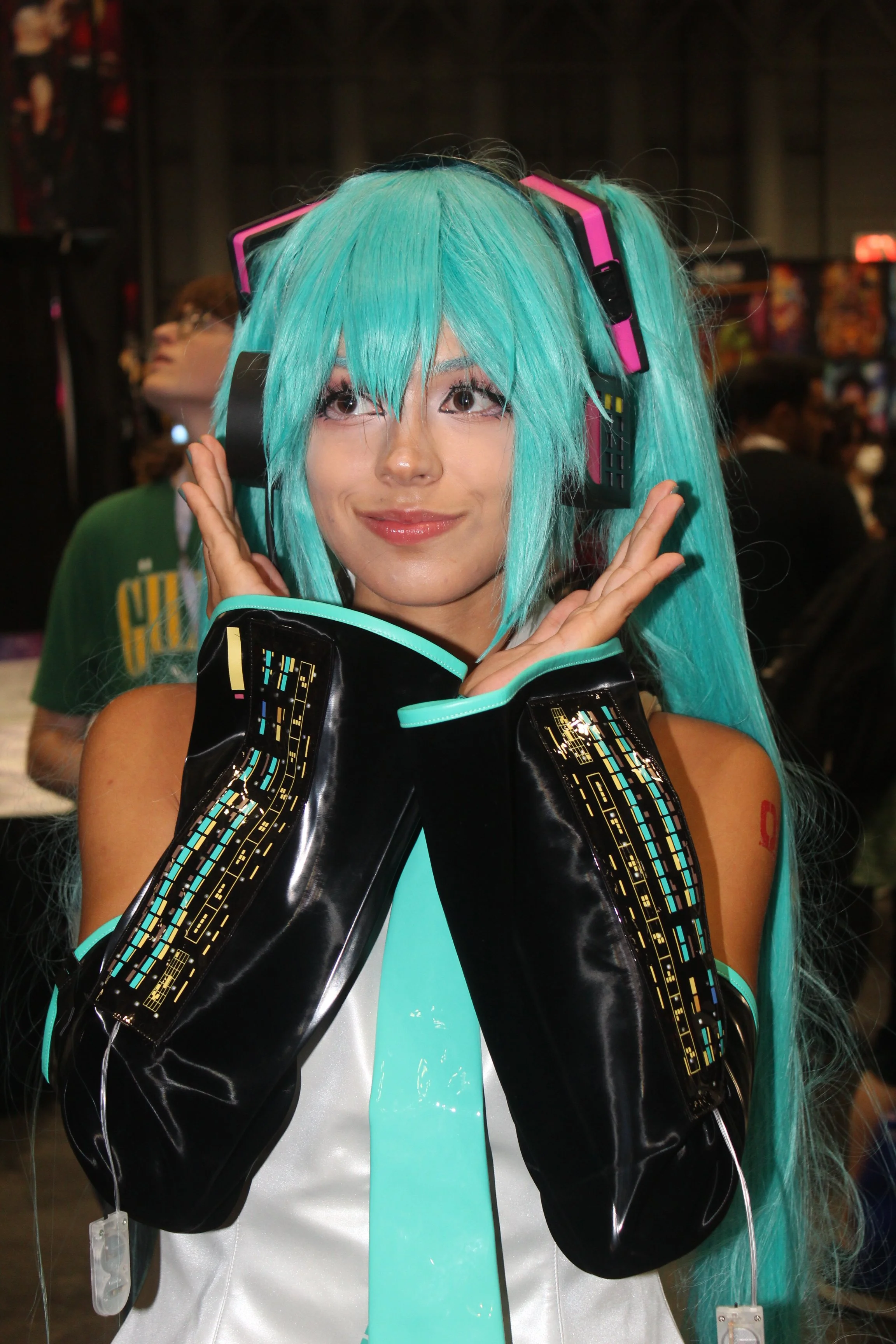
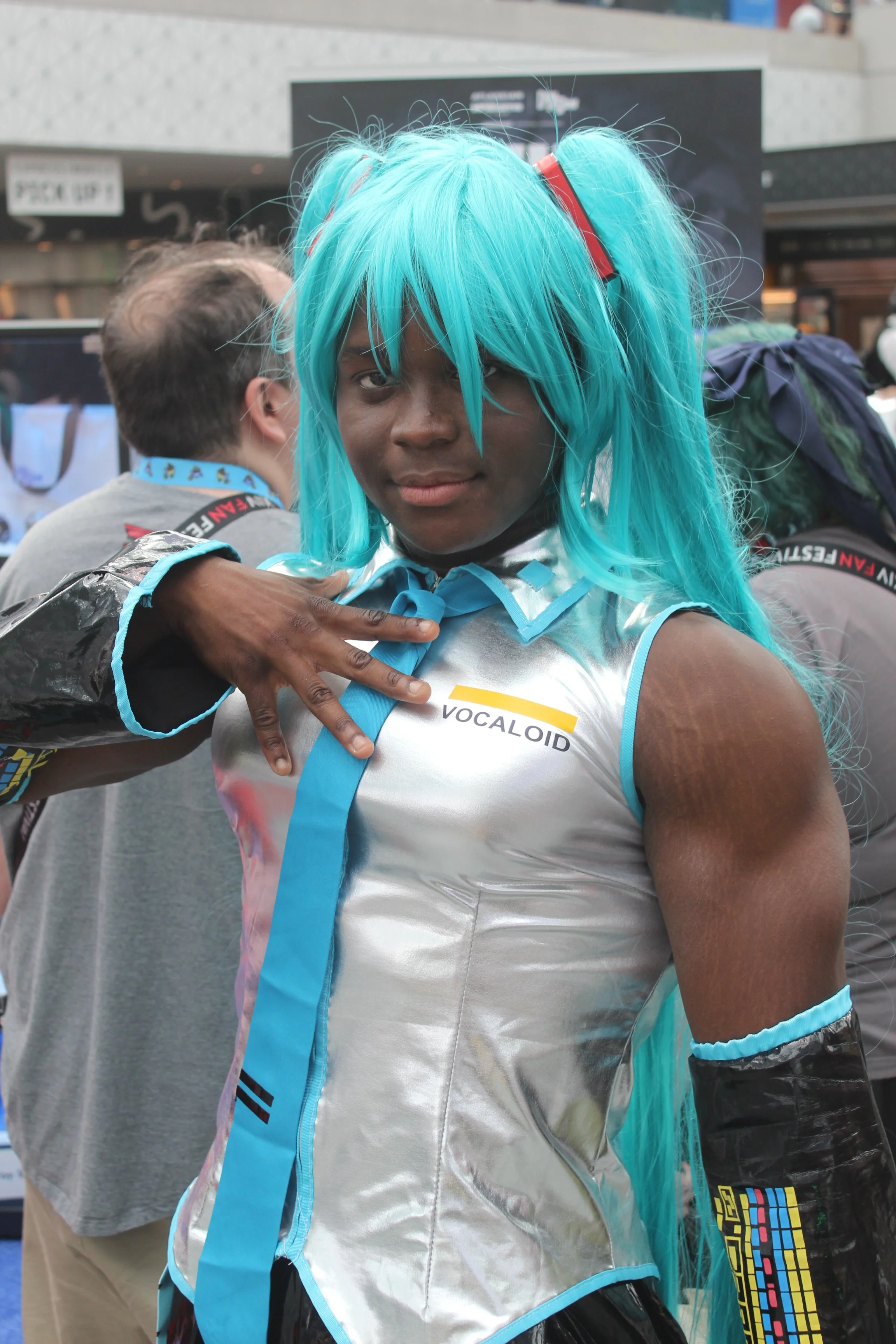
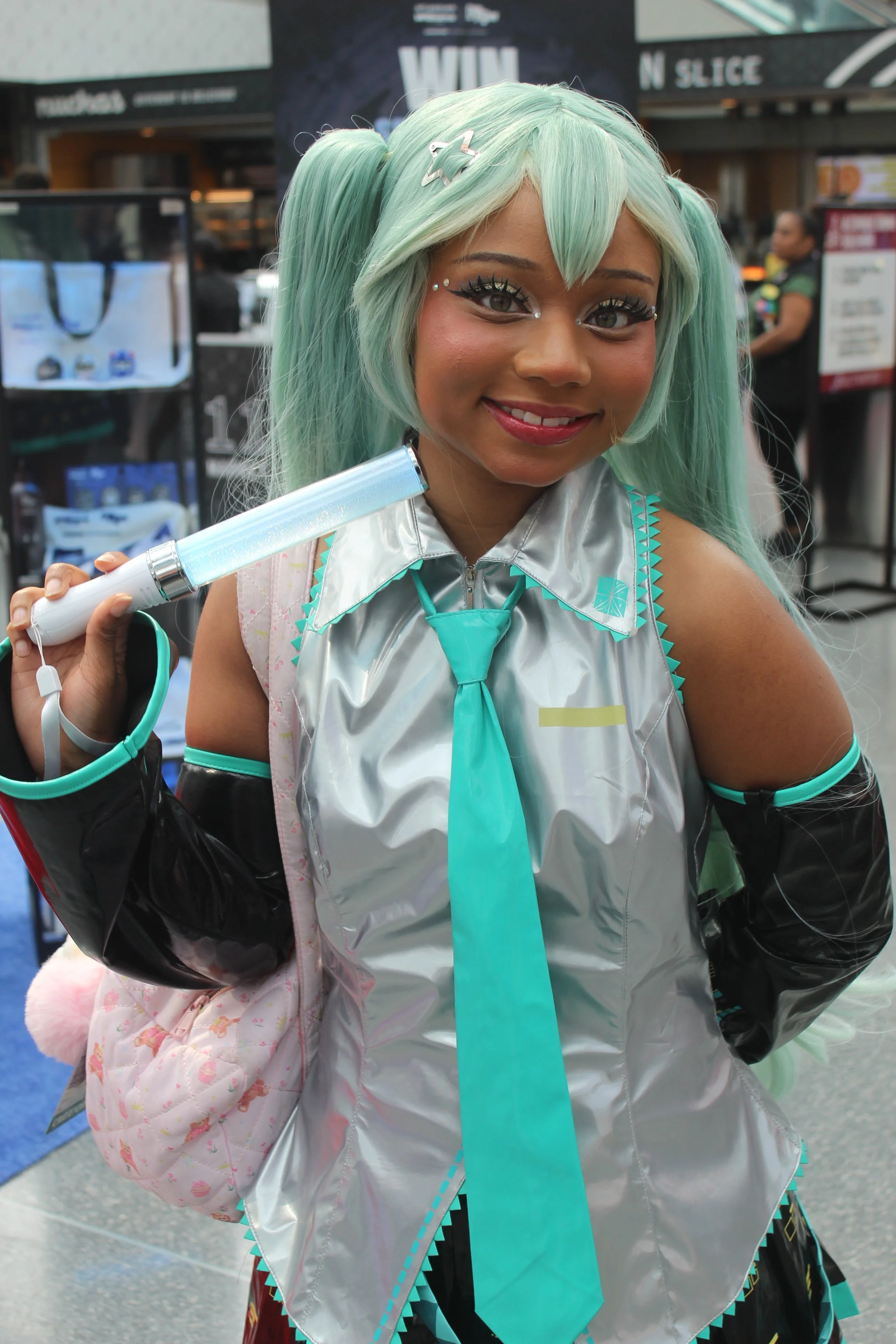

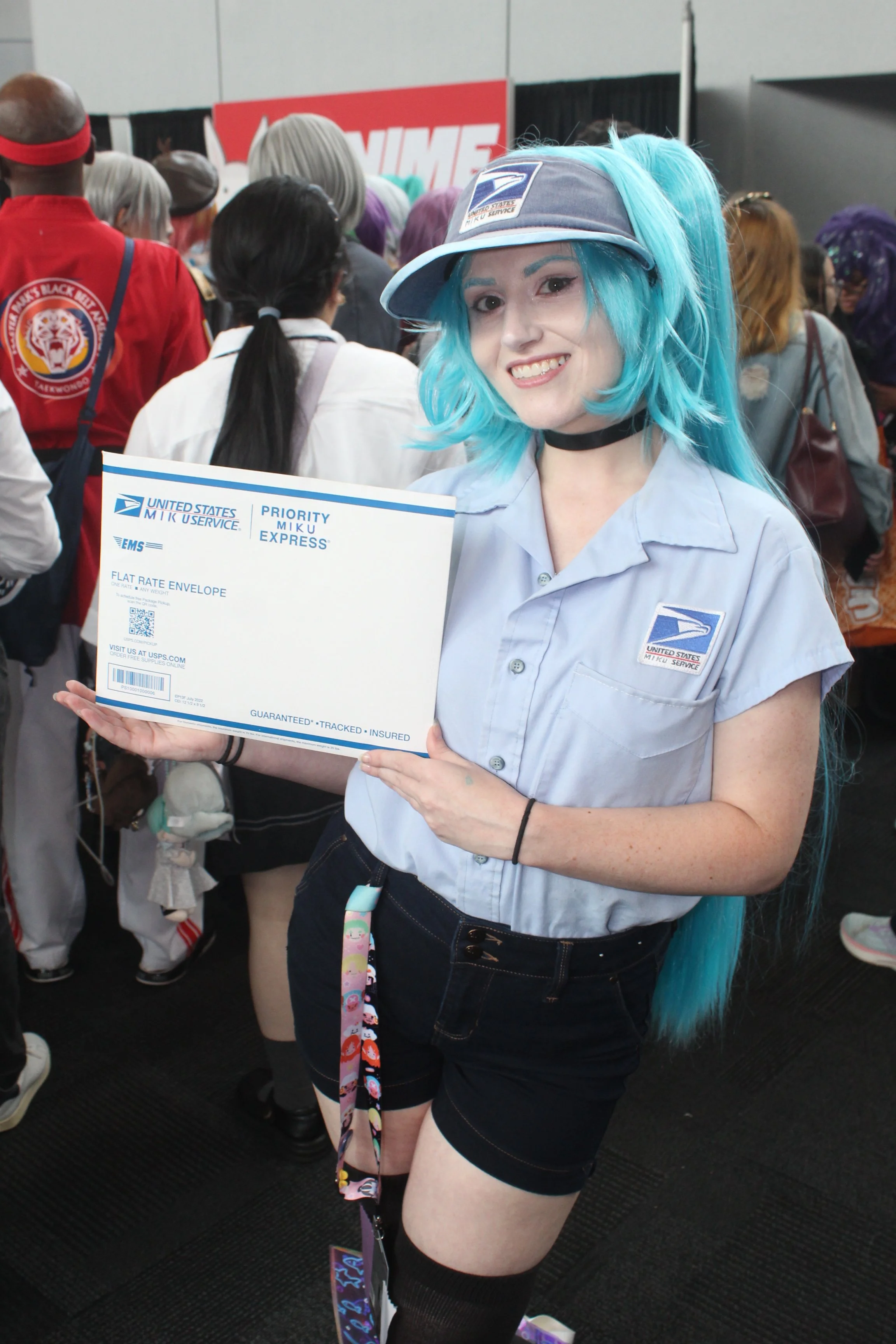
The Magical Cosplay of Hatsune Miku
〰️
The Magical Cosplay of Hatsune Miku 〰️

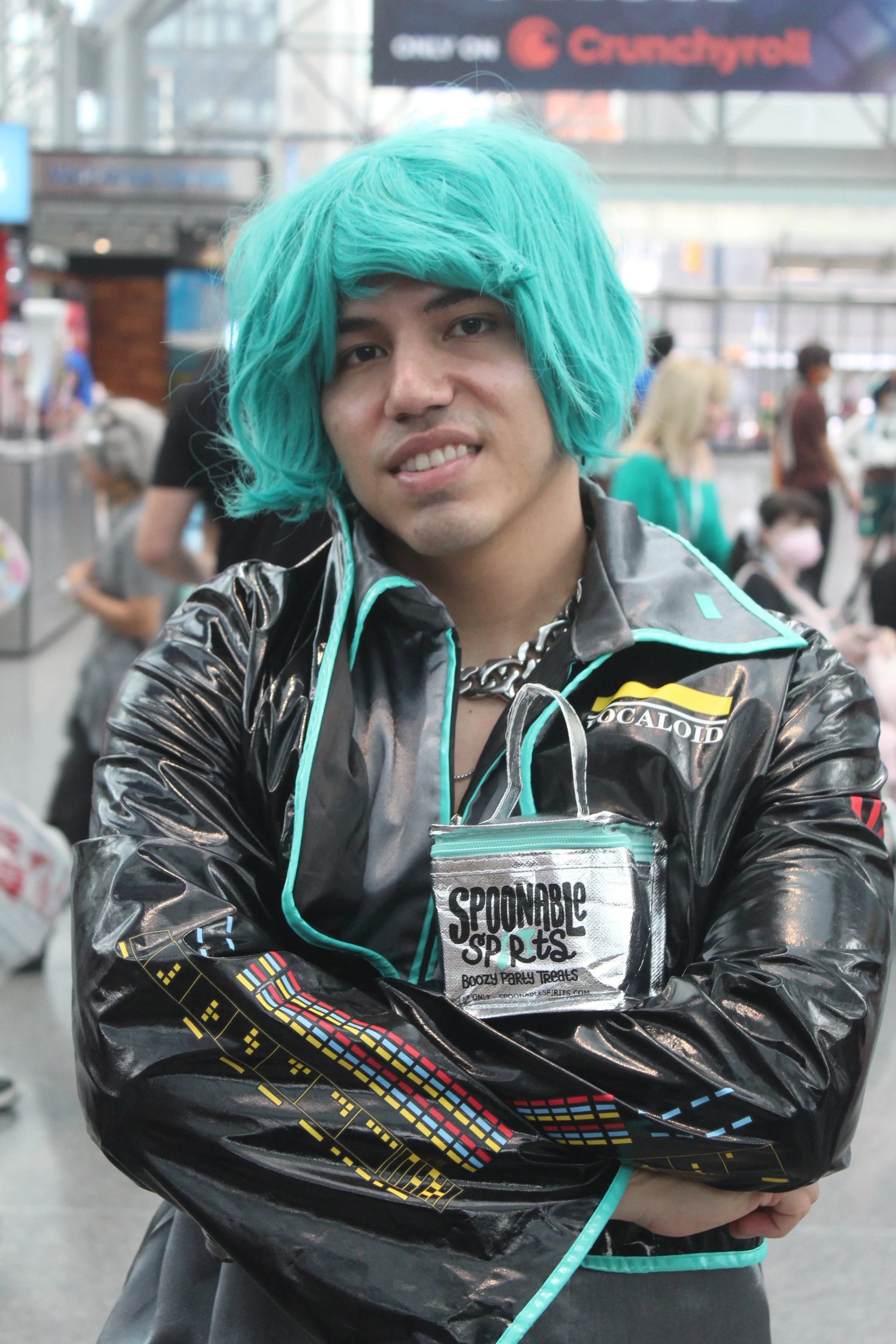

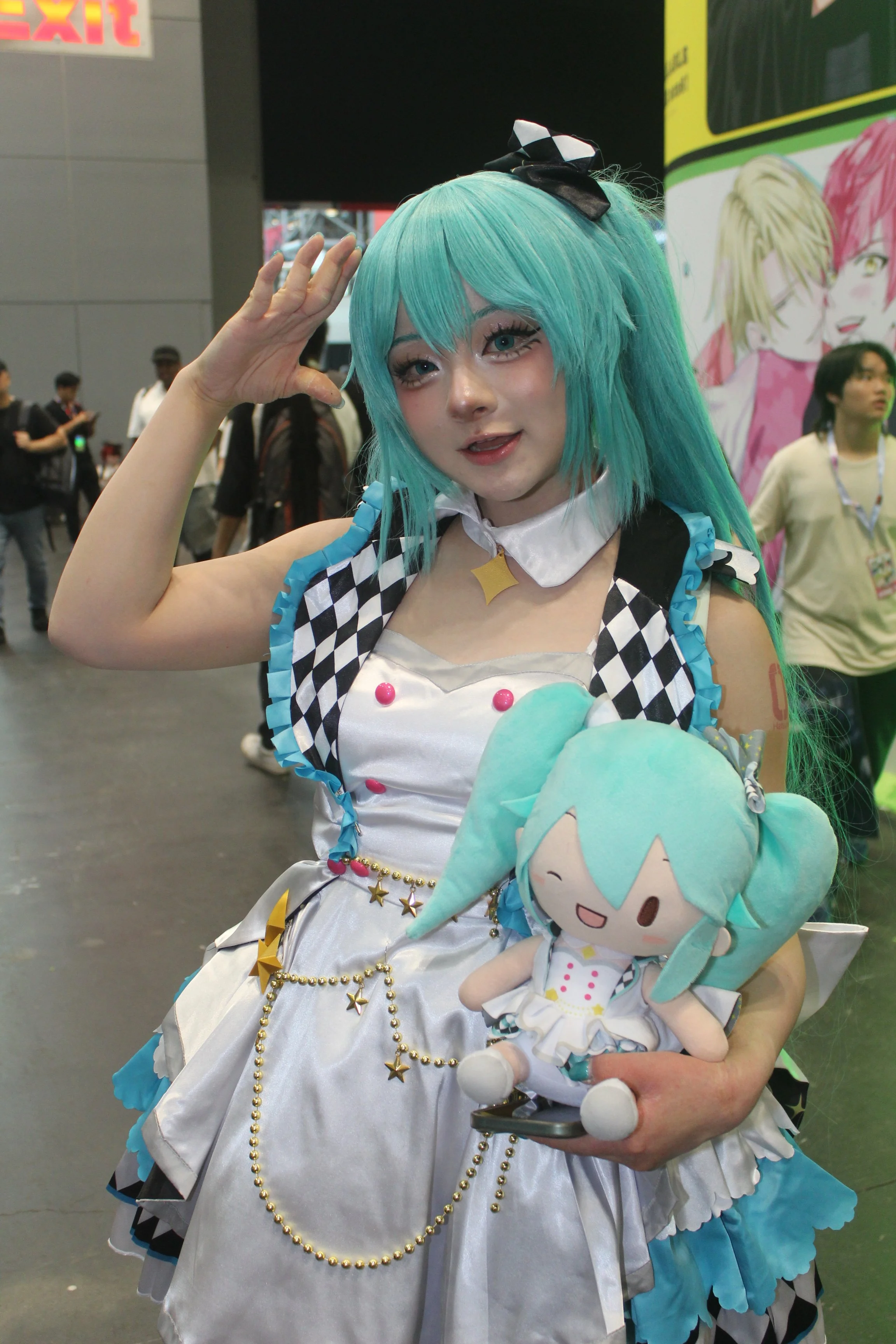
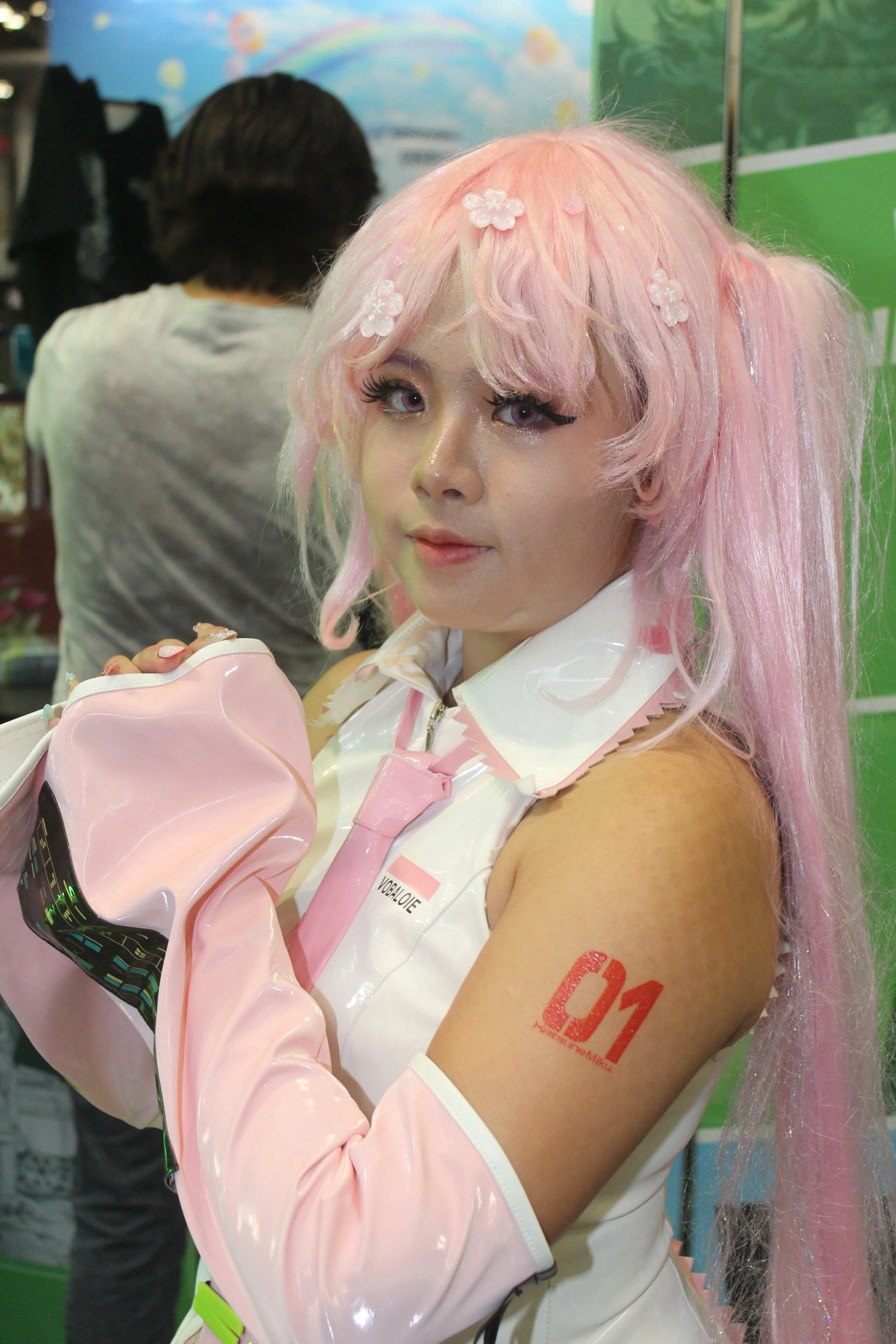
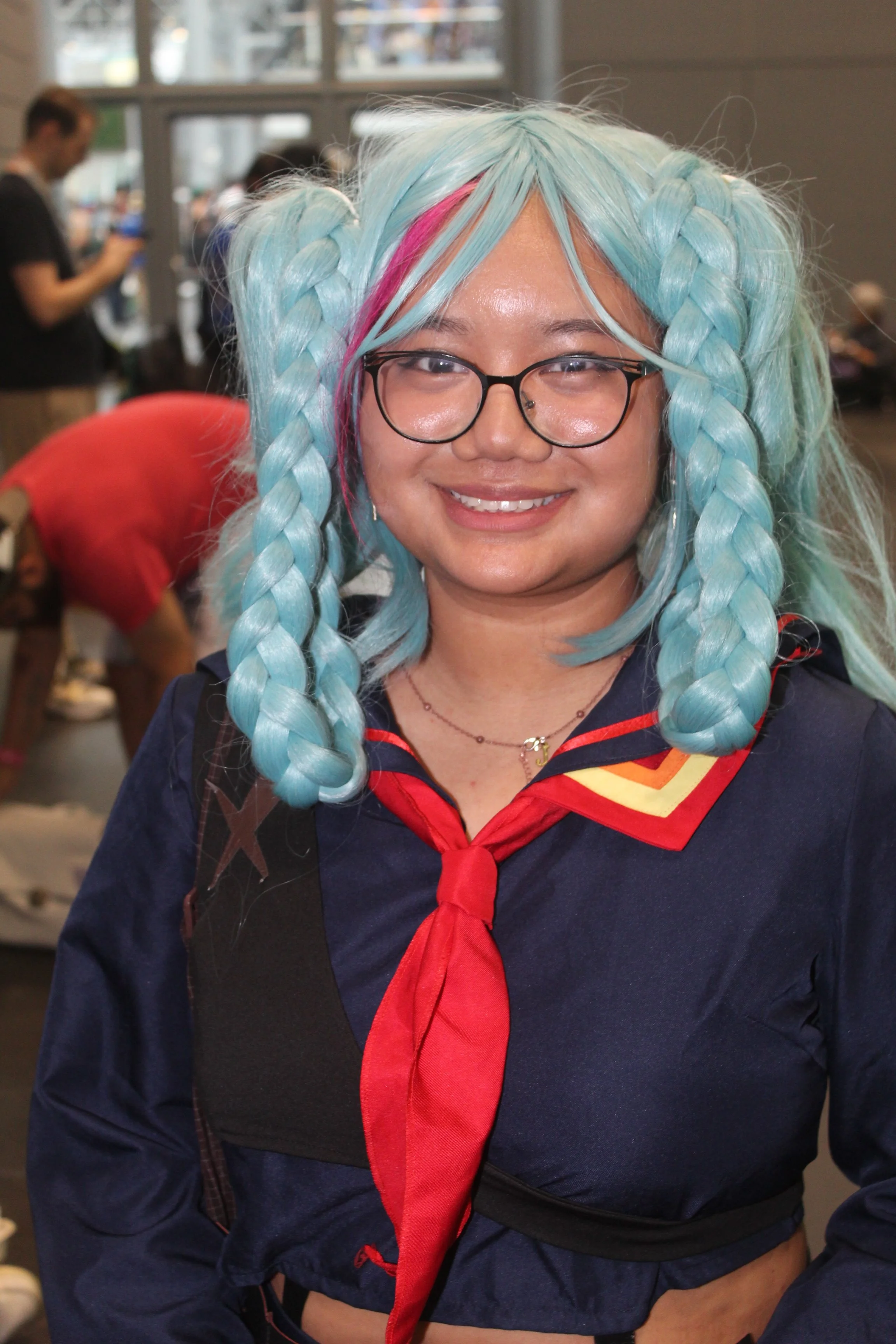
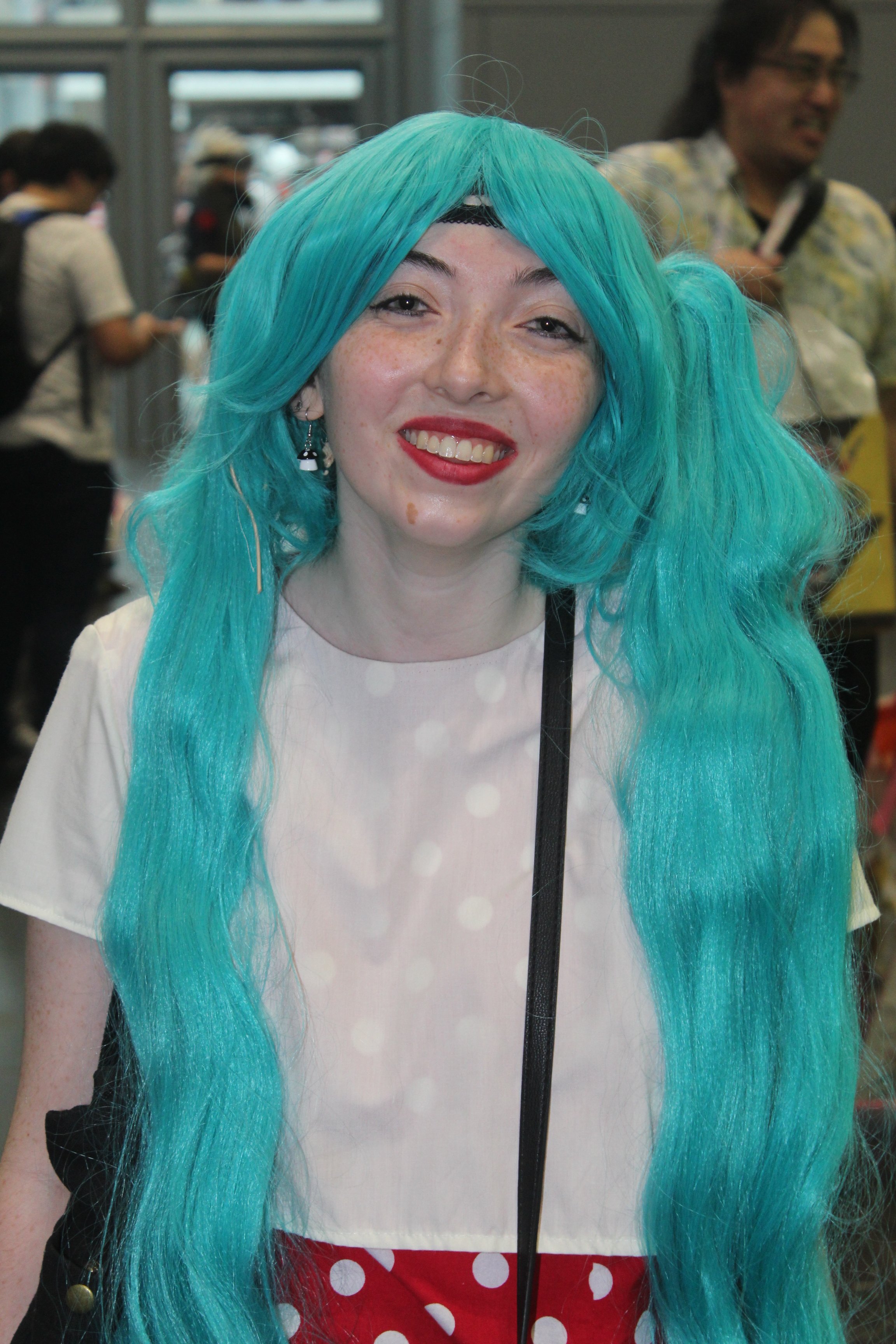
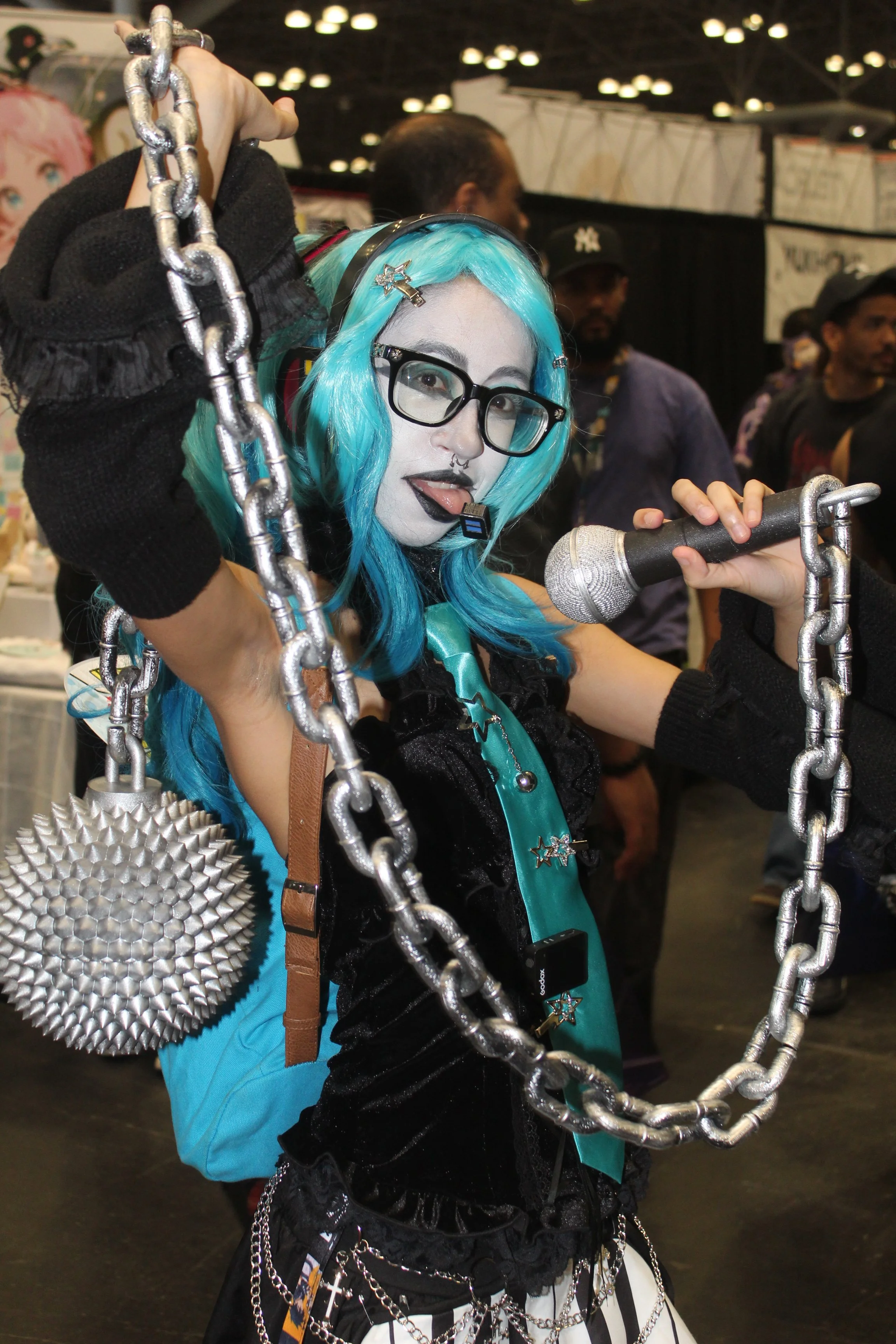
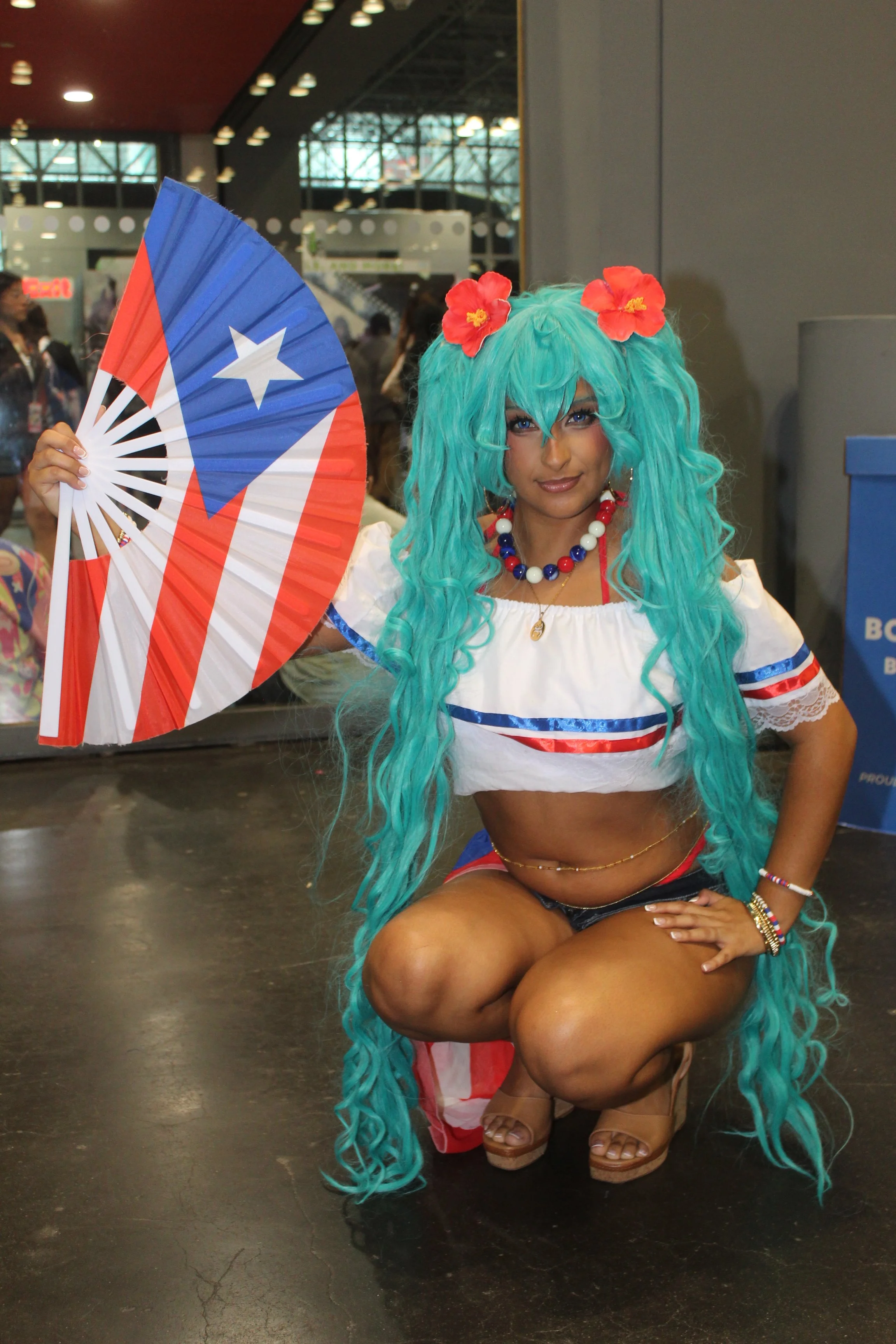

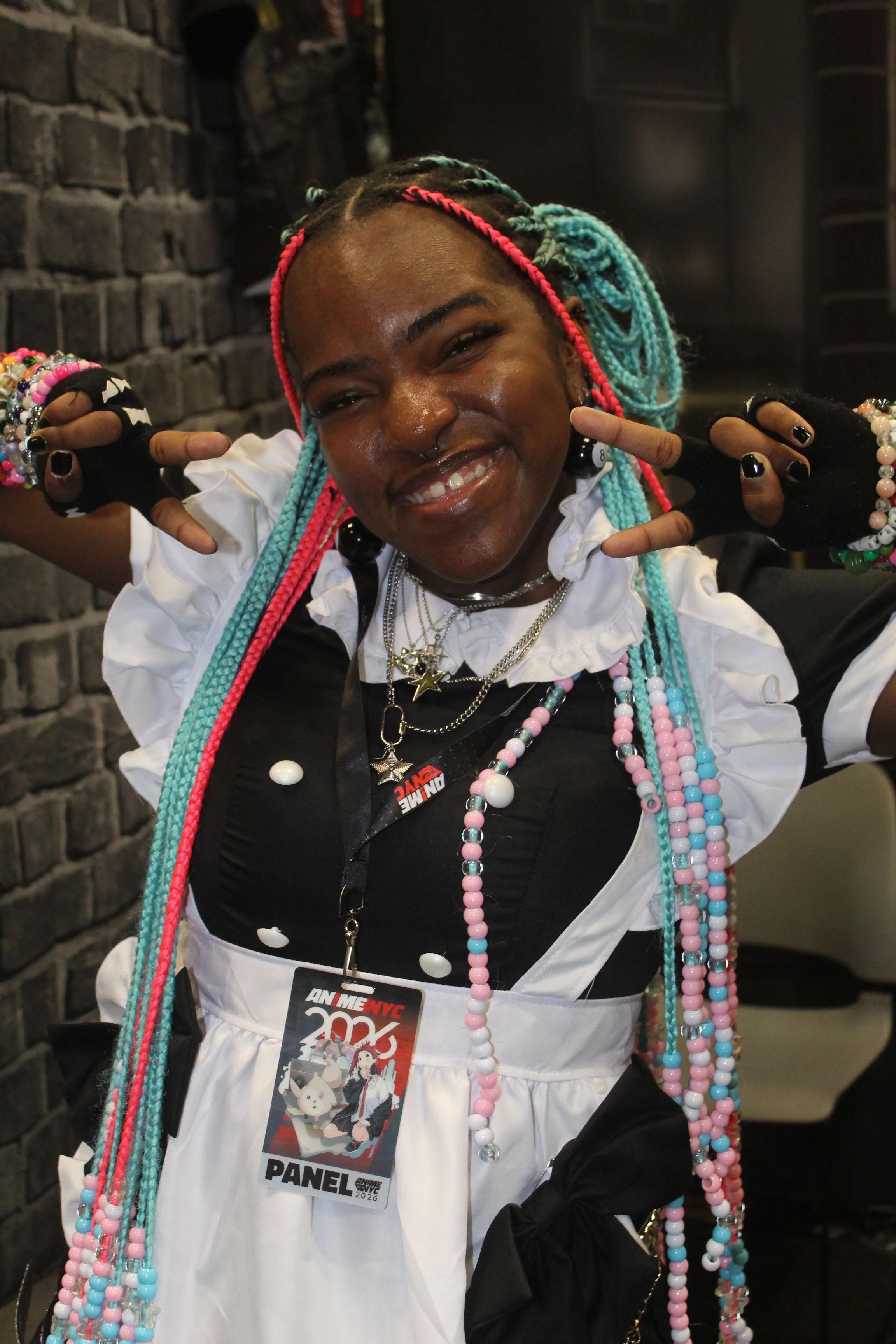
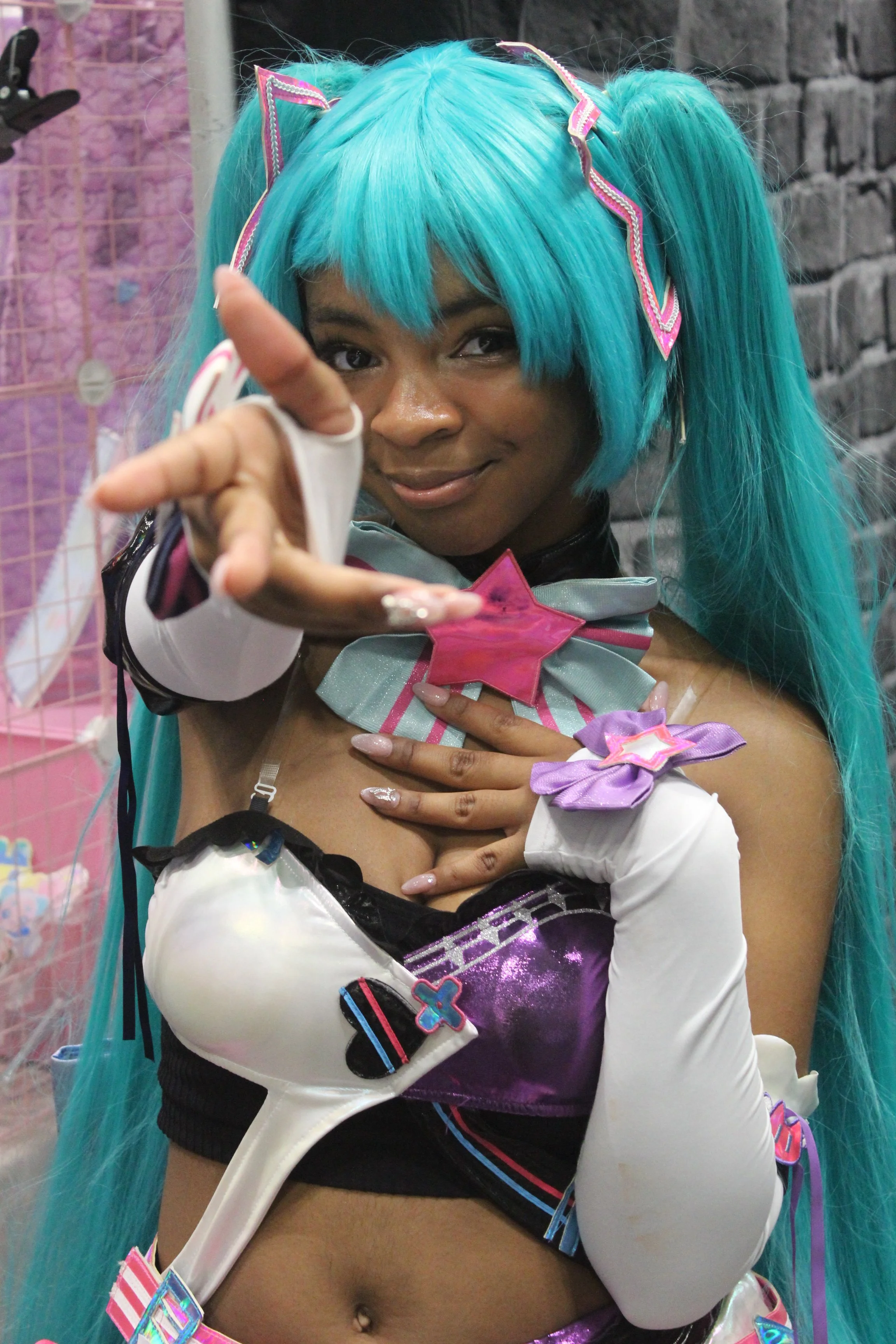


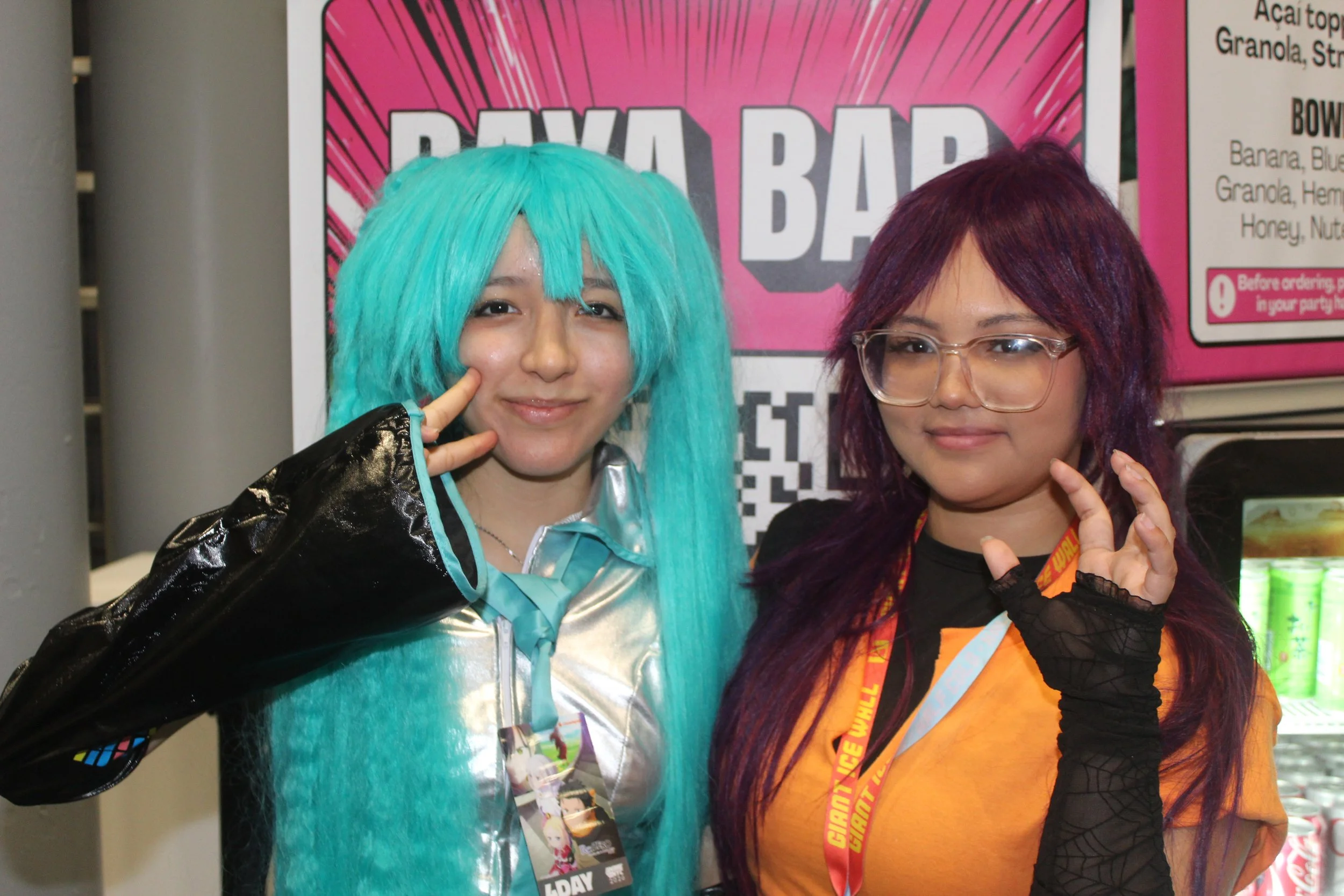
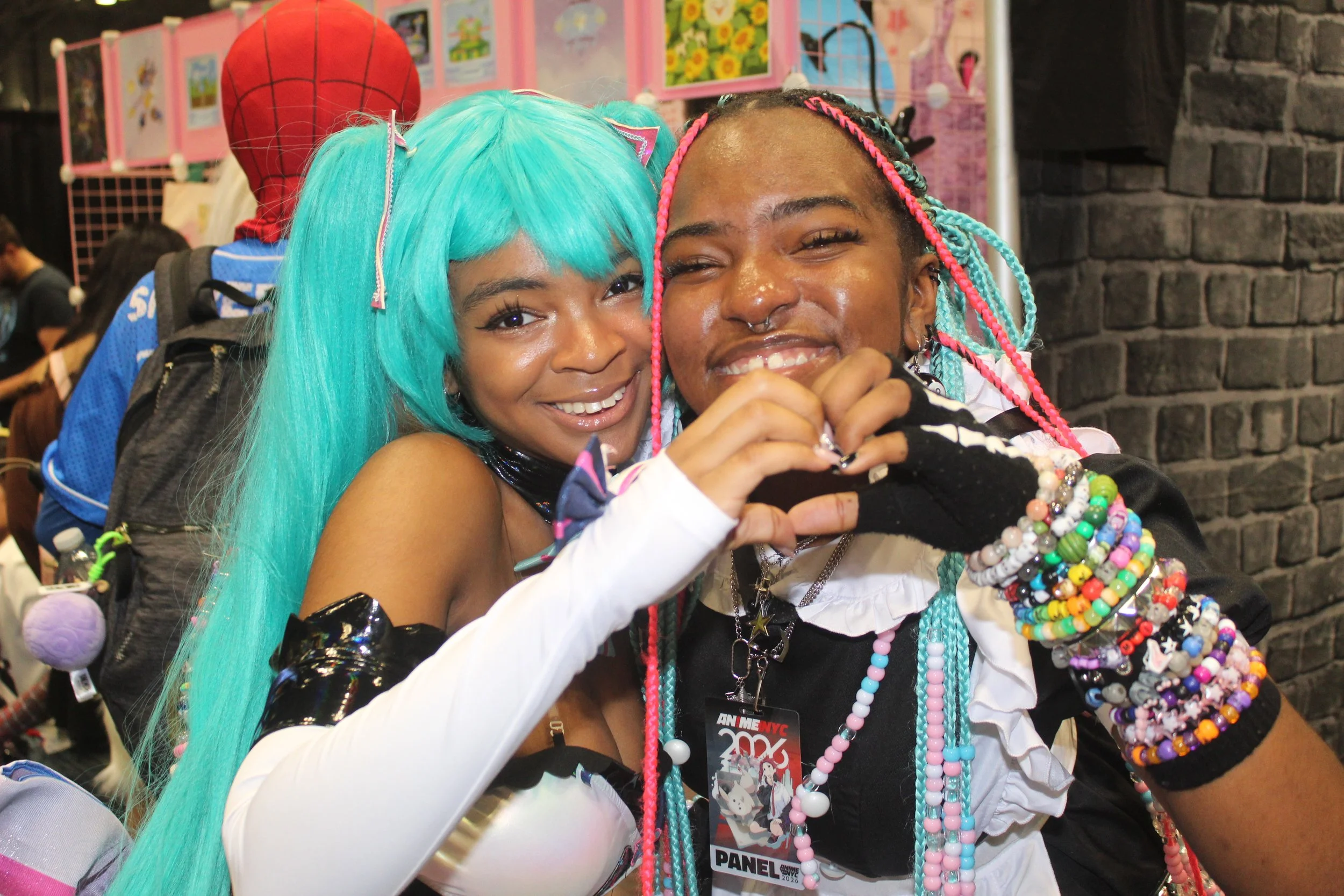
Hatsune Miku Squad Goals
〰️
Hatsune Miku Squad Goals 〰️
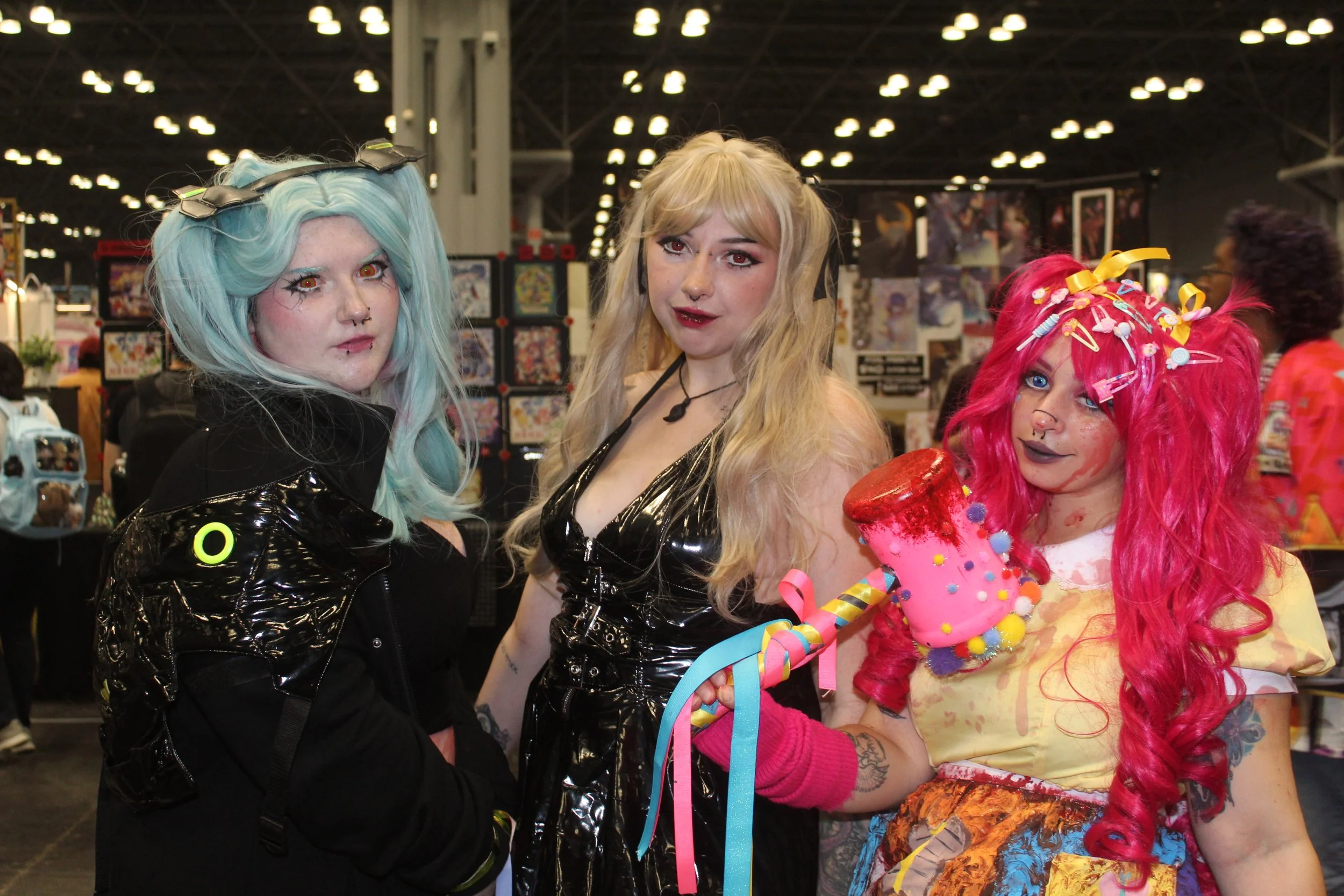
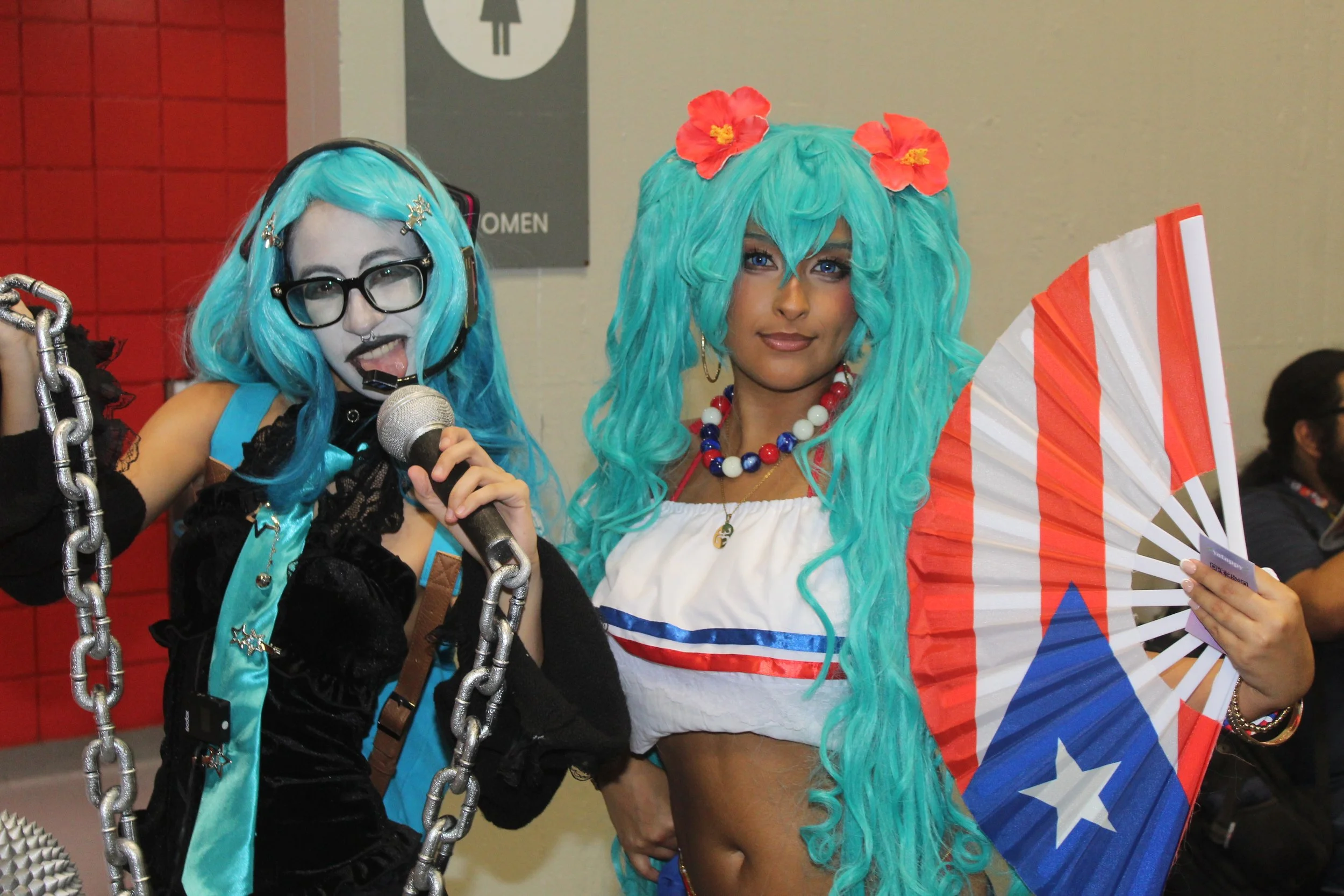

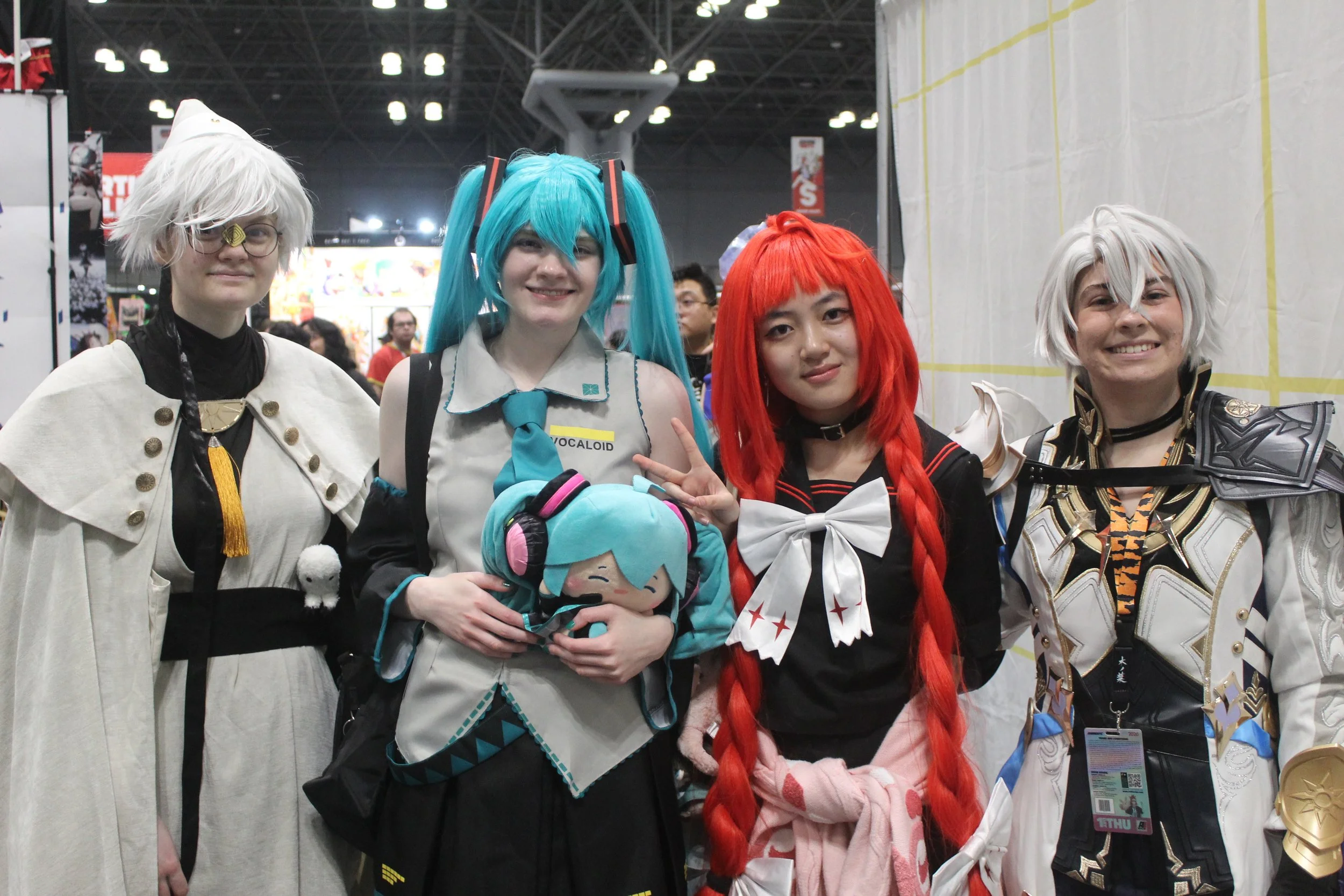

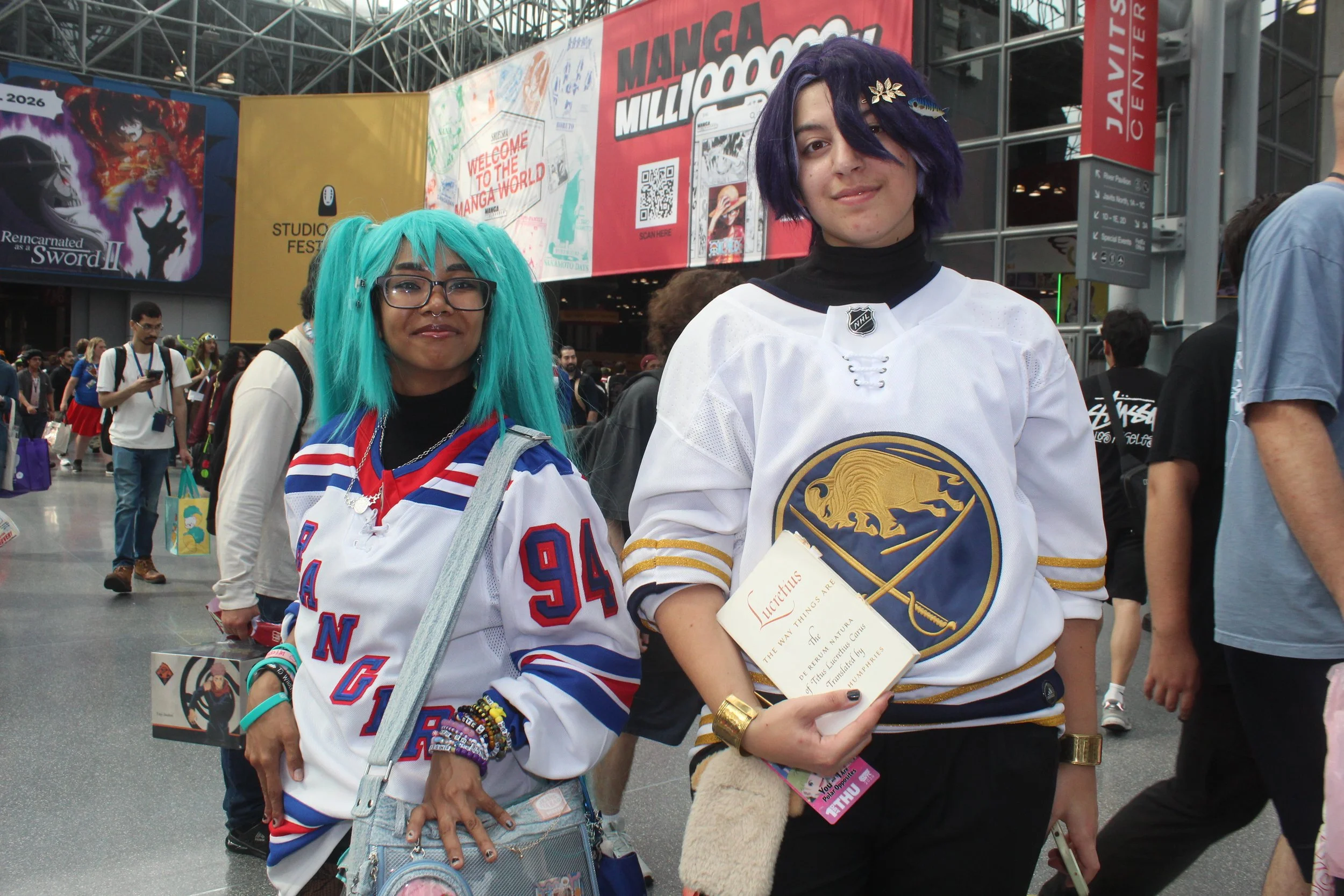

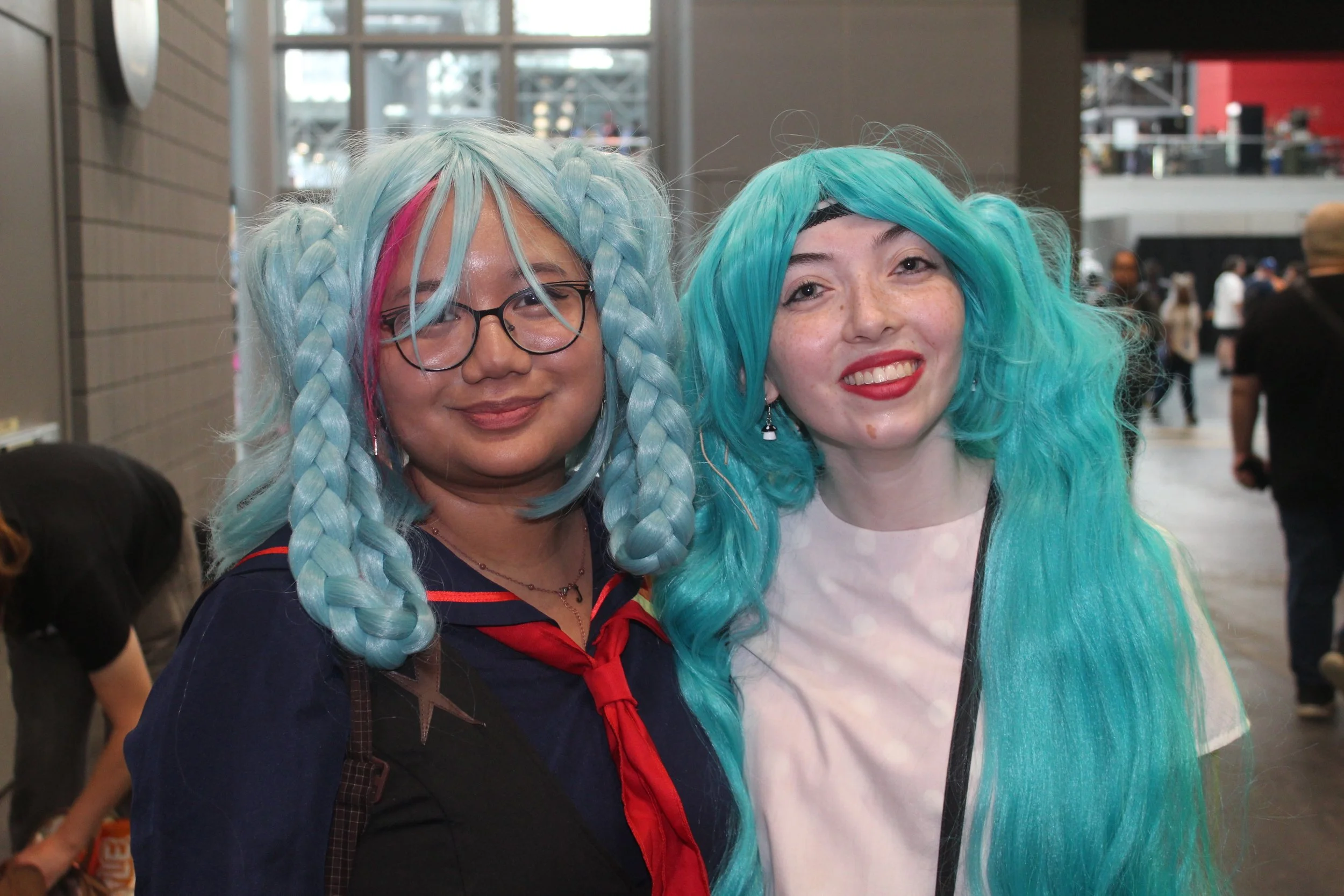
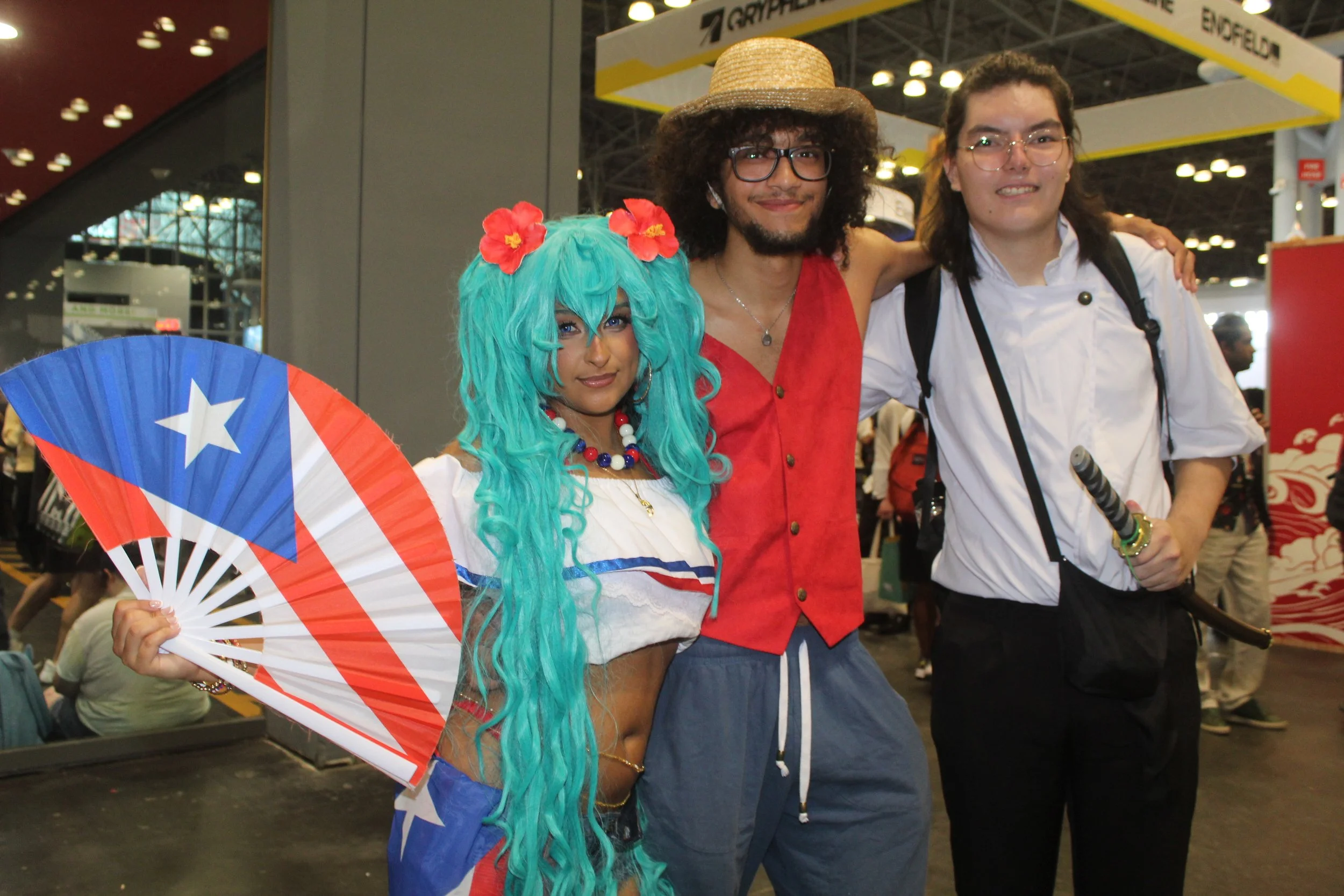
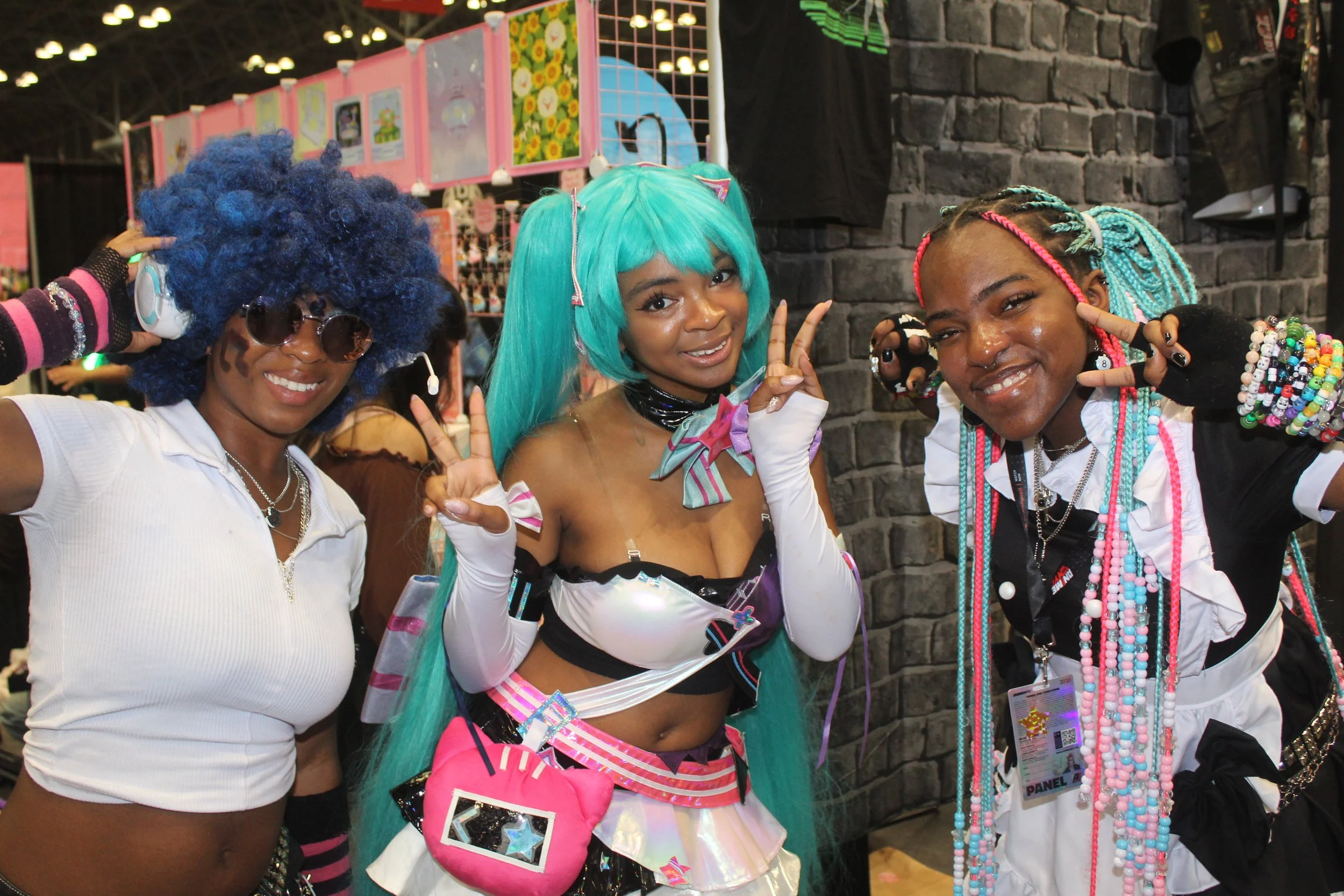
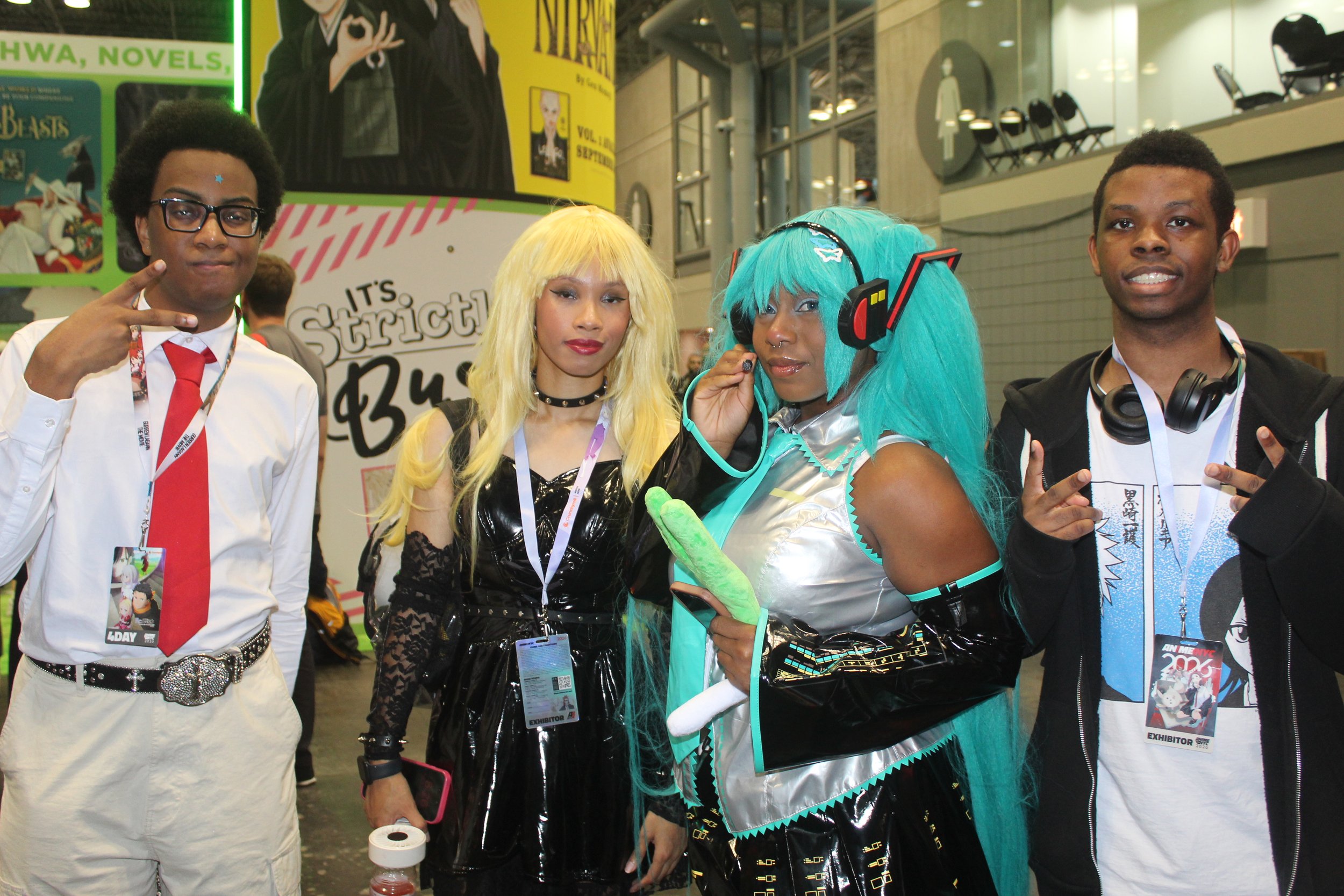
Fandom of Miku’s Sekai
AnimeNYC also celebrated Hatsune Miku by celebrating the hit rhythm game, Hatsune Miku: Colorful Stage! on the main stage. Featuring Tomori Kusunoki (voice of Kanade Yoisaki) and Tanabe Rui (voice of Mafuyu Ashina), fans were able to listen to music and enjoy any new and upcoming developments with the vocaloid franchise......and they were treated to an after party. I, unfortunately, did not attend. Instead, I went to the cosplay meetup to see not only Miku, but other famed vocaloids and observe the fandom experience.
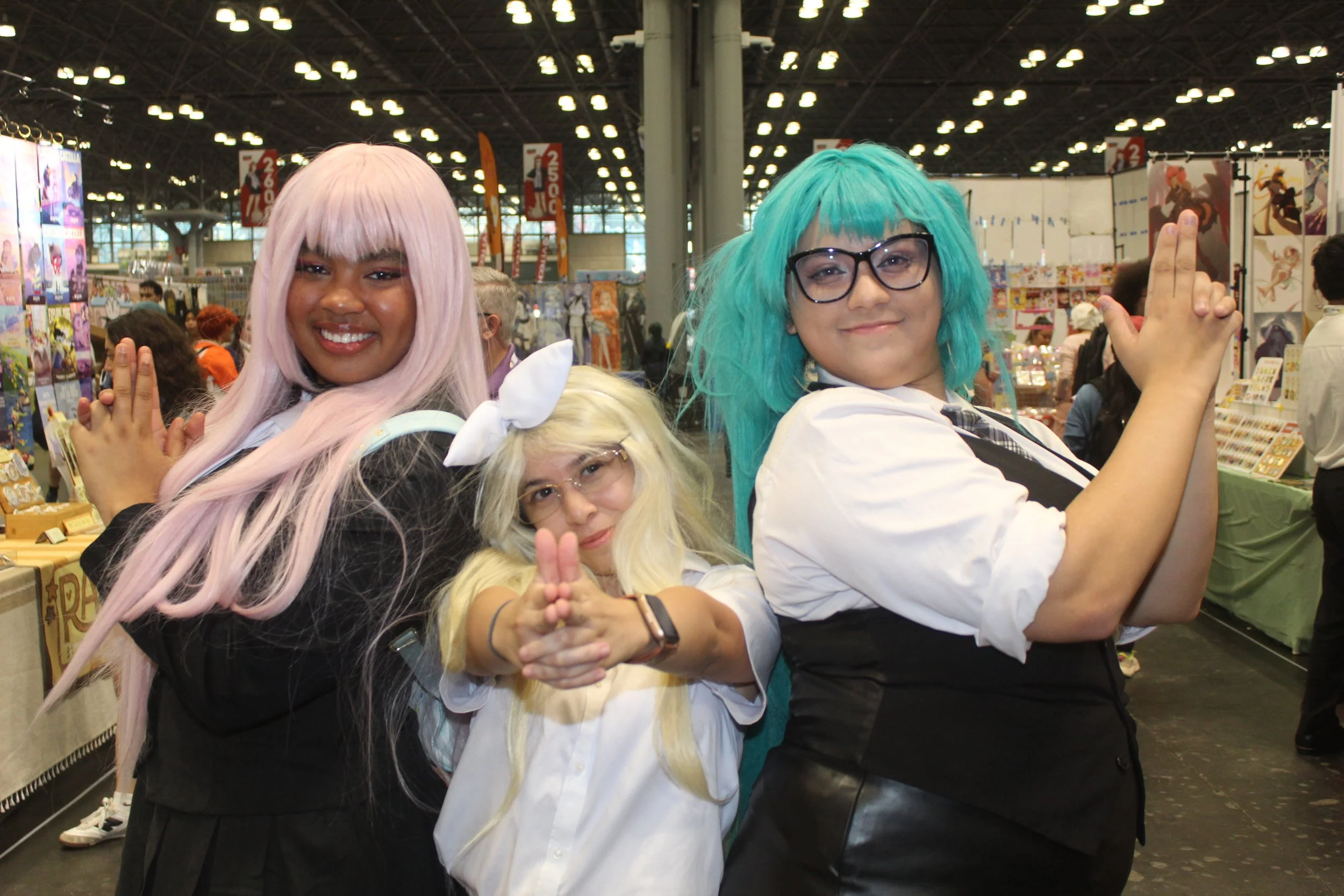
As the Vocaloids met at meetup destination #3 of the river pavilion, I was able to learn about the different Sekai versions of Hatsune Miku as well as her comrades.
Virtual Singer
Organized by the fandom, guests came together to pose as their favorite Vocaloids and discuss their love of the characters.
Final Thoughts.
AnimeNYC continues to be the central hub on the east coast for anime and manga insights. However, this convention is more than just a gathering and a showcase of the latest global media being introduced to the world. It is a waystation for the exchange of shared knowledge, discussion of global trends, a loving community, and a way to see innovation within the anime and manga fandom.
Iconic characters, like Hatsune Miku have helped fans of the culture become active participants and creators, making the popularity of Vocaloids like Miku and others eternal.
Another example of eternal characters within the anime/manga space?
Goku, Naruto, Vegeta, even Eren Yeager have transcended beyond media to become iconic creations within their own right with their identities, nuances and personal beliefs cemented into the lives of its fanbase. However, this is a conversation for another day.
Respect to AnimeNYC, Crypton Future Media, Hatsune Miku and, of course, the fans as they are the magic that continues to keep this convention and these iconic characters alive, through their own personal beliefs and love for their favorite characters.
Also, Happy Anniversary Hatsune Miku.
Respect.