
Devil May Cry - Reflecting on Dante & Vergil's Humanity and their Sibling Rivalry
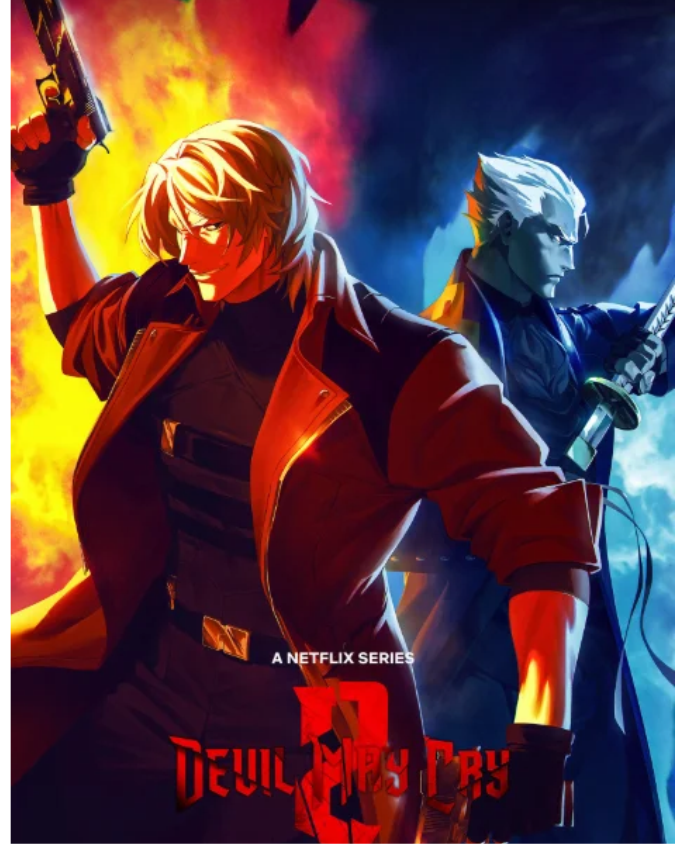
Netflix’s Devil May Cry season 2 is filled with action, profanity, blood, and gore. Dante the sword slashing, gun shooting stylish half-human, half-demon hybrid, voiced by Johnny Young Bosch is accompanied by his brother Vergil, who is voiced by Robbie Daymond. Together the two brothers must come together to stop a looming threat from destroying all of humanity while also rekindling their broken brotherly relationship.
Here, Netflix’s Devil May Cry uses the relationship between Dante and Vergil to explore sibling rivalry as more than just “two brothers fighting.” Here, their conflict is rooted in trauma, identity, and different responses to loss, with both, humans and demons, questioning their own humanity.
Differences
Dante and Vergil represent opposite outcomes; the show presents the brothers as two sides of the same coin:
They never met their father Sparda.
They lost their human mother.
They inherited their demonic power from Sparda and as a result are outcasts among humans and demons
They grew up surrounded by violence, but they react differently to it.
For Dante, he leans toward protecting people and holding onto empathy while Vergil becomes obsessed with strength and control (which is further emphasized by the torture he received by the Uroboros and the training received under Mundus). Their rivalry works because neither brother is completely alien to the other. Each one stands for a path the other could have taken if their circumstances were different.
One focal point in the series is that unresolved grief can turn into an unhealthy rivalry matched with intense competition. Vergil interprets weakness as the reason their family fell apart, so he chases power; whereas Dante’s coping mechanism is humor, reckless behavior, and protecting others. Overall, their fights are really arguments about how to survive pain, what strength means, and whether emotional connection is seen as a weakness or a source of power.
The show also frames Dante and Vergil as two competing viewpoints:
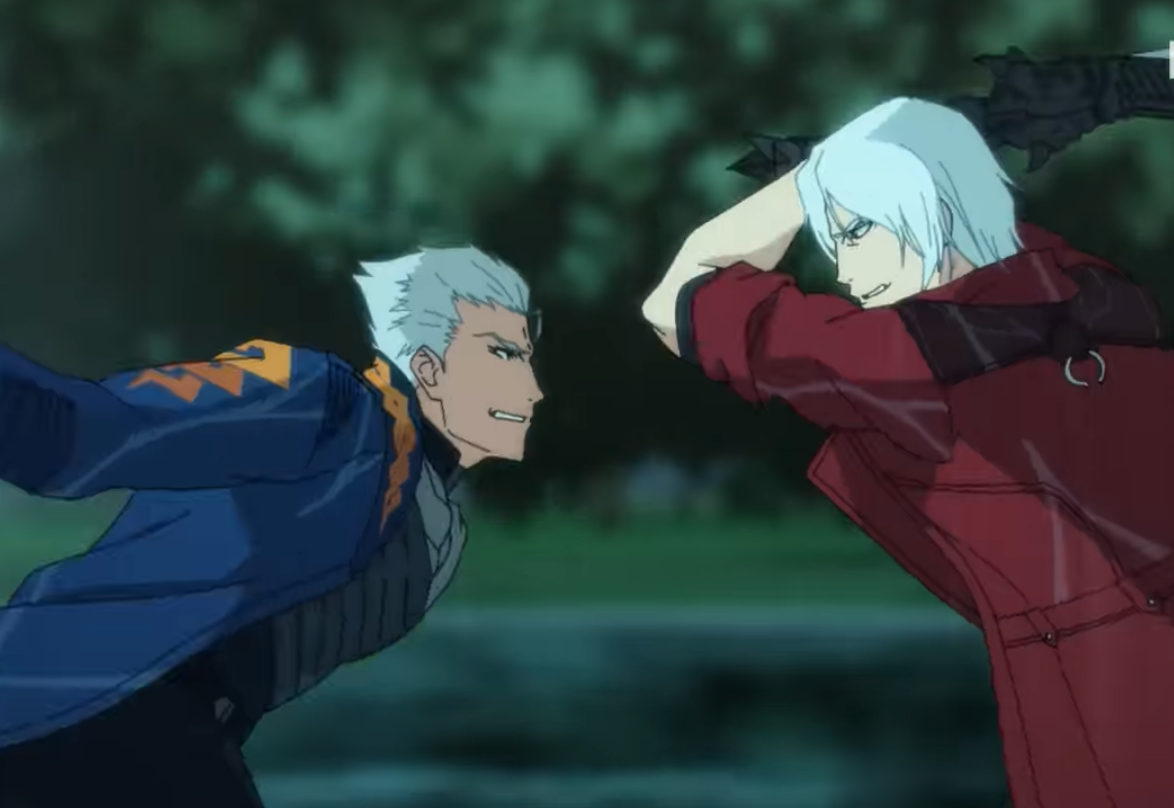
Therefore, every battle between them is also a debate over their identity and morality. Their rivalry throughout the series becomes emotional, philosophical, and physical, with the themes occurring separately and simultaneously throughout the show.
Despite their painful past and their sibling rivalry, the brothers still care about each other underneath the violence, which makes the conflict even more tragic. Instead of the simple good-versus-evil troupe, Season 2 leans heavily into their pain by showing Dante and Vergil that confronting their shared history and calling out their insecurities to each other while moving further apart, makes for good television. Here, the show implies that the real danger, and hope for saving the world is not their demonic power, but what happens when family bonds are replaced by resentment, pride, and unresolved grief while facing these conflicts head on.
Humanity
Despite their supernatural status, the conflict between Dante and Vergil is completely human. Vergil seeks power to avoid feeling vulnerable while Dante seeks connection as he masks his pain with humor, followed by his compassion. These are recognizable human coping tools as the series highlights that demons too can experience the same emotional moments as human beings.
Here, in DMC, humanity is not a biological construct. Multiple characters from both sides (humans and demons) display both, good and evil dispositions. Some humans fear being used or destroyed by demons, while demons fear weakness, being rejected, and annihilated from both humanity and their own kind. Humans torture Demons because they inherently believe that hell and the devil are just evil while demons kill humans because humans constantly try to force their ideals onto them. With each side justifying their brutality by claiming the other side is inherently monstrous, this argument follows the Pot meets Kettle idiom. Either way, it’s all the same color.
Sidenote: One major difference between the video games and the Netflix series is that the show pushes the characters in a political and social direction as DMC fans noticed that the demons represented in the series are oppressed refugees rather than inherently evil creatures.
Dante also proves that being born a demon doesn’t make you evil and that your morality comes from your actions, while Vergil leans heavily into the idea that trauma and ideology shapes one’s identity. This contrast reinforces the message that two people can come from the same bloodline and still be morally opposite.
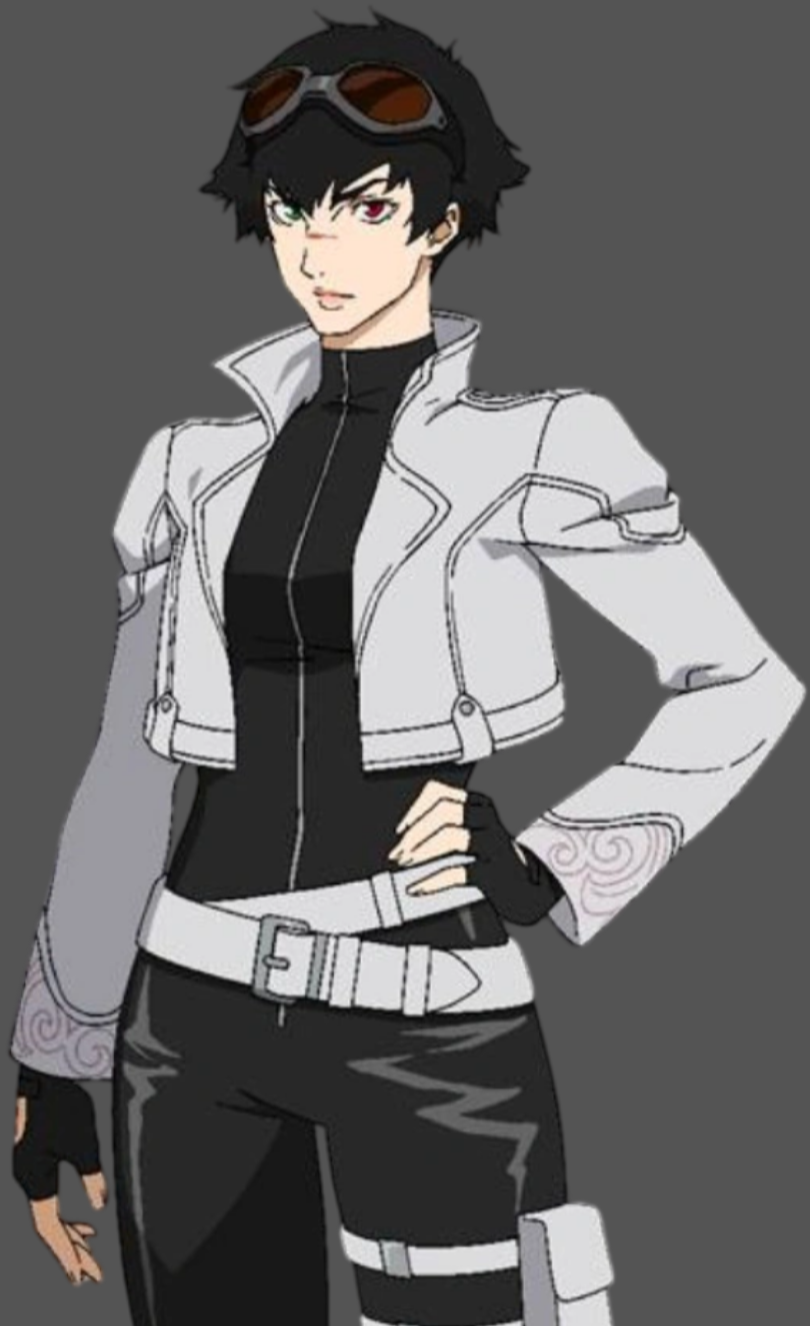
Mary Ann “Lady” Arkham
This viewpoint doesn’t just apply to half human/demon hybrids, Mary Ann Arkham, also known as Lady, is a human Devil-Hunter, (voiced by Scout Taylor-Compton), who starts the series with a deep hatred toward demons because of the trauma she suffered after losing her mother to a demon as well as the government conditioning she received from Vice President Baines. As the series progresses, she begins to question whether all demons deserve extermination. She slowly starts to realize that some humans are more monstrous than the demons they hunt and maybe exterminating them could be a possible solution. Her arc is important in season 2 because she learns that judging entire groups by the origin isn’t the best way to save the world. .
This lesson also extends to demons as well, especially with Dante’s and Virgil’s dad, the demon Sparda. Even though he is a legendary figure in the Netflix series, Sparda is still the heart of the series as he was the demon who chose to protect humanity instead of conquering it. The point of Sparda’s story has always been that morality is a choice and evil, despite being a powerful demon is not a preordained destiny.
Final Thoughts
Devil May Cry uses its supernatural setting to argue that “demosn” and “humans” are unstable categories. What matters is how individuals respond to suffering, power, and connection, not what species they belong to. Dante and Virgil’s sibling rivalry reflects that. Both are half-human and half-demon, yet their different responses to trauma, loss, and power demonstrate how identity is shaped by their choices rather than blood. Throughout the series, being human is more about caring and protecting rather than its biological term. Some humans, mostly the individuals in government and big corporations, fail some of those qualities, while some demons demonstrate them. This irony is central to the story as humans and demons both pursue control, survive, and find meaning in their purpose.
Mary Ann Arkham said it best at the end of season 2, “In the end it’s not our blood that defines us, it's our choices.” That one quote perfectly describes the underlying message of the series as both demons and humans make questionable choices that define their humanity and also asks the question, “Is humanity an inherited condition or is it something acquired?”
Just a thought.