Hell’s Paradise: Where Survival, Redemption, and the Tao Collide
2026 is starting off with a bang by dropping multiple returning titles including Jujutsu Kaisen, Fire Force and Frieren: Beyond Journey’s End, but one series that has gone under the radar this year would have to be the anime, Hell’s Paradise.
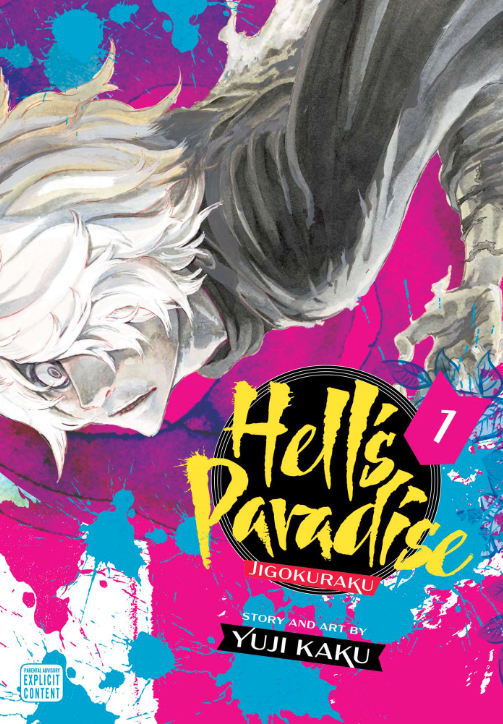
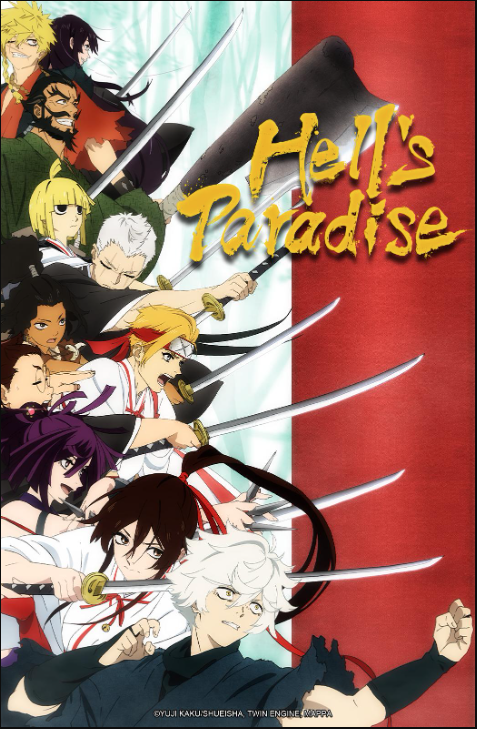
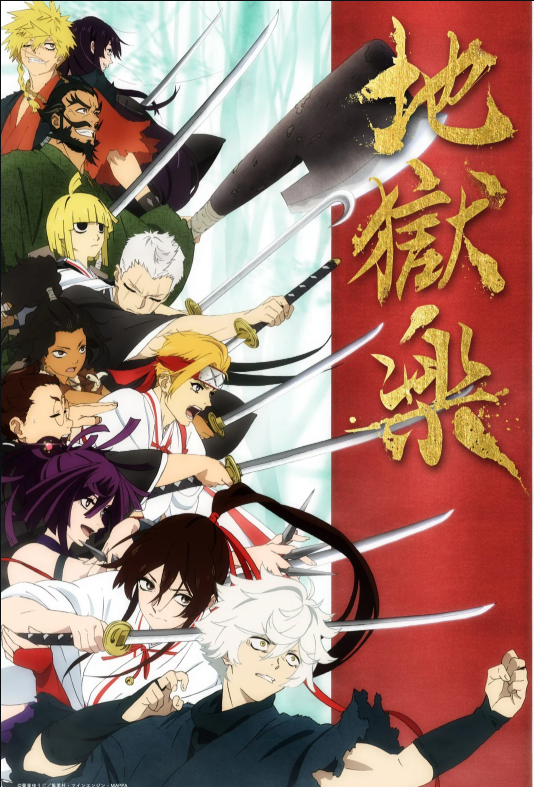
Hell's Paradise is a dark fantasy, action, adventure, and historical Japanese manga series by Yuji Kaku. The central protagonist is a ninja assassin on death row, named Gabimaru, who has the chance to win his freedom if he can retrieve the elixir of immortality from the mysterious and dangerous island of Shinsenkyo, alongside other death row convicts, and their executioners. The series was in Shueisha's Shōnen Jump+, which ran from 2018 to 2021 and has a total of 13 volumes, with an anime adaptation by MAPPA that premiered in 2023 with the English version licensed by Viz Media. From first glance, it appears like another deadly anime story, but the moment the series begins, deeper themes start to emerge.
Survival
The series constantly asks what does it mean to survive and what are you willing to become to achieve that goal? On the surface, survival is immediate. The island itself is hostile and unpredictable. Here, nature mutates in grotesque ways, creating constant tension with the island’s visitors. The message is clear, survival requires abandoning morality. Many characters start with this ruthless mindset: kill or be killed, but the narrative starts to change. Those who cling only to self-preservation will fall and, in contrast, characters who form bonds, those who risk themselves for others, endure.
The series highlights that pure selfish survival is unstable. Survival here isn’t about being the strongest but evolving from that primitive trait, leaving those who refuse to change, behind. This ability mirrors the island itself as everything is constantly evolving.
Beyond the island’s physical, yet threating, abilities, the story also demonstrates that emotional numbness may help someone endure pain, but it doesn’t help them truly live. The Elixir of Life promises eternal existence, but the Tensen represent a twisted version of “survival” which is endless life without growth or meaning. Their stagnation contrasts with the humans, who struggle, suffer, and strive for opportunities to grow.
Here, true survival requires mortality, with growth coming from the possibility of death. Initially, the criminals are pitted against each other, but over time, alliances form, and survival become communal rather than individual. With Hell’s Paradise, survival is about adaptation, not domination, strengthened by connection.
Redemption
One of the earliest things we learn when watching this series is its violence, but beneath its brutality and horror, the series deeply connects with redemption; not as simple forgiveness, but as self-confrontation.
At the start, many characters claim they don’t fear death and that death is just a part of life. Gabimaru, himself, believes he’s an emotionless killer who deserves to be executed for his crimes while other convicts embrace their identities as monsters. Once our cast reaches the island, they are forced to confront the harsh truth that none of them wants to die and that they too are running from their inner demons.
SideNote: While the island itself is distorted, with characters warped by an obsession with eternal life, the theme of redemption in the series is about accepting mortality.
Gabimaru’s desire to return to his wife becomes the catalyst for his redemption. His will to live isn’t selfish, just rooted in love. The series reframes redemption not as punishment, but as a rediscovering of one’s humanity. It’s the same for every character as their past crimes, personal traumas, familial betrayals, and longing for personal bonds comes to light. Redemption here is about reclaiming agency and choosing differently when given the chance. Even the Asaemon executioners who see themselves as righteous beings start to question their superiority.
The series suggests that fate and their roles do not define a person, their decisions do. Here, characters redeem themselves not by escaping death, but by choosing sacrifice, protecting others, and acting with sincerity instead of being led by ego as some characters doubled down on their cruelty.
TAO
The setting isn’t just hostile, its symbolic as the series leans into Taoism and the Buddhist ideas of balance and harmony.
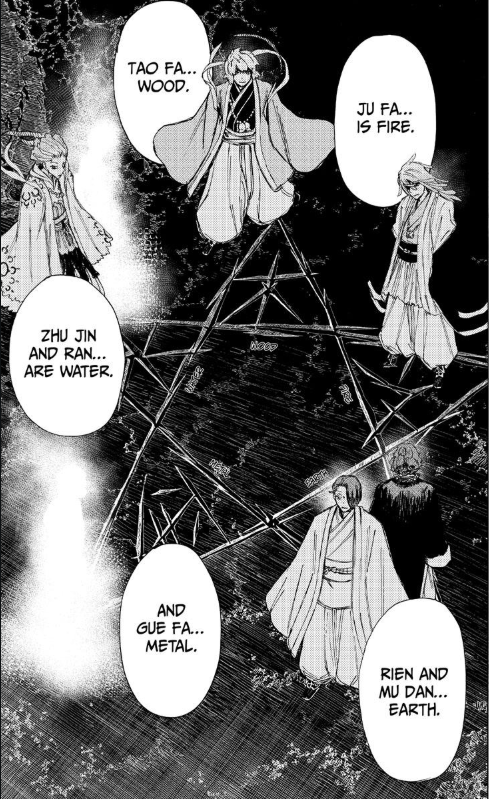
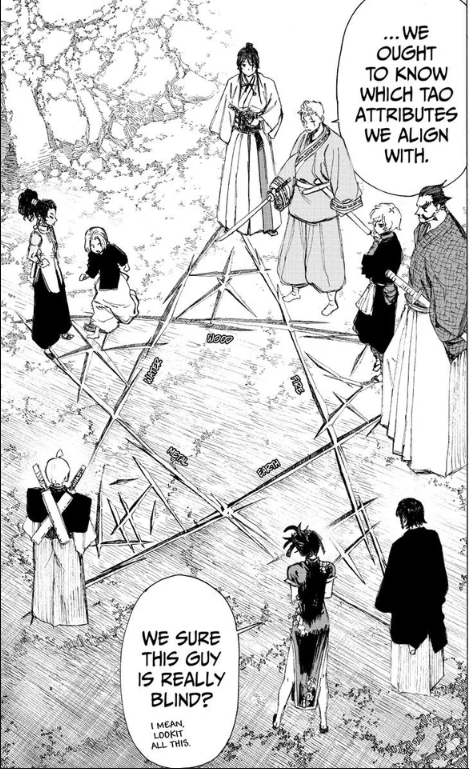
SideNote: Tao here represents the life force that exists in all things: the living, various objects and spiritual entities. In Hell’s P. learning to manipulate Tao allows characters to gain superhuman abilities and interact with the force of the world.
While the concept of Tao, the natural flow of the universe, becomes the basis of the power system, the balance of yin and yang determines strength, weakness, and survival in battle. Tao here is not just an aesthetic; it shapes the rules of reality, and understanding Tao is equivalent to understanding existence itself. Those who begin to understand their own nature achieve greater harmony with it.
Additionally, Tao is more than just a combat mechanic, it represents spiritual alignment. To use it effectively, characters must accept their weaknesses and, on this Island, knowing oneself is not just philosophical; it’s a necessity for survival.
As Tao acts as a power that is strengthened by physical, emotional, and spiritual connections, Bōchū Jutsu [coitus], acts as a means for characters to grow stronger. Bōchū Jutsu, also known as the Art of the Bedchamber, allows individuals to exchange and balance their energy through intimate contact. This exchange strengthens Tao and helps characters better understand and control their spiritual power.
Final Thoughts
While 2026 is promising to be good year for a lot of returning titles, it would be an injustice to not give this series its due. Now that the series has two seasons under its belt, this series is a top 10 contender for possible anime of the year. Hopefully, people will see this series for its worth and give it the same attention as other big names like Bleach and and hopefully we’ll get a third season sooner rather than later.