MOTU '26: Why He-Man Still Matters.

Erik M. BIZ
When He-Man and the Masters of the Universe (MOTU) debuted in the 80’s, it was one of the first animated series created primarily for first-run syndication rather than a major network. This allowed it to air in many markets across the United States, giving it massive exposure. Fans became addicted to the epic battles between He-Man, Skeletor, and his Evil Warriors. Fans also became addicted to the fantasy world of Eternia and the transformation of Prince Adam into He-Man. The iconic phrase, “By the Power of Grayskull!” became instantly recognizable to millions of fans and would later be a phrase to shape an entire generation.
Some fans not only watched He-Man, many recreated his adventures at home with his action figures. The figures were larger and more muscular than many competing toys; making them stand out on store shelves.
He-Man embodied many lessons that resonated with audiences, through the ideals of courage, responsibility, and protecting others. Unlike many action heroes of that era, He-Man wasn’t a cruel or selfish protagonist. He used his power to defend others and often showed restraint toward his enemies.
Additionally, through the show’s other characters, those heartfelt lessons would further explain the principles of honesty, teamwork, respect, and helping others. Parents also appreciated that the show tried to teach those positive values alongside the action and fight scenes.
By the mid-1980s, He-Man was one of the most recognizable fictional characters in the world with the franchise expanding into comics, books, video games, clothing, lunchboxes, and a live-action film: Masters of the Universe (1987) featuring Dolph Lundrin as He-Man and Frank Langella as Skeletor. He-Man’s popularity continued to expand, cementing its place in pop culture, as references to He-Man, Skeletor, and Castle Grayskull continue to appear in movies, television, and internet memes; even decades later.
Overall, the concept of He-Man and its franchise continues to be successful because it offers more than just action; It combines heroic ideals, imaginative fantasy, memorable characters and positive life lessons. For some children, growing up in the 80s, He-Man was more than just a cartoon, it was a shared cultural experience that defined part of their childhood. And as television evolved, so too, did the interpretation of He-Man, with modern adaptations emphasizing the character's role as a model of healthy leadership and masculinity.
With the 2026 live-action Masters of the Universe, the film continues this trend by promoting positive masculinity through the characters of Prince Adam/He-Man, female empowerment through its feminine characters, and the embodiment of male toxicity through the villain himself, Skeletor (played by Jared Leto).
The movie starts with Prince Adam (Played by Nicholas Galitzine) desperately trying to find his lost sword. Here, Prince Adam is someone who struggles with self-doubt, identity, and belonging. Rather than present his emotional openness as weakness, the movie treats it as part of his growth into a hero. While He-Man is the main attraction, Prince Adam is the voice of reason. Although He-Man is physically the most powerful person in the world, the story emphasizes that violence is not the first choice. Instead, reasoning with others and providing peaceful solutions are the desired courses of action before fighting.
Another theme the movie shows is the importance of responsibility over dominance. For Adam, his journey is less about becoming the strongest man in the world and more about accepting responsibility for protecting Eternia, his family, and his friends. Here, true strength comes from taking responsibility for others rather than trying to control or overpower them.
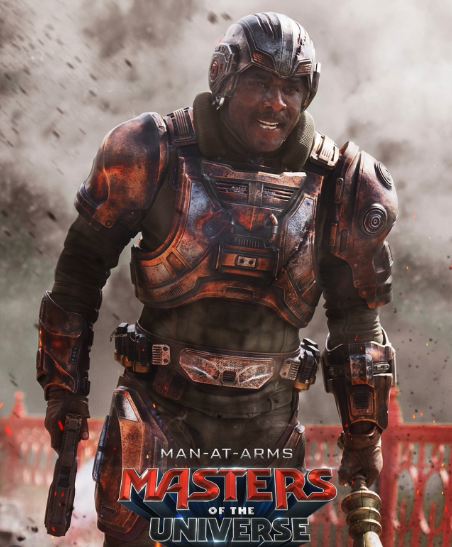
The supporting characters also play a part in highlighting these issues and the movie displays this by highlighting Adam’s bonds with Teela (played by Camila Mendes) and Duncan/Man-At-Arms (played by Idris Elba). One subplot focuses on Duncan learning that his worth is not based solely on his combat ability but also his role as a father and mentor thus rejecting insecurity-driven power.
SideNote: An additional example is when He-Man motivates his fellow soldiers (Fisto, Mekaneck and Ram Man) to embrace their unique abilities and stand with him against Skeletor when they are all at their lowest point as a team.
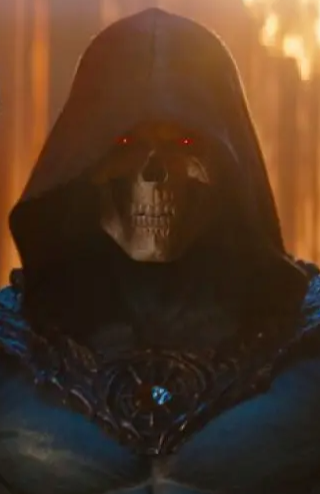
As for toxic masculinity, Skeletor, played by Leto, is the perfect metaphor. Despite being a menace, outright killer, and an extremely powerful villain; he’s insecure, uses fear, control, and domination to compensate for his weaknesses and he believes that the way to win is by torturing and killing people. For Skeletor, he represents the destructive side of masculinity which is rooted in egotism and domination.
This fits the spirit of He-Man perfectly, where the hero’s role was not just to defeat the villain, but to act as a moral compass and protector for all. This is further shown in the film when He-Man offers Skeletor (although he refuses) the opportunity for redemption showing that power is not just physical dominance but knowing that words have power as well.
SideNote: Before returning to Eternia, Prince Adam worked in Human Resources. At first it feels like a throwaway plot to the movie, but it is the movie’s way of showing viewers that problems can be solve by simply talking them out and finding a solution that doesn’t involve violence.
Teela Revised.
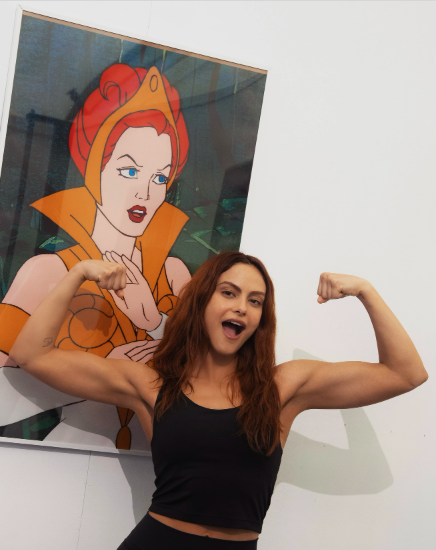
One of the biggest changes emphasized by the cast and filmmakers is that Teela is portrayed as a capable leader in her own right. Teela effectively leads the group during parts of the story because Adam has not yet embraced his destiny and Duncan has lost confidence in himself. As the one directing the mission and keeping the team moving forward, her leadership is something earned through competence rather than familial bonds.
Teela’s personality is shaped by her relationship with her father and how she balances toughness with empathy giving Teela her emotional depth alongside her combat skills. Here, rather than presenting strength as simply being able to fight, the movie portrays emotional resilience and compassion as strengths too.
Overall, the movie portrays Teela as a strong and independent character rather than a damsel in distress or a romantic interest for He-Man. By giving her agency and allowing her to make her own choices, the story emphasizes her individuality and establishes her role as a capable hero.
The filmmakers also, and intentionally, moved away from the more revealing costume designs associated with some older versions of Teela. Mendes noted that the film gave Teela practical armor suitable for a warrior fighting alongside He-Man. This was also a notable move as the film’s decision breaks tradition and shows a newer generation that women can be interesting to watch without their assets showing.
Review
Historically, the movie embraces the lighthearted spirit of the 80s franchise that has long been part of its identity. While the movie occasionally struggles to balance its comedic and dramatic elements, I believe this is an intentional creative choice that reinforces that possible 80s nostalgia. He-Man and Skeletor, a battle as old as time, loved by countless generations.
Although many of the action sequences feel underwhelming, often consisting of little more than characters pushing one another around, the climactic moment in which He-Man completely overwhelms Skeletor with his sheer presence and power is still, undeniably, entertaining.
SideNote: That scene stands out as one of the film’s most memorable highlights and perfectly captures the energy that fans expect from the character.
Overall, the movie’s approach to gender equality is not about replacing He-Man or diminishing the male characters. Instead, it presents a world where men and women can both be leaders, warriors, mentors, and heroes.
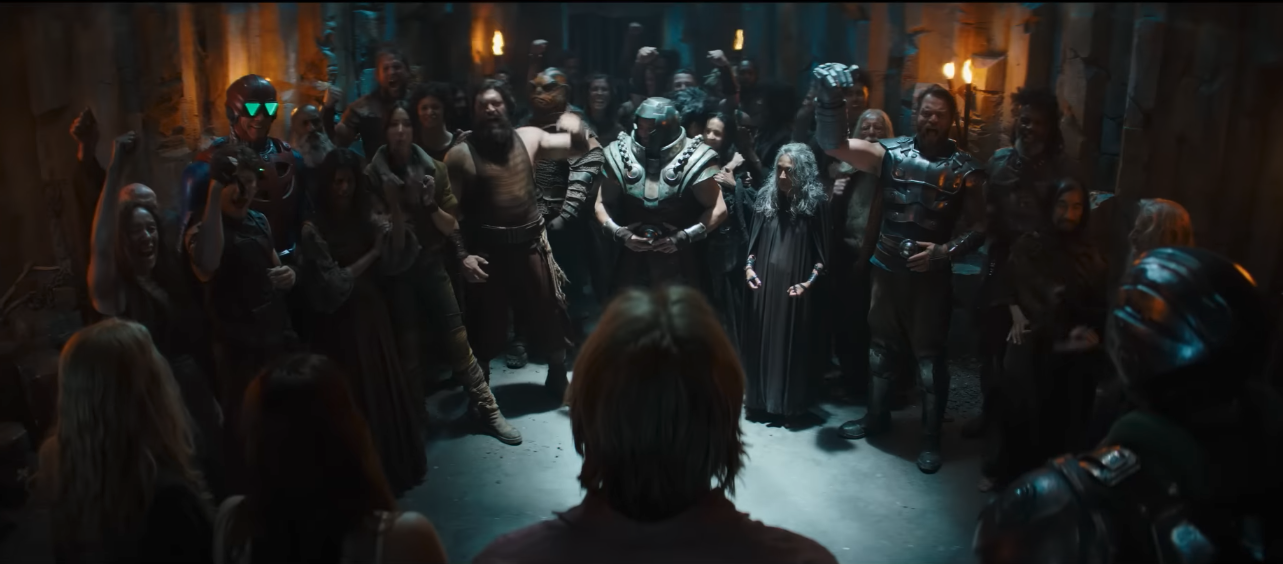
Although, He-Man and his struggle to reclaim Eternia from Skeletor is front and center in the film, we also discover the stories of the supporting cast . For example, the Sorceress, played by Morena Baccarin, Evil-Lyn, played by Alison Brie, and Queen Marlena, played by Charlotte Riley, each have their own subplots, strengths, motivations, and influence over the main story rather than simply serving as supporting character fodder for He-Man and Skeletor.
Decisions like these reflect a broader trend toward portraying both male and female heroes as capable fighters whose value comes from their actions and abilities rather than their appearance. Above all, the movie reintroduces He-Man to a new generation of fans while staying true to its 80’s roots. Staying true to their original personalities, the movie also ends with a homage to the show by having He-Man do his iconic pose with his Battle Cat, Cringer.
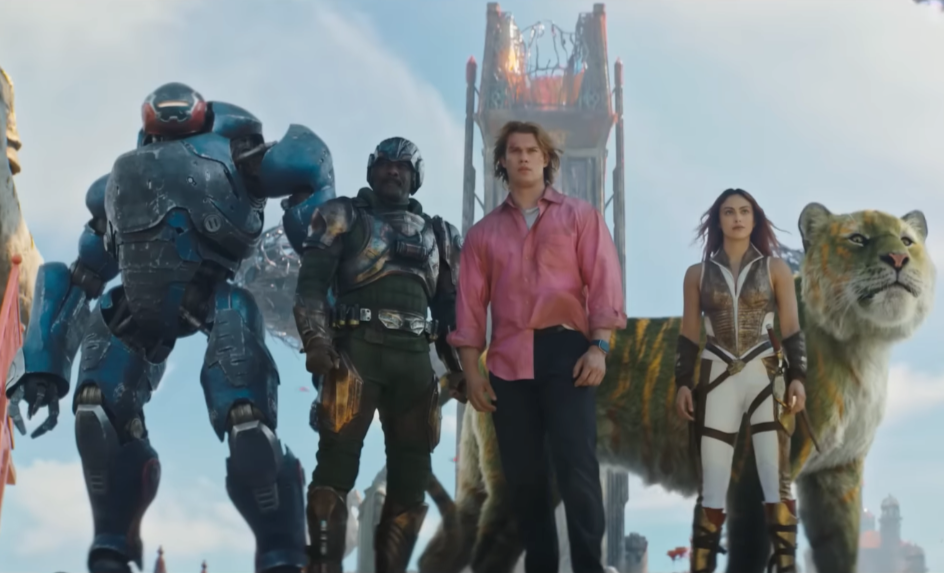
He-Man proves that a hero can be strong but not cruel; caring but not naive; dominant but not intimidating. It also shows that feelings and emotions can be powerful tools in resolving conflict.
Take the moment and reflect (if you saw the movie) where Adam is working in Human Resources or working out at the gym. Many people would say these are unimportant plot points that do not move the story forward, but looking deeper, we see that these scenes carry more meaning. It reinforces the underlying themes of what He-Man represents, a hero who embodies courage, empathy, self-control, loyalty, and a willingness to help others; who seeks peace through words and prepares for war, if need be. Masters of the Universe reminds us that it’s not the battles a person faces that define them, but the character they display and how they respond to those challenges.