
Paradise Records: Welcome to Bobby’s Black Nerd World.
Joseph W.
Bobby Tarantino, whose rap name is LOGIC, and legal name is Sir Robert Bryson Hall II, has been in the Hip Hop game for a number of years; almost decades. In his music, he often raps about his personal life, with moments touching on his biracial heritage (black dad, white mom), his family members, friends, and the trials he’s faced throughout his life. And trees, can’t forget the trees.
His music catalog is nothing short of spectacular, with Wu-Tang Forever (his version, featuring some of Shaolin’s finest: Ghostface Killah, Raekwon, RZA, Method Man, and others); Indica Badu ft. Wiz Khalifa (my intro into his world); and the famous hotline number for those in distress, 1-800-273-8255, to name a few.
Still, don’t sleep on Young Sinatra. Since he was Young, Broke & Infamous, he’s been a stain in the game and that stain has been growing and spreading exponentially. With a discography that spans over 20 albums and collaborations with the likes of Eminem, AZ, Cynthia Erivo, Gucci Mane, and other creatives, Bobby has lived up to his namesake by challenging the nature of Hip Hop, confronting his personal demons, and rebuilding his life……all while obtaining platinum status and various music awards.
But this is only speaking to his musical expertise…
With LOGIC, one cannot imagine him just walking down one path of success, after all, this is the individual that did a freestyle, while solving a rubric cube...on Big Boy TV. Human Ai on the Real 92.3.
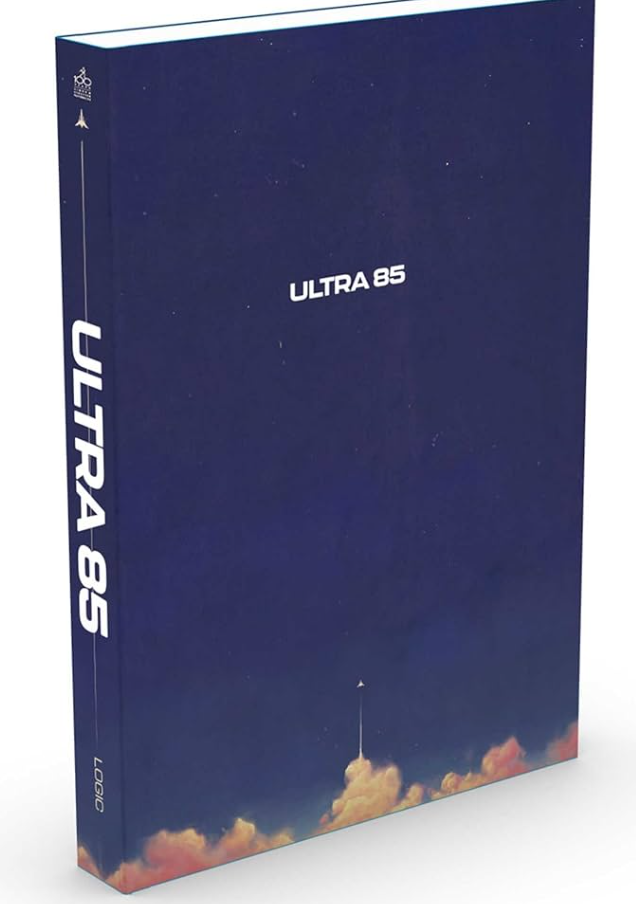
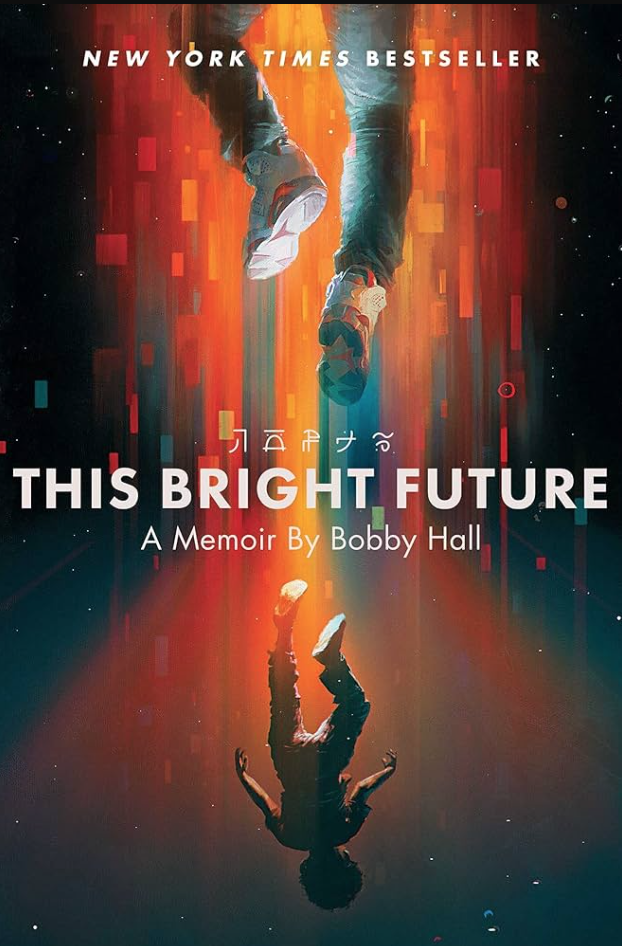
With his shift to the literary world, Bobby Hall has also accumulated an impressive body of work that doesn’t stray from his musical roots, but rather emphasizes them in the works of Supermarket, Ultra 85, and his personal memoir, This Bright Future:
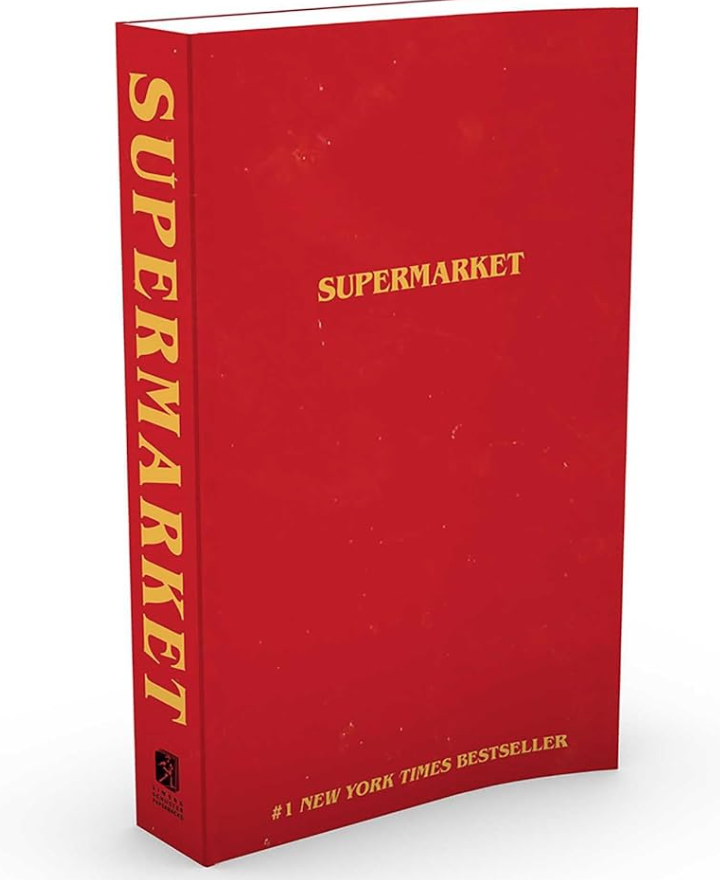
Supermarket is a psychological thriller about Flynn, a depressed young man stuck working at a grocery store while searching for inspiration for his own book. As the store’s reality begins to blur with his own mind, Flynn is pulled into a dark, mind-bending spiral that explores mental health, creativity, and the fragile line between reality and fiction. He also created a soundtrack that emphasizes the magic of his 1st novel with the same title.
Ultra 85 is a science fiction novel that expands the universe of the album, The Incredible True Story. Set in a futuristic world where humanity survives aboard a massive space station called Babel, the story follows pilots Quentin and Kai on a high-stakes mission to locate the mythical utopian planet known as Paradise. Blending sci-fi storytelling with heavy influences from the 80s and 90s pop culture scene, Ultra 85 explores the desire to break free from the systems that shape reality. The album, Ultra 85 also follows as a soundtrack to the book as well.
This Bright Future is an autobiography that discusses his traumatic childhood, personal struggles, and rise to success in the hip-hop industry. Centered on themes of resilience, healing, and positivity, the book explores how he overcame abuse and adversity to build his career and his creative identity.
Bobby, since his inception, has been staying true to his lyrics:
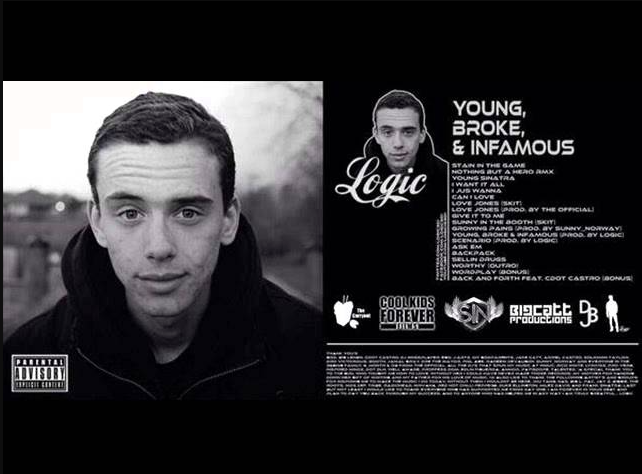
“See, I'm a stain in the game/ try to scrub me out/ I'm still in/ I started at the bottom and now I'm spreadin' to the ceilin'..... I'm so hungry, I need FEMA, and I used to be a dreamer/'Til I came into fruition, now all of y'all better listen/ And understand it's my mission/ That no matter where I walk, it's my purpose to glisten....”
And ever since those lyrics dropped on that famed mixtape, Bobby has been moving the needle forward, transitioning from music to literature, and now film, with his first motion picture, Paradise Records. Written and directed by Bobby Hall himself, and executive produced and edited by Kevin Smith, what we see firsthand is a love letter to hip-hop, friends, and family, with the center of Logic’s whole existence, his love of music, spread throughout the film.
As the movie starts, Cooper, played by Bobby H., is the boss of Paradise Records, a store that’s fighting to keep the lights on, past due bills, and common store theft. As the story progresses, we’re introduced to a variety of guests who play their position in such a 90’s stoner way. The co-stars are too hard to ignore, and while weed doesn’t encompass the entire film, it takes its place as it plays tribute to old school films like Clerks, Friday, and Empire Records. But that’s just one element of how deep Logic can get, especially within this new visual medium....
Bobby’s directorial debut is a love letter to hip hop in a way that is both comedic and affectionate. As the movie plays, the store’s financial distress remains at the forefront of the conversation, and as the clock ticks on this typical ‘day in the life’ film, the co-stars do most of the heavy lifting with Bobby giving each character their ability to shine. T-Man, played by Tramayne Hudson, Logic’s close friend/confident, shines as his right-hand man and closest Black Nerd companion. The chemistry between them extends beyond the screen and it shows as they continuously play the dozens on each other with Logic taking the “L” in most of the racially charged conflicts. The “Salt” reference had me pausing the movie for about 5 minutes as I couldn’t stop laughing.
Within this film, Bobby also gives Tremayne a moment to showcase his love of pop culture, weed, and fashion in an intimate scene where he shares his love of designing clothes with his co-worker Melanie, played by Mary E. Kelly, who is seen throughout the film as a reasonable, loving, no-nonsense co-worker. Still, Bobby’s love hits even closer to home when those closest to him appear in moments that truly bring his love of family to light.
In a brief, yet cherished moment played out between his wife and child (as customers); you could almost see him break character and probably say, “Damn, she fine… oh wait, this is a movie, and that’s my wife!!!” When his son makes his first cameo, holding the J-Dilla vinyl and saying, “No, Pizza Man. Jay Dilla,” that moment feels full-circle. He’s in his dad’s movie, and Dad is right there with him, followed by one of his musical inspirations. Sure, he pulled a DJ Khaled, but that’s how legacies are made, through the passing of wisdom and, in this case, the legacy of J-Dilla, considered one of the greatest beat makers to walk the planet.
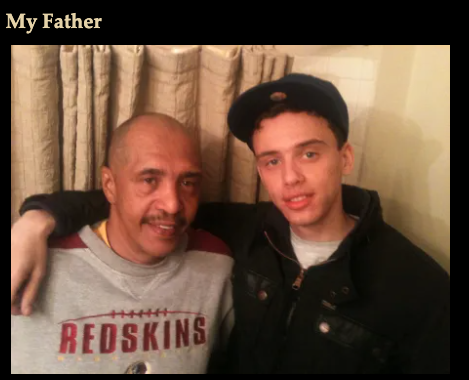
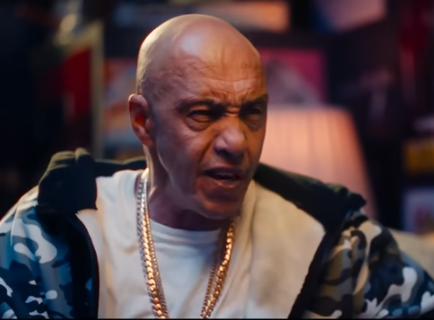
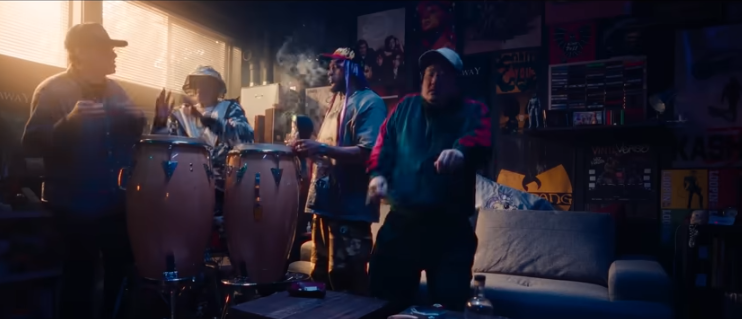
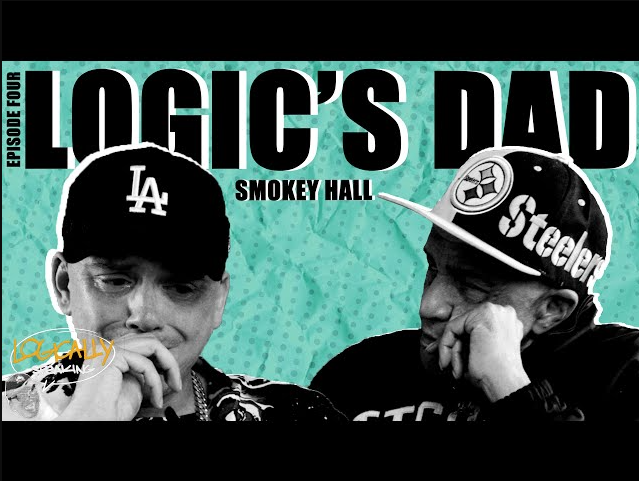
Another full circle moment takes place when he speaks with his biological father, “Smokey,” played by Robert Bryson Hall, the Legend. These moments, I feel follow up to the conversation that premiered on episode 4 of Logically Speaking, where he confronted his dad about his life, trauma, and the love between them. In these moments, we see a genuine love between father and son, and with the presence of weed, we witness a hilarious safe space, as well as Kevin’s defense of his editing as they talk sex, getting bxtches, and family values through congo drums, freestyle moments, and “elevated” discussions with T-Man and the comical Bobby Lee.
Yet, part of the magic of Paradise is also in its handling of the “N-Word,” not just between Logic and T-Man—where he [Logic] is taking comedic hits, but in the dialogue between him, T-Man, and fellow actor extraordinaire Phil LaMarr.
In this scene, the N-Word is exchanged between Logic and T-Man in typical dialogue, and as Logic explains himself to LaMarr (with LaMarr assuming he is white), Logic explains his racial ambiguity. LaMarr then notes that his wife is also white and that he has a son who is also racially ambiguous, and provides Logic some guidance in the Black ways of life…with the eventual punchline telling Logic to “keep trying” to stay Black.
Here, we witnessed two generations of people helping him transition in the use of the N-Word: from his fam, and the other from one of the greats. Any wisdom, whether on screen or off, from Phil LaMarr is a gem, so when he says, “keep trying,” he’s speaking facts. Comedy gold. Chances are, you probably missed that moment.
SideNote: Throughout the conversation, it seems only T-Man understands the true context and how it flows in a sentence. Still, it was funny as hell.

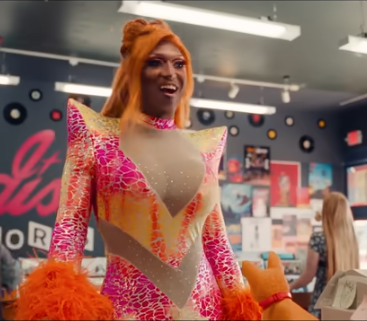
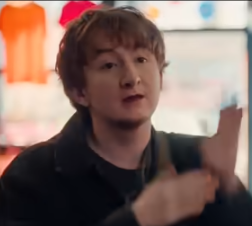

And while I can go on about the various scenes and independent moments the additional actors contributed within the film, let’s just say Logic succeeds in ensuring that his co-starts each have a moment to shine and they do so successfully; Especially Slaydro, played by Tony Revolori. His moments in the film’s final minutes as a stoner are top tier. #shoutout to Flash T. and I also can’t forget the hobbit jokes from “Tables,” played by Reed Northrup. Bro called T-man “common loot.”
An important aspect of the film is also his respect for the LGBTQ+ community. Here he does it two-fold, one for the background (via the Pride Flags), and one through the forefront with conversations with Tajh Jordan aka Flawless. Still, even through the conversations, Logic comedically acknowledges that he’s down for the pronouns, just stop making it difficult [they, we, ours, yours, he/she, mine]. A comedy moment intended with love coming from a Biracial cis male who acknowledges the diverse world he lives in, even if he has trouble living in it at times.
Scenes
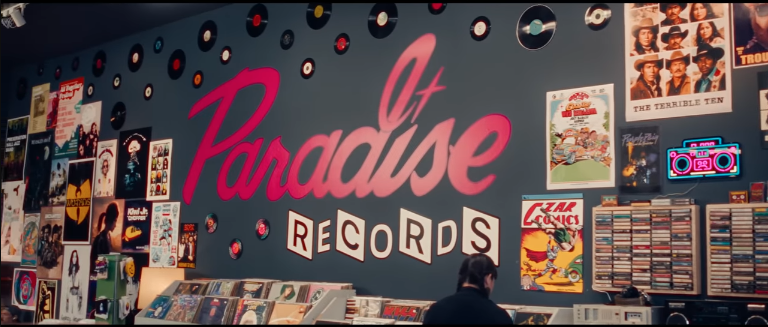
As we focus on the background of the film, Logic goes even deeper. Comedic Inception Indeed. As the movie progresses, one has to note the background and the promotional plugs that gradually and casually showcase his work, his love, and his beliefs. It’s here that his love of music is further deepened as the room he’s in reflects how deep and intimate his love of music is. For example, in general public (behind the counter/store floor) we have the 1989 Batman soundtrack vinyl, The Who, Moby, The Cure, a Phil LaMarr record case, and the Last of US I video game poster to name a few.
SideNote: Logic’s own work is there too, followed by the hit Supermarket, dead in center.
But in his most intimate places, where he’s the most vulnerable, the background shifts, and so do the posters. Where he sleeps, where his dreams and visions come alive; where he also smoked with his dad, we have Wu-Tang dead in the center, a series of manga and anime posters, old school CDs and of course, WiZ Khalifa/Fall Out Boy Tributes. When he uses the bathroom, however, we see, what it appears, are his first influences: Young Sintra Mugshot, J DIlla, Marvin Gaye, Al Green, Janet, Elton John, Kravitz (Lenny) and many more.
Black, White, and Green
Through the ups and downs of this film’s typical day, Logic’s love is centralized as he leans into his love of the herbal plant. With a vulnerability that can only be learned through the streets, he casually leaves his fortress of solitude of music, which is in color, for the black, white, and gray side of the buying of Mother Nature’s wonder drug.
And through the legendary “Snoochie Boochies” Squad, Jay and Silent Bob (played by Jason Mewes and Kevin Smith), the only thing colorized in the film is the plant. With a back-alley scene reminiscent of the old-school way of buying drugs, we see comedy cold as the legendary crew goes full throttle, continuing to endorse their favorite product for over three decades. A moment as brief as the drug transaction itself.
Logical Magic?
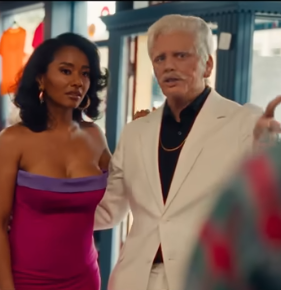
Unc Tony - Logic
With Paradise Records, over time we do see a pattern, Logic will only leave the comfort of his musical sanctuary for money, food, weed (buy or smoke), and a possible shot at being on TV. However, he doesn’t go far as he’s just a few feet away from his first love. And in staying true to the music and movies that helped raised him as a kid, despite the chaotic mess in this “one day film,” we see Logic in his ecosystem, protecting it and defending it from those genetically similar to him, who leech off of him for money as well.
For example, as he plays his ‘Uncle Tony,’ The background is perfect as the Bobby Boy logo looms in the back, his uncle asking him for money for either sex or to pay of the mob on the left side, and Logic on the right trying to fend of his uncle from his greedy claws. This scene is particularly heartbreaking, especially for those who know what it’s like to deal with family vultures.
Final Thoughts
Overall, Paradise Records is a love film. Logic’s first attempt at film making shows how raw the film is followed by its innocence. His love for music is throughout the film, with one message being clear, he doesn’t do music for the money, he does it for the meaning and the culture. He would rather give it away, stay true to those closest to him; paying them their worth, and would rather die with his love of music than sell out (especially to Mike Hawk, played by the hilarious Martin Starr), if he can prevent it.
Still, Logic gave us a trip into his world and continues to do so as he has conquered his third medium. Through his music, his writing, and now, his direction, we’ve been able to journey into his life and observe his comedic romps, his love for family, his traumas, his struggles with being Biracial and, of course, the use of the N-Word.
Is it safe to say that Logic aka Bobby Hall is Hip Hop’s first successful Blerd [Black Nerd]? Yes, Possibly. But that is a conversation for another day.
What’s undeniable, though, is that Logic has always stayed true to his first love: music. No matter the medium; whether its through albums, literature, or film, he continues to showcase that love with unwavering authenticity. But chances are you probably missed that.
Respect.