


InKONBINI: A Cozy Time Capsule.

Over the past few years, I’ve found myself drawn more and more to a new genre of video game – the cozy game. Video games designed for you to kick back, relax, and immerse yourself in a different world, if only for a few hours at a time. Animal Crossing: New Horizons, Retro Rewind: Video Store Simulator, and Tomodachi Life: Living the Dream are games I’ve put an immense amount of time into, simply because just taking time out of my day to exist in a world free of stress, reminiscent of a more comfortable age, or putting familiar characters in funny situations really does just make me feel good. That’s why when I first caught a glimpse of InKONBINI: One Store, Many Stories upon its announcement back in 2024, I knew it was a game that I would adore. And, thanks to the team at Nagai Industries, the developers of inKONBINI, I got to experience the game firsthand for the Nintendo Switch 2. With that out of the way, let’s talk about inKONBINI: One Store, Many Stories.

Makoto
InKONBINI tells the story of Makoto, a young girl home from college for a week, helping her aunt by picking up graveyard shifts at the local convenience store (or “Konbini” for short) that she runs. The game takes place over the course of a single week in the early 1990s, each day presenting new activities, customers, and unique story moments.
The first thing that struck me about inKONBINI is how deliberate it is in its design. I remember the first time I played through Monday, I kept looking for a dash button of some kind, as Makoto’s movement felt slow and sluggish to me. I was used to the frenetic sprinting you had to do in Retro Rewind: Video Store Simulator, where you’ve got to constantly be moving around to accommodate the needs of the dozens of customers that filter in each day. However, I soon realized that the movement speed was, like everything in inKONBINI, a deliberate choice by the developers. There is no time limit, no harsh deadlines to anything going on. You can take as much time as you want stocking and fixing the shelves of your store before you decide to open. Rather than dozens of forgettable one-note NPCs, the customers that come in to your store each night are fully independent, realized characters. Each has their own stories to tell, their own reasons for coming in to a convenience store in the dead of night.
The longer I played inKONBINI, the more I realized that organizing the store isn’t the game – it’s about being present. Appreciating the small moments in life, and the people that come in and out of it. Each character that enters the store has their own shopping lists that you can help with, and in doing so, you learn bits and pieces of their lives.
Surrounded by the hum of fluorescent light in the quiet evening, sharing these private moments with the customers makes you feel connected in a way that few games can do in a hundred hours, much less than the scant three or four I’ve spent in inKONBINI thusfar. This is, of course, by design, as Nagai Industries says on the game’s own website that inKONBINI is based on the Japanese concept ichi-go, ichi-e. I didn’t know what this meant before playing the game, but for those curious: Ichi-go, ichi-e is a Japanese four-character idiom which translates to "one time, one meeting" or "once in a lifetime".
It represents the cultural concept of treasuring the unrepeatable nature of a moment, reminding people to cherish every gathering and experience because it can never be replicated exactly the same way again. It’s no wonder that Makoto moves at one speed – that there are only one or two customers per night – it’s because rather than waiting to see what comes next, inKONBINI invites you to enjoy what is.
The moment-to-moment gameplay involved in inKONBINI is also thoroughly enjoyable in its own right. I’ve always found great joy in organizing things – putting items exactly where they belong in a predetermined system is extremely relaxing for me. Not to mention the lovingly crafted environment of the convenience store and the items within make for an effortlessly charming view.

The team at Nagai Industries outdid themselves by designing dozens of fictional foodstuffs with appealing packaging that you can turn over in your character’s hands, making them feel that much more real, despite the cartoony art style. I also really must praise the stellar score for this game – Archibaldi Studio worked in tandem with Nagai Industries to craft some of the best instrumental tracks I’ve heard all year. The gentle guitar strums, the saxophone, and the sounds of nature itself all intermingle to create this immaculate atmosphere that you can’t help but want to get lost in.
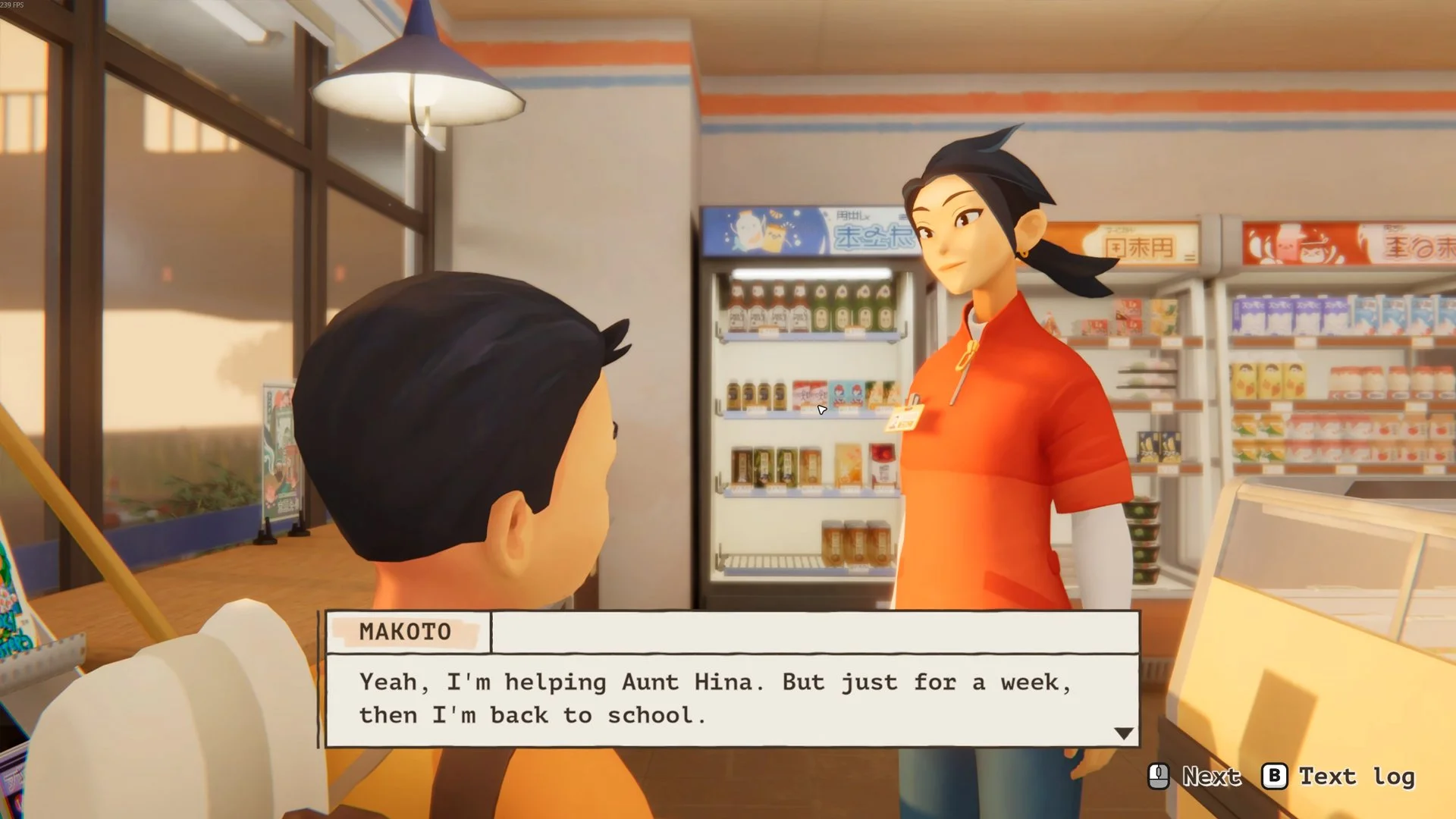
More than that, inKONBINI is uniquely nostalgic. When I was younger, at thirteen years old, my parents took me on a trip to Japan. The first day I got there, I was so jet-lagged I slept through the whole day. When I finally woke at three AM the next morning, I felt awful. I’d spent my whole first day in Japan asleep!
My dad was awake, and understood how I was feeling. So, in the dead of night, we walked the empty streets of Tokyo, with only the light of the vending machines along the streets to guide us. Somehow, an hour or two later, we found ourselves in a Japanese diner, eating breakfast together in a foreign land as the sun rose. I’ve never forgotten that moment – and this game is the closest I’ve come to remembering just how it felt back then – to be in somewhere foreign, yet wholly familiar, and comfortable.
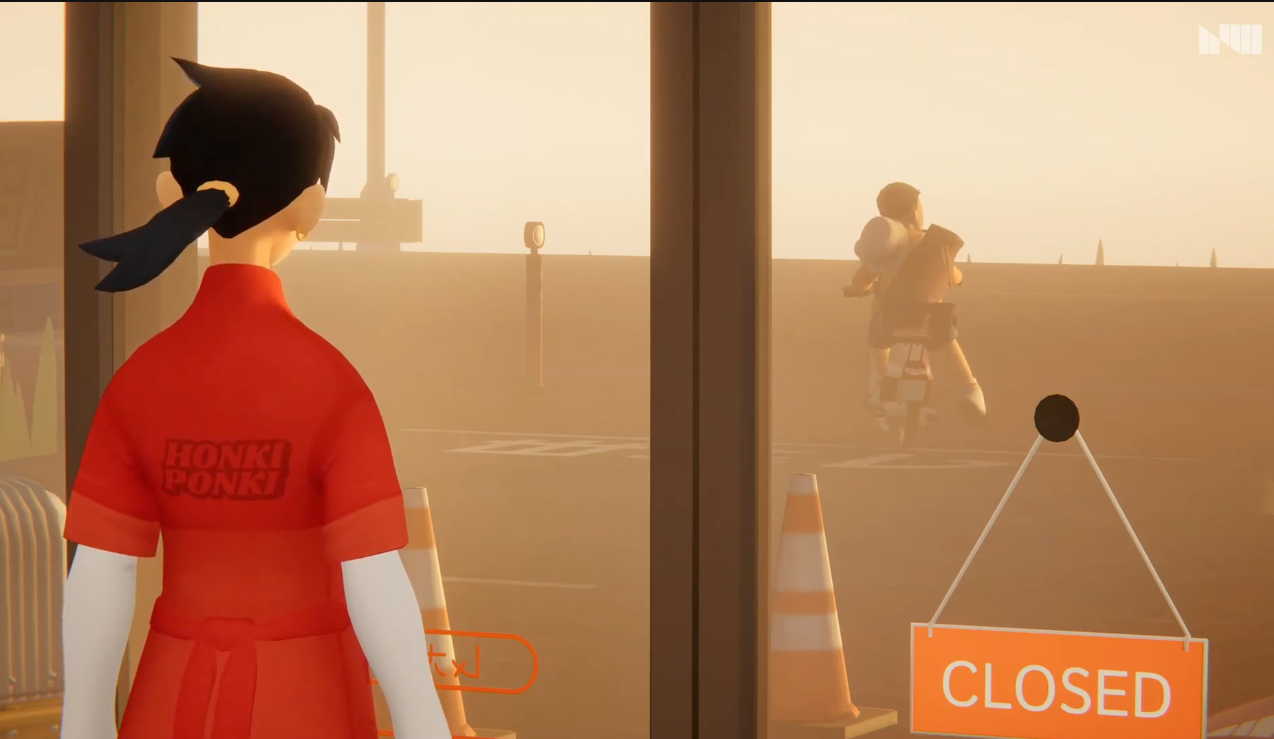
I mean this when I say it too – the biggest endorsement of inKONBINI I can give, is that despite having owned and played it for some time, I still haven’t finished it. From what I’ve seen online, the game is a modest length, at only eight hours or so. This really is just one week in Makoto’s life. And yet, the more time I spend with her and the people that come into her store, the less I want to leave. As a result, I’ve been taking my time, really savoring the experience.
If you love cozy games, you owe it to yourself to play inKONBINI: One Store, Many Stories. Because, like the old adage goes: ichi-go, ichi-e. A game like this only comes around once in a lifetime.
I give inKONBINI: One Store, Many Stories a 5 out of 5 Stars.